

The Prime Minister revealed that all oil operators confirm no signs of oil shortage but urged everyone to conserve fuel. He pointed out that negotiations to purchase oil involve multiple countries, not just Russia.
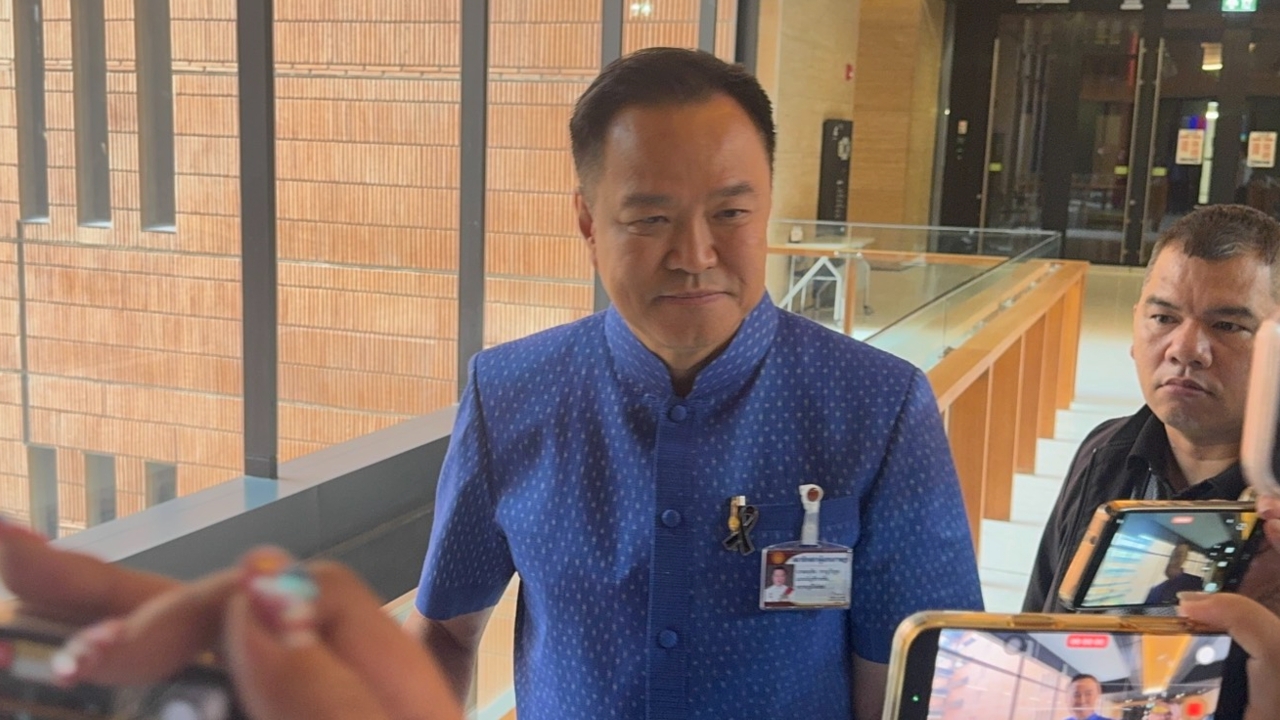
On 15 Mar 2026 GMT+7, at the Parliament Building, Anutin Charnvirakul, Prime Minister and Minister of Interior, gave an interview after a meeting of the Center for Administration and Monitoring of the Middle East Conflict Situation (CMEMC).
This followed Deputy Prime Minister and Finance Minister Aekniti Nitithanprapas, who is also deputy director of CMEMC, stating that the industrial sector is competing to buyoil.From the public at gas stations, which mightcauseoilshortages. He said he has received confirmation from oil tradersincludingThai Oil, Bangchak, Shell, and Caltex—all operators whoimportcrude oil—assure him there is no problem or any signal of oil shortage. However, since there is an ongoing conflict, the situation is abnormal. Therefore, all consumers usingoildomestically must be aware and start conservingfuel.Even if there is no shortage, awareness must be raised. The more we conserve, the moreoil reserveswithin the country will increase. Currently, reserves have risen from 60 to 90 days, and we hope to reach around 100 days.He urgedeveryone to consider fairly that, within ASEAN, Thailand has the largestoil reserves.Comparing to Japan, which can sustain more than 200 days, one must also consider economic size and logistics.When asked if crude oil at refineries remains abundant and whether total reserves now reach 100 days, the Prime Minister said it does. He reassured the public not to worry. Even though fighting continues, we must not be complacent but must be aware and conserveoil.He emphasized that energy shortages will not occur, as Thailand's electricity is generated by natural gas, which we produce from our Gulf of Thailand reserves and have
increasedby adding gas production plants that mightoperatemore intensively than before. Regarding oil exports to Laos, he clarified sales continue. Oil prices fluctuate with the global market, but theOil Fundhelps stabilize prices and alleviate public hardship as far as budget and economic conditions allow.The Prime Minister thanked the public for their cooperation but said there is no need for panic orstockpilingoil.He assured that the government will manage the situation fully and will not allow prices to spike abruptly, such as increasing by 10 baht overnight. Thailand cannot produce its ownoil,
and oil-producing countries are facing problems. We import about half from those sources, but that does not mean the supply has vanished—half still comes from other regions. If reserves drop from 100 to 50 days in a worst-case scenario, we can still manage.When asked about the likelihood of purchasingoilfrom Russia, the Prime Minister said negotiations are ongoing with all countries. PTT Public Company Limited, a major Thai company, is not small and conducts business beyond just oil. In the business world, they have channels and connections. No one would dare exclude PTT from supply chains or refuse to sell to them. If the situation normalizes, PTT can choose other suppliers, but losing customers in ASEAN would also be a loss. The regional market operates with such mechanisms.