

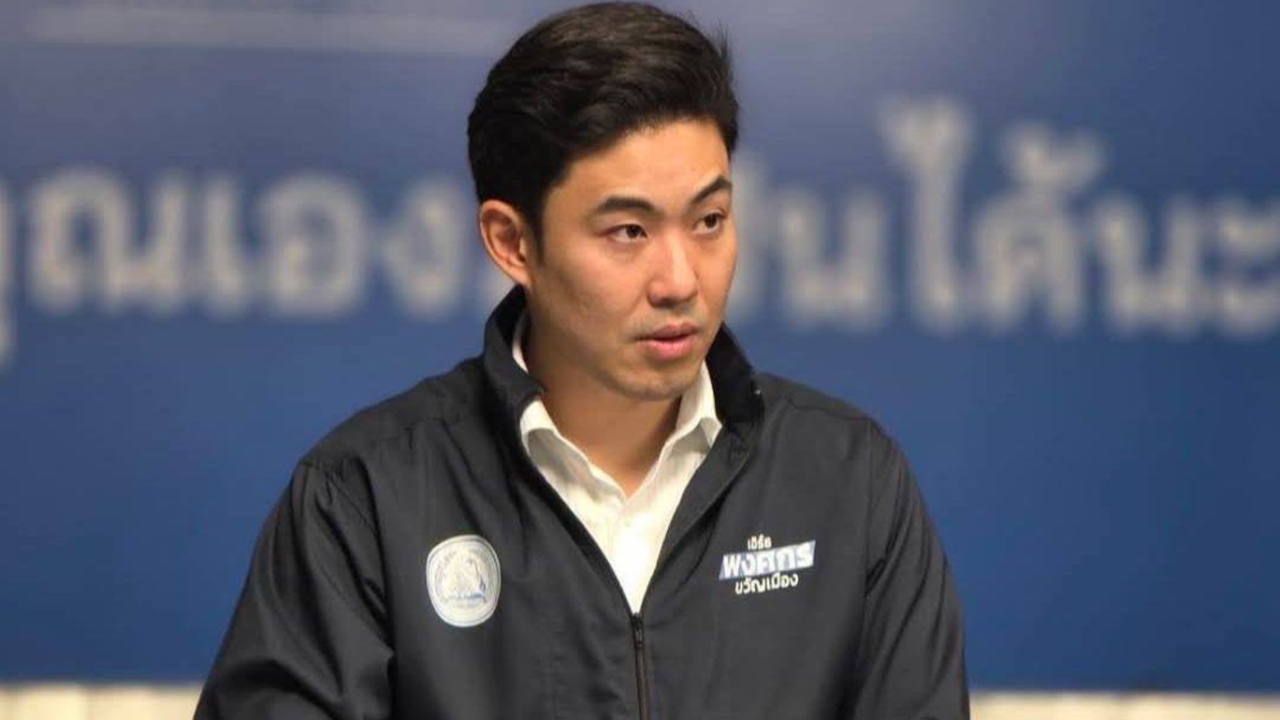
The Democrat Party spokesperson revealed four reasons for abstaining from voting in the Speaker of the House election, stressing their straightforward approach and readiness to serve the country alongside all parties. They criticized Pchun for putting forward a candidate without ever consulting other opposition parties, viewing it merely as a move to draw attention within parliament.
On 16 March 2026, Mr. Pongsakorn Kwanmuang, spokesperson for the Democrat Party, posted on Facebook explaining why the Democrat Party abstained in the Speaker of the House election. The post outlined the reasons behind their decision to "abstain" in the Speaker election.
Mr. Pongsakorn stated: 1. Working as part of the opposition coalition requires unity. Nominations for key positions like Speaker of the House should be discussed collectively within the opposition to reach a unified stance. However, on this occasion, Pchun decided to nominate a candidate without prior discussion or consensus with other opposition parties.
2. Compliance with the constitutional intent (Article 106). The constitution clearly states that the opposition leader must come from a party whose members do not hold the Speaker or Deputy Speaker positions. Therefore, the leading opposition party nominating its own candidate for Speaker contradicts the legal role the opposition leader must uphold. (That said, there is a view that this provision should be amended to allow the main opposition party leader to hold the Speaker position.)
3. Emphasis on tangible outcomes rather than just garnering attention. The Democrat Party respects the vision of the nominated individual, but given the parliamentary vote numbers make the practical outcome clear, the party assesses this nomination as a bid to use parliamentary space to attract attention rather than a genuine attempt to win. Thus, the Democrat Party chose not to participate in this process.
4. Maintaining the party's independence and ideology. The Democrat Party has a clear stance: they fully perform their opposition role to scrutinize the government (hence they do not vote to support the government). At the same time, they are not anyone's satellite party. They follow an independent decision-making process based on party resolutions to preserve their identity and principles.
He affirmed that this abstention was a straightforward fulfillment of their duties. The party is ready to cooperate with all sides on matters beneficial to the nation and its people, but everything must be based on correctness, mutual respect, and prior consultation.