

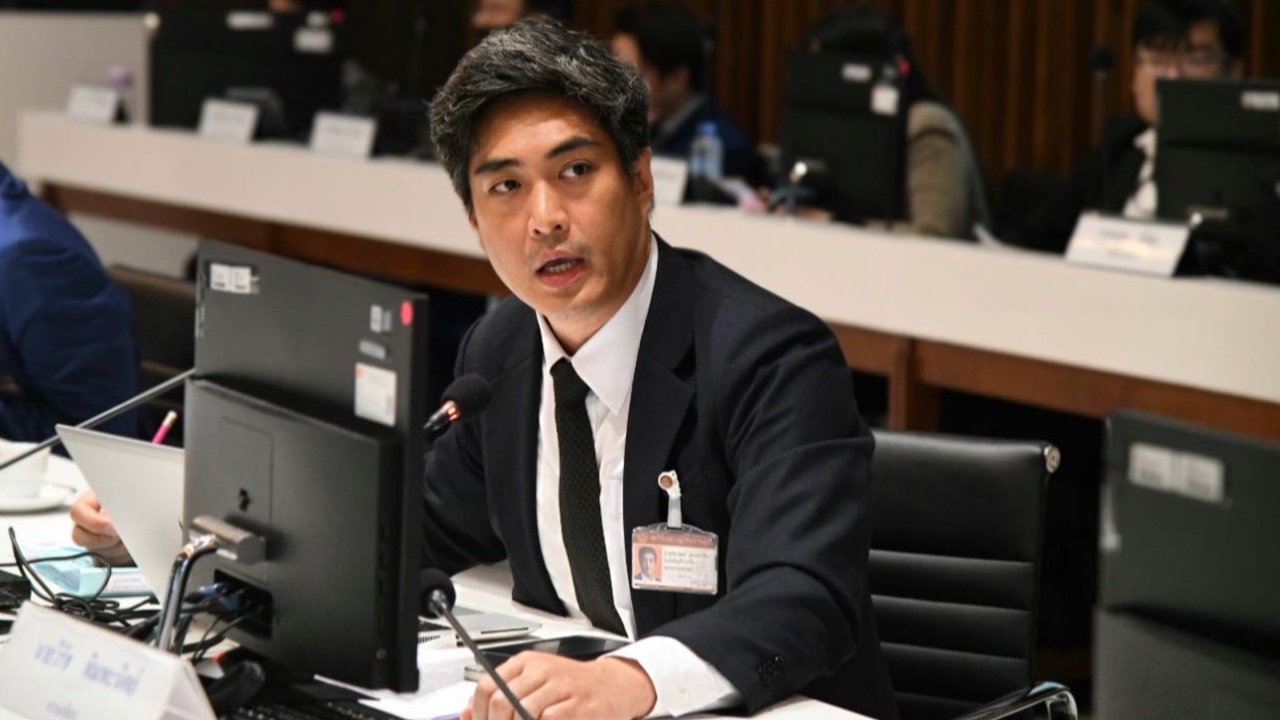
Chaiwat, deputy leader of the People’s Party (PChon), views the government’s explanations about oil as contradictory to the truth. He points out that using the oil fund to prop up prices is unsustainable. He suggests short-term fixes such as reducing bus and skytrain fares or making them free, while recommending long-term adjustments to the oil pricing structure.
On 16 March 2026, Chaiwat Sathawornwijit, a party-list MP and deputy leader of the People’s Party (PChon) for foreign affairs, commented on the government’s statement assuring that oil supplies are sufficient and nearly 100 days’ worth remain. He said the government’s figures likely include oil still in transit. Counting oil yet to arrive creates a disconnect with reality, as at many gas stations, especially in rural areas, fuel is running out or unavailable. Some stations limit purchases to 500 baht per fill-up. The government’s claim of no shortage thus contradicts the actual situation. Moreover, some temples have stopped accepting cremations due to lack of fuel, posing a serious issue since uncremated bodies accumulate and cause storage problems. He sees a clear conflict between official statements and reality in addressing this problem.
Chaiwat said he believes the government is currently subsidizing oil prices using funds from the oil fund, which distorts market prices. The fuel shortages at pumps mostly stem from large users—transport companies, agricultural businesses, or industry—that normally do not buy at gas stations but now do so because prices there are 14 baht cheaper than at refineries, which do not receive subsidies. These large buyers compete with ordinary motorists for limited fuel. This situation shows that propping up oil prices this way is unsustainable. Using the oil fund to subsidize will only accumulate debt with interest over time. In simple terms, the public is effectively borrowing against their own future money, plus interest, to maintain artificially low prices now. The government needs to consider more sustainable solutions rather than temporarily supporting prices with the oil fund.
Chaiwat added that aside from the unsustainable oil fund subsidies, short-term solutions should include encouraging work-from-home policies in government agencies and promoting such practices in private sectors. Even though two weeks have passed, starting now is better than not at all. There should also be measures to increase public transport usage to reduce private car travel, such as lowering bus and skytrain fares or even making them free. He believes these are feasible short-term measures.
Regarding short-term measures and reviewing oil pricing structures, Chaiwat noted that with refining costs rising rapidly due to external factors like war, the government should set a maximum acceptable refining cost ceiling. If costs exceed this, measures should be taken—such as imposing a windfall tax on refinery profits that are not due to production improvements. The revenue from this tax could then be used to reduce energy costs for the public. For medium- to long-term solutions, restructuring oil prices to better reflect incentives is needed. Currently, locally produced biofuels, such as those from palm oil or agricultural products converted to ethanol, have an impact. Previously, when global oil prices were low, adding ethanol raised prices, but now that global prices are high, ethanol production in Thailand could help bring prices down.
Therefore, reviewing and adjusting the pricing structure and domestic ethanol production is necessary to stabilize prices and incorporate biofuels without burdening the oil fund. Public awareness should also be increased about how much their vehicles can use biodiesel or E20 fuel. These measures should be reviewed and implemented promptly, especially as the war situation remains uncertain and unlikely to end soon.
Chaiwat also expressed concern that if oil prices do not fall, electricity prices will rise, followed by gas prices. It’s not just about oil prices. This situation presents an opportunity to promote solar power among citizens, a policy the People’s Party has long supported. The government should buy solar power generated on people’s rooftops without requiring complicated permits. Currently, restrictive approvals discourage widespread adoption. As electricity prices rise, people rush to install solar panels, but it may be too late to meet demand.
Regarding today’s (16 March) emergency meeting called by the Prime Minister with relevant parties to discuss energy crisis measures following the 15-day diesel price freeze, Chaiwat said that beyond the obvious high oil prices, other costs will follow. For example, Thailand imports urea fertilizer mainly through the Strait of Hormuz from the Middle East. Shortages have driven fertilizer prices up, which is a basic cost for all goods, so food prices will rise, increasing living costs. Using future tax revenues to temporarily subsidize these costs is unsustainable. More sustainable approaches are needed, such as diversifying import sources and negotiating new suppliers, assessing and mitigating price increases at each point to lessen impacts on citizens. Clear communication is also essential to prepare the public for expected price adjustments in essential goods.