

The Operations Center urges Thai citizens to leave the Middle East conflict zones, revealing that Sihasak called to thank the Foreign Ministers of Bahrain and the UAE for facilitating Thai nationals' return. Iran has agreed to coordinate with the Navy to assist three crew members of the Mayuree Naree.
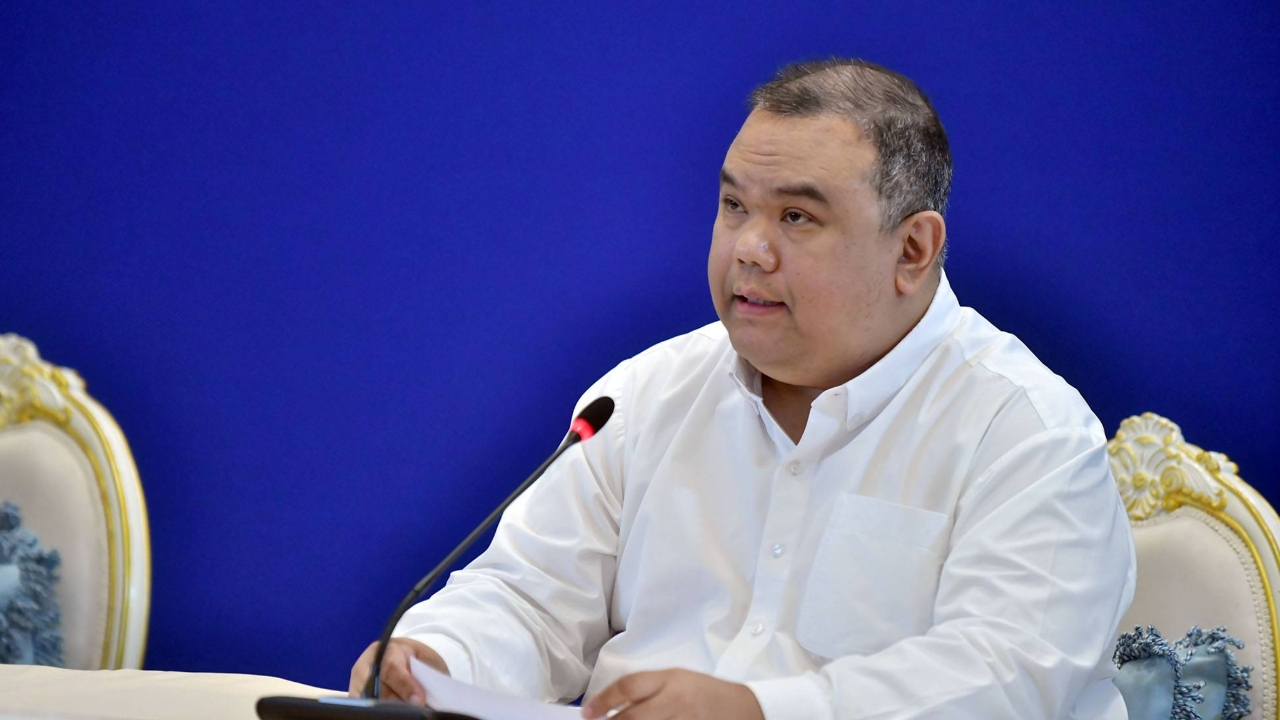
At 11:05 a.m. on 17 March 2026 GMT+7 The Center for Administration and Monitoring of the Conflict Situation in the Middle East Region (Operations Center) Issued a daily situation report at the Government House, delivered by Mr. Panidol Patchimsawat, Acting Director-General of the Information Department, Ministry of Foreign Affairs, and Deputy Spokesperson of the Ministry of Foreign Affairs, who stated that regarding developments in the Middle East region, the situation has continued to escalate with multiple airstrikes exchanged among several countries. Qatar, the United Arab Emirates (UAE), and Saudi Arabia have intercepted numerous missiles and drones targeting strategic sites such as oil facilities and airports.
Additionally, many oil tankers remain stranded near the Strait of Hormuz, directly impacting oil prices and the global economy. Several countries have expressed concern and condemned Israel for deploying forces to attack Lebanon, resulting in many casualties and displaced persons. Meanwhile, multiple countries have declined U.S. requests to join naval forces to open the Strait of Hormuz.
Furthermore, due to ongoing uncertainties, the Ministry of Foreign Affairs urges Thai nationals to leave the risk areas as soon as possible. They should monitor official news and advisories closely and register their contact details with the responsible embassies and consulates.

Mr. Panidol added that at the special ASEAN Foreign Ministers' Meeting on the Middle East situation held on 13 March, key issues affecting citizens’ lives were discussed, including using ASEAN mechanisms to mitigate impacts such as commodity and energy prices. In the short term, Foreign Minister Sihasak Puangketkaew proposed ASEAN employ mechanisms like the ASEAN Petroleum Security Agreement to reduce energy shortages.
For the long term, Sihasak proposed that ASEAN accelerate the transition to renewable and alternative energy sources and leverage the ASEAN power grid network to enhance regional connectivity. The meeting agreed to strengthen cooperation in trade, finance, and transportation by promoting connectivity and reducing trade barriers, thereby bolstering ASEAN's economic resilience amid external crises.
Meanwhile, the Philippines, as ASEAN Chair, issued a Chair’s statement emphasizing the severity of the situation and reaffirming ASEAN’s stance calling for all parties to engage in dialogue and diplomatic efforts to end the violence. The statement highlighted economic impacts and stressed strengthening ASEAN mechanisms to cope with these challenges.

Mr. Panidol further reported that on 16 March, Foreign Minister Sihasak held phone discussions with the Foreign Minister of Bahrain and the Deputy Prime Minister and Foreign Minister of the UAE. He expressed gratitude for their care of Thai residents and facilitation of those returning to Thailand. He also thanked the UAE for assisting 20 Mayuree Naree crew members in returning to Thailand. Sihasak expressed concern over the regional situation and hopes for a peaceful resolution, affirming Thailand’s readiness to support diplomatic efforts to restore peace promptly.
Regarding Iran, additional evacuations are scheduled for 17 and 25 March. The embassy has deployed staff to coordinate on-site and at the Turkey border immigration checkpoint to enable Thai nationals in Iran to travel overland to Turkey for flights back to Thailand. The embassy may arrange further evacuations as needed, urging Thais to monitor official channels regularly for safety assessments and to promptly register with the embassy if intending to return.
Currently, 1,116 Thais have been assisted to leave Middle East countries either to Thailand or third countries. The Thai government remains committed to assisting affected Thai nationals to evacuate dangerous areas safely at the earliest opportunity.
When asked about negotiations with Iran, Mr. Panidol said that, as Foreign Minister Sihasak previously stated, discussions emphasized Thailand’s position favoring diplomatic dialogue to end the conflict. Sihasak spoke with Iran’s Foreign Minister about assisting three Thai crew members, with Iran expressing regret over the incident and agreeing to coordinate with the Iranian Navy to assist these crew members. Additionally, concerns about navigation impacts were raised, noting Thailand is not a party to the conflict and urging safe passage for Thai vessels through the Strait of Hormuz.