

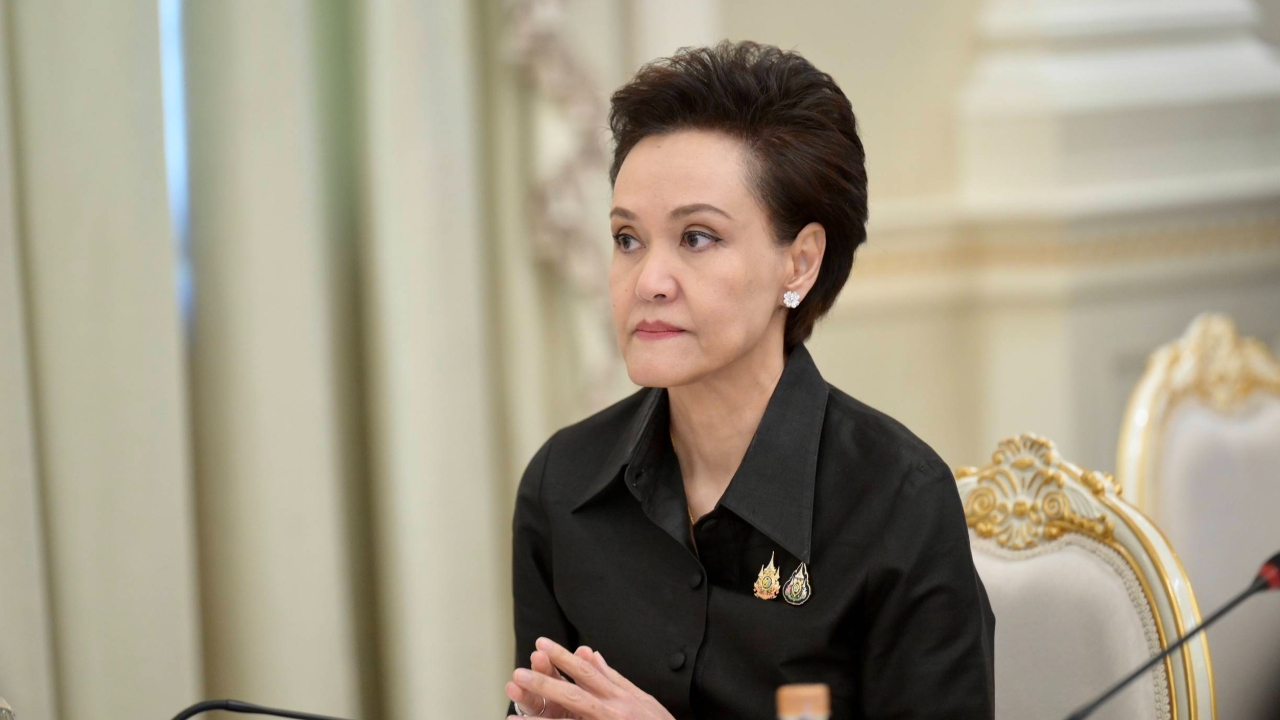
The Minister of Commerce ordered strict control over eight key product categories and launched a project to reduce living costs. He emphasized that prices of essential consumer goods should not rise and urged the public to report any suspicious price hikes via the 1569 hotline. Fertilizer and plastic pellet supplies remain sufficient for another four months.
At 18:07 on 17 March 2026 GMT+7. Mrs. Supachai Suthamphan, Minister of Commerce. She held a press conference after attending a meeting. At the Center for Administration and Monitoring of the Middle East Conflict Situation (CMMEC). At Government House, she said the Ministry of Commerce is well aware that rising global energy prices are causing concern among businesses and the public. As Energy Minister Attapol Rerkpiboon previously stated, energy prices will be controlled to not exceed last year's levels, with diesel capped at 33 baht per liter, adjusted gradually. Tomorrow (18 March 2026 GMT+7), a 0.50 baht increase is planned. Regarding essential consumer goods, the current situation remains manageable. The Ministry of Commerce will oversee inspection, control, and address impacts on both businesses and the public.
Regarding the "cost of living" category, no product prices need to be increased yet because oil prices remain within manageable levels, as the Energy Minister stated. We strictly oversee eight categories of controlled products that are prohibited from price hikes without permission from the Department of Internal Trade, Ministry of Commerce. Currently, these eight categories include products such as instant noodles, canned foods, canned fish, powdered milk, chemical fertilizers, pesticides, and animal feed. Any price increase in these categories requires prior approval. So far, no business has requested a price increase. If there is information about unauthorized price hikes in these categories, the public is urged to report it via the Department of Internal Trade hotline 1569 for close monitoring and action.

Another category includes products that require notification before price increases but not permission, such as detergents, shampoos, and dishwashing liquids. These daily-use products have not seen price hike requests yet. If price increases occur, citizens are encouraged to report via hotline 1569 as well.
Additionally, some products require price monitoring but are not controlled, such as packaged rice, seasoning sauces, and fish sauce. These have not experienced price increases, but if reports arise, the ministry will negotiate with producers to help stabilize prices, as energy costs have not risen excessively.
Mrs. Supachai went on to discuss proactive measures. One initiative involves using the mechanism of the Central Committee on Goods and Services Prices (established in 1999) to review which products should be strictly controlled—requiring permission before price hikes. We are currently conducting public consultations to gather opinions on whether to add necessary products to this category during this crisis.
Simultaneously, we have been discussing with major producers and traders to create special-price products distributed to retail and wholesale traders nationwide. Soon, we will officially announce which companies and traders are participating to distribute discounted goods across all 77 provinces through local retailers and wholesalers. In vulnerable areas, the Blue Flag project will help provide essential consumer goods at affordable prices, but only in these areas to avoid undermining local retail and wholesale businesses. Both approaches will be implemented together.
"No product should increase in price now. If anyone notices suspicious price hikes, please report them so we can take action. The Ministry of Interior has already implemented measures under the provincial committees on goods and services prices (PCGSP), involving governors, deputy governors, commerce and energy officials as teams overseeing local areas. We ask the public to cooperate by reporting any information, so we can promptly address it."

The minister added that another category requiring oversight, though no price increases should occur yet, is cost-reduction products such as agricultural supplies. Fertilizer costs are a major factor. We have discussed with businesses and currently have fertilizer stocks sufficient until May. Additional fertilizer shipments are expected, which could extend supplies until August, but transport is delayed due to the Middle East situation. We are coordinating with the Foreign Minister to negotiate for cargo ship access to replenish stocks. So far, no price adjustments have been made or are needed. Fertilizers are among controlled products, and any violations will be strictly dealt with under PCGSP mechanisms.
Furthermore, if oil prices—which impact transportation and fertilizer raw materials—increase, we have prepared measures to support fertilizer price reductions. We already have the “Green Flag” project, which was limited last year but is planned to expand. If by May existing stock depletes and new supplies cannot be obtained or alternative sources secured, we will seek to purchase fertilizer from substitute suppliers in Malaysia, Brunei, and other countries under negotiation.
If prices rise, we will intervene to reduce fertilizer prices under the Green Flag project to make fertilizers more affordable for farmers. We also aim to adjust fertilizer formulas to reduce reliance on imported raw materials without affecting yields. This long-term strategy supports self-reliance and includes promoting organic fertilizers with incentives for farmers to use them, helping reduce costs. Bio-fertilizers are expected to be beneficial long-term. Preparations are underway to manage any fertilizer price increases by restructuring fertilizers and lowering prices accordingly.

Regarding reports of plastic pellet shortages potentially lasting until April—which could raise prices of items like instant noodles or other plastic-based products—we are addressing two main points.
First, we have communicated directly with major producers and manufacturers, confirming additional raw materials have been secured. Initially, supplies were expected only until April; now, reports indicate plastic pellets sufficient for four more months, which is positive news for continuing food packaging production.
Second, we are seeking alternative sources for importing plastic pellets from other countries, similar to our efforts with fertilizers. This cooperation involves the Ministry of Foreign Affairs to identify substitute suppliers. This proactive approach aims to ensure preparedness for potential price increases, enabling us to manage and provide relief. Besides promoting bioenergy, we also aim to reduce bio-based production costs.
"In summary, essential consumer goods have not had price increases. We ask for the public's cooperation to report any signs of price hikes, so we can address them promptly. Our teams are already deployed in many provinces."
There may be questions about reports of price increases already existing. I explain that when we inspect, for example, if price tags comply but sales prices differ, buyers or informants report price hikes, but no purchase proof is provided. To act, we require evidence of actual purchase at increased prices to enforce penalties immediately. This is not unmanageable but requires cooperation in monitoring. We assure that if violations occur, we will enforce strict measures. If energy prices change further, additional relief measures will be implemented beyond those already announced.