

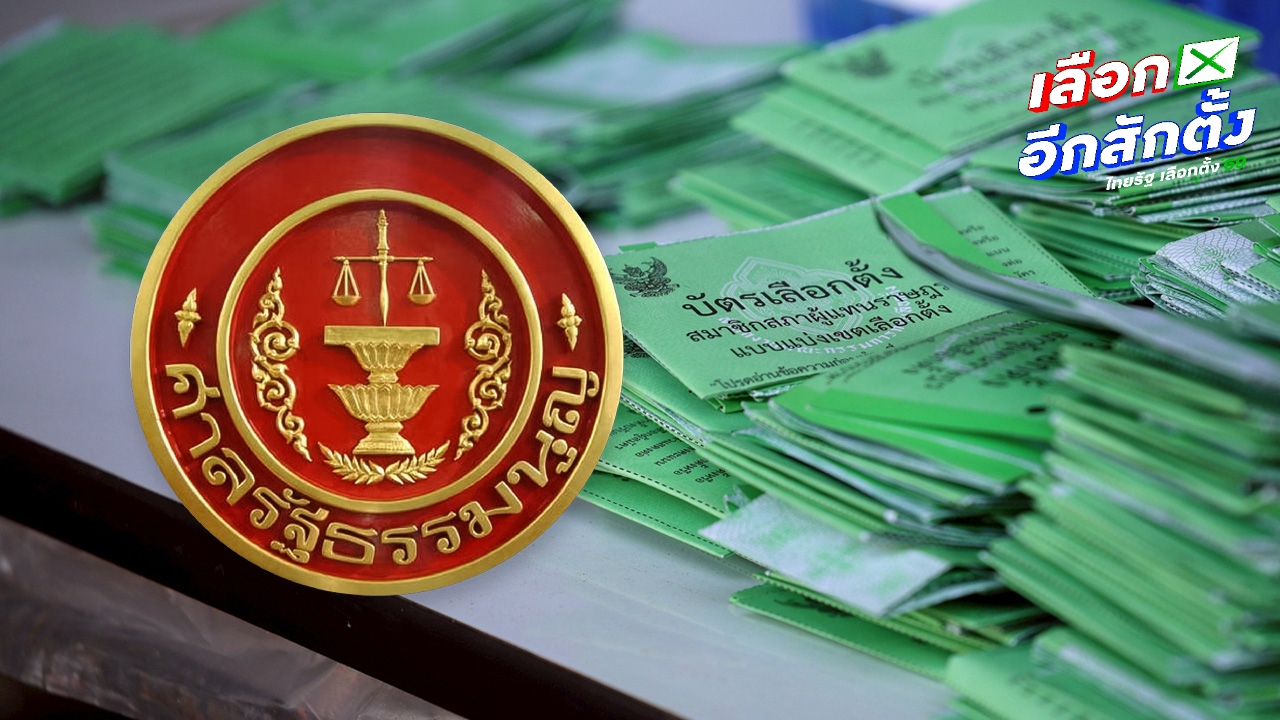
The Constitutional Court voted 6 to 3 to accept the Ombudsman's petition concerning election ballots containing barcodes and QR codes for review, instructing relevant parties to provide explanations to the Court within 15 days.
On 18 March 2026, the Constitutional Court convened to deliberate on a significant case in which the Ombudsman petitioned the Court to interpret under the Constitution, Section 213 (case number T. 30/2566).
The petitioner stated having received 21 complaints and requested the Court to consider the petition with opinions under Constitution Section 213 regarding the Election Commission (Respondent 1), the Secretary-General of the Election Commission (Respondent 2), and the Office of the Election Commission (Respondent 3) conducting the general election of House of Representatives members on 8 February 2026. The petitioner argued that the ballots printed with barcodes and QR codes could allow identification and verification of voters and their votes, thereby compromising the secrecy of the ballot. This was asserted to contravene various constitutional provisions including Sections 4, 25, 34, 50(7), 83 paragraph two, 85, 95, and 224.
After reviewing the facts and supporting documents, the Constitutional Court found that the core issue concerns the nationwide conduct of the House of Representatives election, not limited to any specific electoral district or individual case. The matter raises constitutional questions about the Election Commission’s election procedures, which exercise authority under constitutional provisions.
The Court noted that the exercise of power falls under Constitution Section 224 in conjunction with Section 83 paragraph two. The petition complies with the criteria, procedures, and conditions stipulated in Constitution Section 213 and the Organic Act on the Constitutional Court Procedures B.E. 2561 (2018) Section 46.
By majority vote (6 to 3), the Court ordered acceptance of the petition for adjudication and notified the petitioner. The six justices in the majority were Nakarin Mektrairat, Wiruph Sangthian, Jiraniti Havanon, Napaton Thepphitak, Udom Rattamrit, and Sumeth Roykuljaroen.
The three dissenting justices—Udom Sitthivirattham, Banjongsak Wongprach, and Sarawut Songsivilai—opined that the matter did not constitute a direct exercise of constitutional authority but rather concerned powers under the Organic Act on the Election Commission B.E. 2560 (2017) and the Organic Act on the Election of House of Representatives B.E. 2561 (2018).
For the benefit of the proceedings and under the authority of the Organic Act on the Constitutional Court Procedures B.E. 2561 Section 27 paragraph three, the Court ordered all three respondents to submit their explanations addressing the allegations within 15 days from receipt of the petition copy. Both petitioner and respondents must also submit lists of evidence and methods of obtaining such evidence to the Court within 15 days from the date of the summons.