

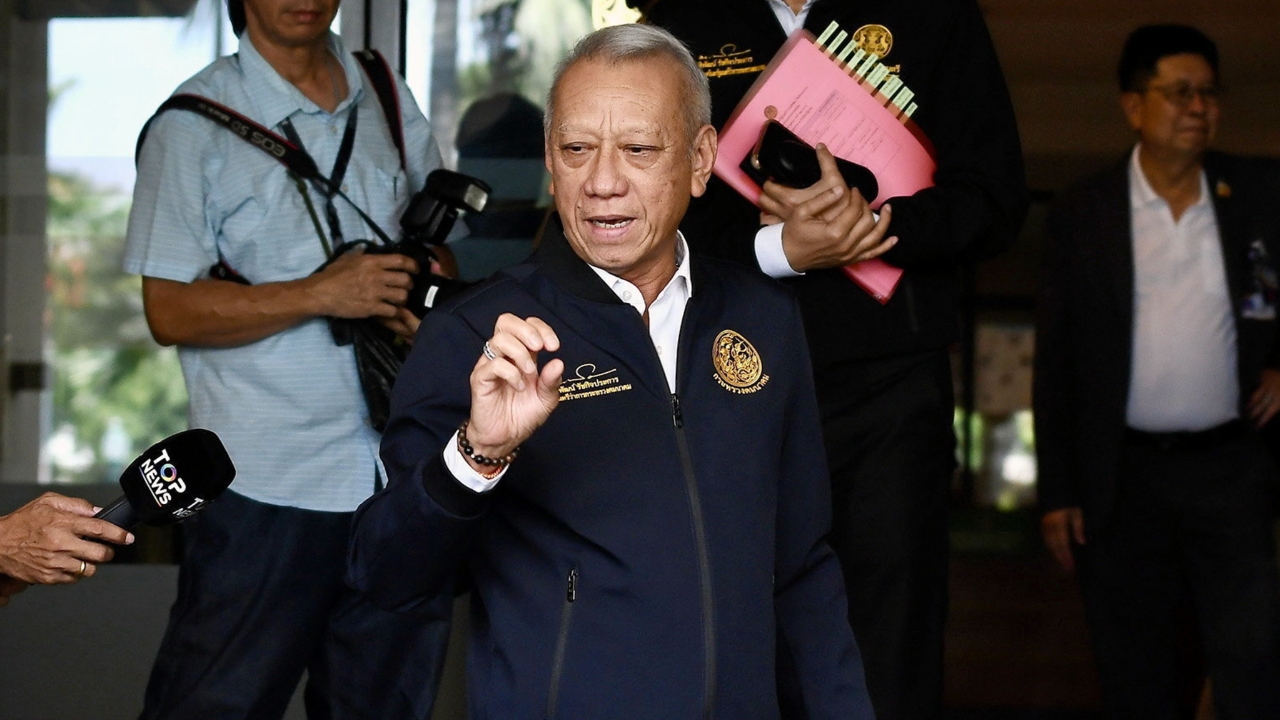
Phiphat suspects oil disappearance may involve illegal maritime shipments, asserting someone must be lying. Refineries produce at full capacity every day, yet storage yards have no oil to supply operators, resulting in insufficient fuel for the public. He also appeals to the public not to blame gas station attendants.
At 14:00 on 18 Mar 2026 GMT+7, Mr. Phiphat Ratchakitprakarn, Deputy Prime Minister and Minister of Transport, serving as Director of the Center for Management and Monitoring of Middle East Conflict Situations (Director of CMMC), commented on the ongoing shortage of fuel at service stations. The Ministry of Energy confirms there is a 101-day oil stock, and refineries operate at full production daily. However, the fact that storage yards have no oil to supply operators, resulting in insufficient fuel for the public, indicates someone must be lying. For example, one of his own service stations used to receive 15,000 liters daily, but now certain brands only supply 4,000–5,000 liters, causing a disappearance of up to 10,000 liters of oil.
Therefore, the only plausible hypothesis is that oil is being smuggled out by sea to other countries. He has already inquired with the Department of Energy Business whether they have ordered a halt to oil exports by sea. To clarify the matter, the Prime Minister has called a large meeting at the parliament, inviting all agencies related to the energy sector, including refineries, transport operators, and storage yards, to discuss openly, identify who is hoarding or causing the oil disappearance.
Regarding protests demanding the government end restrictions on oil quotas, Mr. Phiphat confirmed that the government has never imposed sales quotas; it is the oil traders or parent companies that limit delivery volumes. When asked if refineries might be hoarding oil for speculation, he firmly denied this, explaining that refineries working at full capacity have no tank space to store oil. Hoarding is also risky because if the war ends, oil prices could plummet $20–30 per day immediately.
"I believe no one can hoard oil unless they are not refining at full capacity as they claim. For example, if I say I can refine 300,000 barrels per day but still have tank space for crude oil, I might only refine 200,000 barrels but claim 300,000 to speculate. However, the information indicates refineries are operating at full capacity. When refining is at maximum every day, oil should be available without shortage even for a day. The disappearance therefore raises other suspicions, such as illegal maritime shipments instead."
Regarding allegations that old oil stocks are sold at higher prices, Mr. Phiphat explained that refinery crude oil purchasing mechanisms require orders at least three months in advance, unlike daily trading at service stations. Therefore, if the war ends and oil prices fall, refineries would also suffer losses. He urges society to consider this from the perspective of trade fairness and appeals to vehicle users that if they find fuel sold out at stations, please refrain from yelling or blaming gas station staff, as they have no knowledge or means to supply fuel. He then stated, "If anyone wants to blame, please blame me instead. I am ready to listen to all criticisms."
