

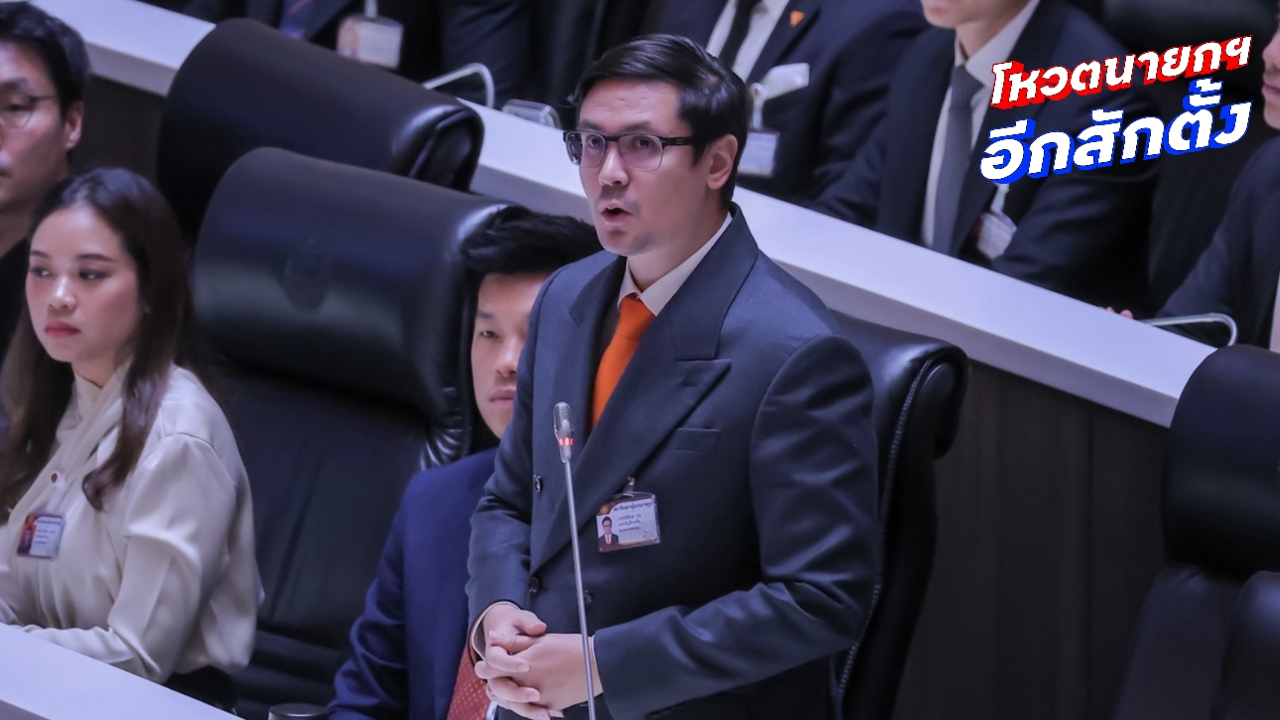
The parliament opened a session to vote for the prime minister, nominating "Anutin" and "Nattapong" to vie for the leadership seat. "Rome" debated sharply, accusing "Anutin" of having qualifications that violate the constitution and a clearly evident lack of integrity, criticizing his handling of the oil crisis, labeling him as a key figure in election fraud and collusion in Senate appointments.
On 19 March 2026 at 10:00 a.m., at the parliamentary building, during the 27th House of Representatives session, Mr. Sophon Sarum, Speaker of the House, chaired the meeting. The key agenda was to consider approving a person suitable to be appointed prime minister under Article 159 of the constitution. Before the agenda, Mr. Siroj Paetphan, Secretary-General of the House of Representatives,read the royal command appointing the Speaker and Deputy Speakers of the House of Representatives for the meeting's acknowledgment.Then, Mr. Chaiyachon Chidchob, party-list MP from Bhumjaithai Party, and Mr. Attawit Suwanpakdee, party-list MP from United Thai Nation Party, took the oath before starting their duties, with 499 MPs present and serving.
Later, Mr. Sophon explained the procedure for voting for the prime minister to the assembly: an open ballot by calling MPs by their ID numbers, with individual votes cast. Approval required more than half of all MPs' votes, or at least 250 votes.
The session then proceeded to the prime minister vote, with Mr. Chaiyachon Chidchob, Buriram MP from Bhumjaithai Party, nominating Mr. Anutin Charnvirakul, leader of Bhumjaithai Party, for prime minister, with valid endorsements. Meanwhile, Mr. Rangsiman Rome, party-list MP from the People's Party, nominated Mr. Nattapong Rueangpanyawut, party-list MP and leader of the People's Party, also with valid endorsements. Before voting, the assembly allowed both government and opposition sides 70 minutes each to debate the nominees.

Mr. Rangsiman debated that the oil price problem reflects a country managed with pervasive corruption. Everyone knows the illegal oil issue has long existed, rooted in multinational organizations in Thailand. This raises doubts about the integrity clearly evident in the nomination of the prime minister. Although he affirmed that there is sufficient oil, he questioned where the oil disappears to if not due to corrupt policies. This led Mr. Akkaradej Wongpitakroj, Ratchaburi MP from Bhumjaithai Party, to protest that the debate was off-topic and unrelated to the prime minister's qualifications, prompting Mr. Sophon to warn against turning the discussion into a no-confidence debate..
Mr. Rangsiman continued, stating that the 2026 election was one of the dirtiest in history, with Mr. Anutin as a key figure causing election dishonesty by using his power as prime minister and interior minister to transfer civil servants before the election. This is not standard Thai political practice and suggests election fraud, hoping Mr. Anutin would not do so. Regarding Senate collusion, Mr. Anutin was accused of this, which underminesthe Senate election process.This has caused public loss of faith and led Bhumjaithai MPs to protest periodically, prompting Mr. Sophon to repeatedly caution Mr. Rangsiman not to delve into details that could turn the debate into a no-confidence motion. Mr. Rangsiman then argued that these three examples reflect public sentiment and demonstrate that Mr. Anutin lacks the qualifications required by Article 160 of the constitution..Regarding integrity, it is clearly lacking.

Photo: Thanat Chayaphatrutthi