

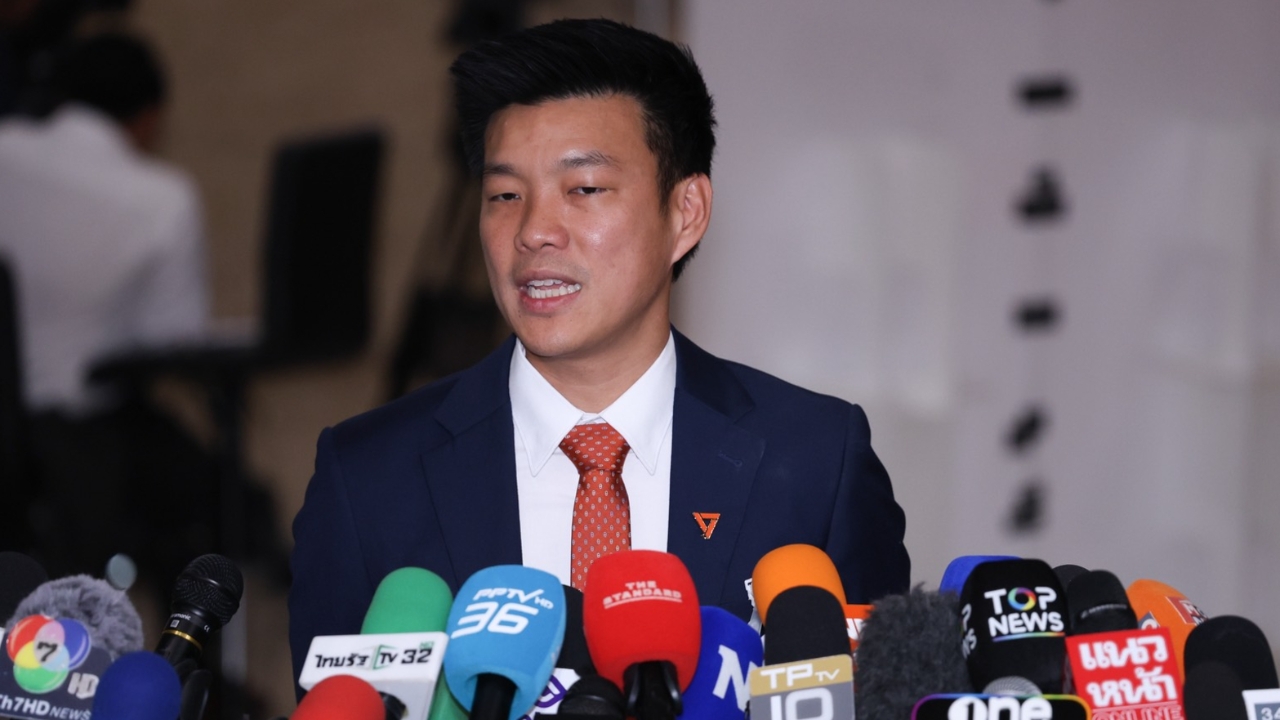
Natthapong expressed disappointment that the parliamentary speaker closed the session to avoid urgent motions to discuss the energy crisis. Meanwhile, Rome criticized the speaker for breaking promises, saying he spoke but did not act. At the same time, Weerayut called for attention to whether the Center for Energy Situation Administration can identify those responsible for the oil shortage.
On 19 Mar 2026 GMT+7, Natthapong Ruangpanyawut, a party-list MP and leader of the People's Party, held a press conference regarding the party's plan to submit an urgent motion to the House of Representatives today to propose solutions to the rising oil prices. Unfortunately, the speaker immediately closed the session right after voting for the prime minister, even though prior discussions had taken place and the speaker had promised otherwise. He viewed this as unacceptable.
Natthapong stated that besides the prime minister vote today, pressing problems affecting citizens, such as the oil issue, could have been addressed productively during parliamentary time. He saw no reason for the government to close the parliament to avoid scrutiny and questioned whether the government was trying to evade investigation, as the current energy crisis is partly linked to corruption.
Meanwhile, Weerayut Kanchuchat, a party-list MP and deputy leader of the People's Party, said he was surprised that the parliament was closed to avoid debate, even though many MPs from various parties were ready to discuss and present solutions to the energy crisis to the government. This action showed a lack of solidarity with the people. Many citizens, including farmers, agricultural workers, and fishermen, continue to suffer, making the first day of this parliamentary prime minister's term disappointing.
Weerayut added that following urgent orders from the Ministry of Interior yesterday to allow oil transport vehicles to operate in certain areas, he urged provincial governors to implement these orders to ensure oil distribution throughout the country. Today, attention should focus on whether the Center for Energy Situation Administration will investigate and summon oil operators—from refineries, jobbers, wholesalers, to gas station representatives—to find those responsible for the rapid depletion of fuel at pumps. Failure to hold anyone accountable would undermine public confidence amid global geopolitical turmoil and external pressures. Without internal cooperation to strengthen the system, public trust will falter, which is worrisome.
Weerayut noted that the energy crisis's impact is now affecting fishermen, as rising fuel prices reduce their ability to fish, which in turn affects the public. It is also harvest season for crops like sugarcane and rice, which require fuel for harvesting equipment. If assistance does not target these critical logistics points, it is concerning. Therefore, he urged the government to address the root logistical issues and make transparent information available on fuel reserves by location so citizens nationwide can be informed and avoid queuing unnecessarily for fuel.
Rangsiman Rome, a party-list MP from the People's Party, said he had previously asked the parliamentary speaker, Sophon Sarum, why the session was closed so abruptly. He viewed it as a broken promise and noted that the speaker mentioned the atmosphere was unfavorable today. Rome expressed doubt that since a prime minister has been chosen, MPs representing various provinces should endure a bit longer to raise energy issues, which would be very beneficial.