

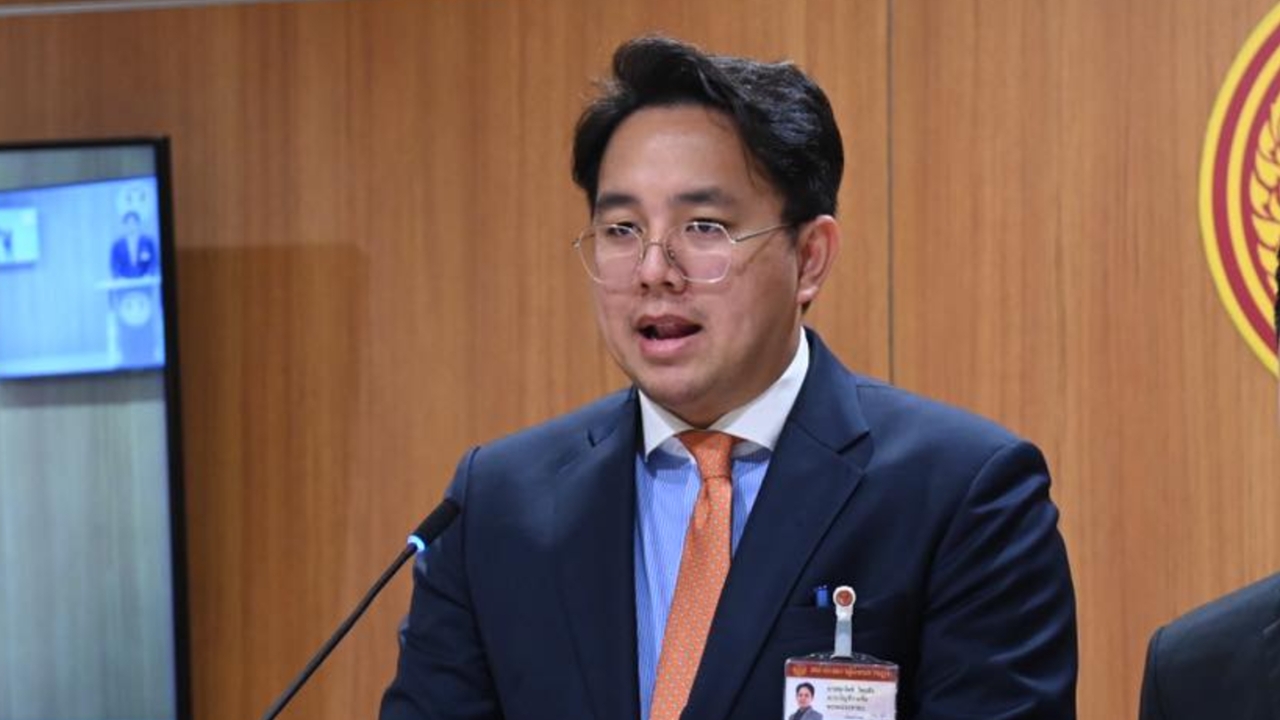
MP Suphachot from the People’s Party criticized the government for giving inconsistent statements and demanded full disclosure of oil system data. He sharply questioned whether the government is favoring energy investors to recover their investments through elections, while the entire nation suffers.
19 Mar 2026 GMT+7 Mr. Suphachot Chaisat, a party-list Member of Parliament for the People’s Party, commented on the government's contradictory statements on the issue of oil energy allocation. He said yesterday (18 March), Mr. Atthapol Rerkpiboon, Minister of Energy, confirmed that after random inspections of refineries and major oil storage facilities, no hoarding was found, even stating that the oil valves were operating normally. However, by the evening of the same day, Mr. Phiphat Ratchakitprakarn, Deputy Prime Minister and Minister of Transport, questioned where the oil had gone and sternly warned that he would summon all parties to inspect individually to find who was lying or hoarding.
Today, Mr. Anutin Charnvirakul, Prime Minister and Minister of Interior, gave an interview after abruptly leaving a meeting, saying “There is no masked group hoarding oil anywhere.” He then blamed the public for panic buying due to excessive concern. Afterwards, Mr. Phiphat, who has been responsible for this issue throughout, reported that no oil hoarding was found. After his stern stance yesterday about catching operators hiding oil, today he adopted a calmer tone, saying no oil was missing. This reflects a lack of unity and transparency in the government’s work and clearly indicates a complete failure in managing this crisis.
Mr. Suphachot added, what the government should have done since the first week of March, when the oil crisis began, was to disclose the entire oil system data from start to finish. Specifically,
1. How much oil the refineries have produced.
2. The volume of oil received and dispensed by storage facilities.
3. Where the middlemen, jobbers, and wholesalers have distributed it.
4. The amount of oil transported abroad, and whether it exceeds appropriate levels.
If these data are revealed, society will immediately see where oil is missing within the system and be able to clearly answer whether certain groups are hoarding or delaying sales to speculate on the crisis. The government already has the authority and tools to access this data, such as law enforcement mechanisms under the Fuel Shortage Crisis Act and licensing systems that require energy business operators to disclose information to the public.
“But the key question is why the government still avoids using the tools it has to create transparency for society. The refusal to disclose data when it is possible leads the public to question whom the government is protecting. Amid nationwide public hardship, the unavoidable question is whether the government is favoring energy investors or collaborating to extract benefits from the public’s cost of living to recover investments through elections.”