

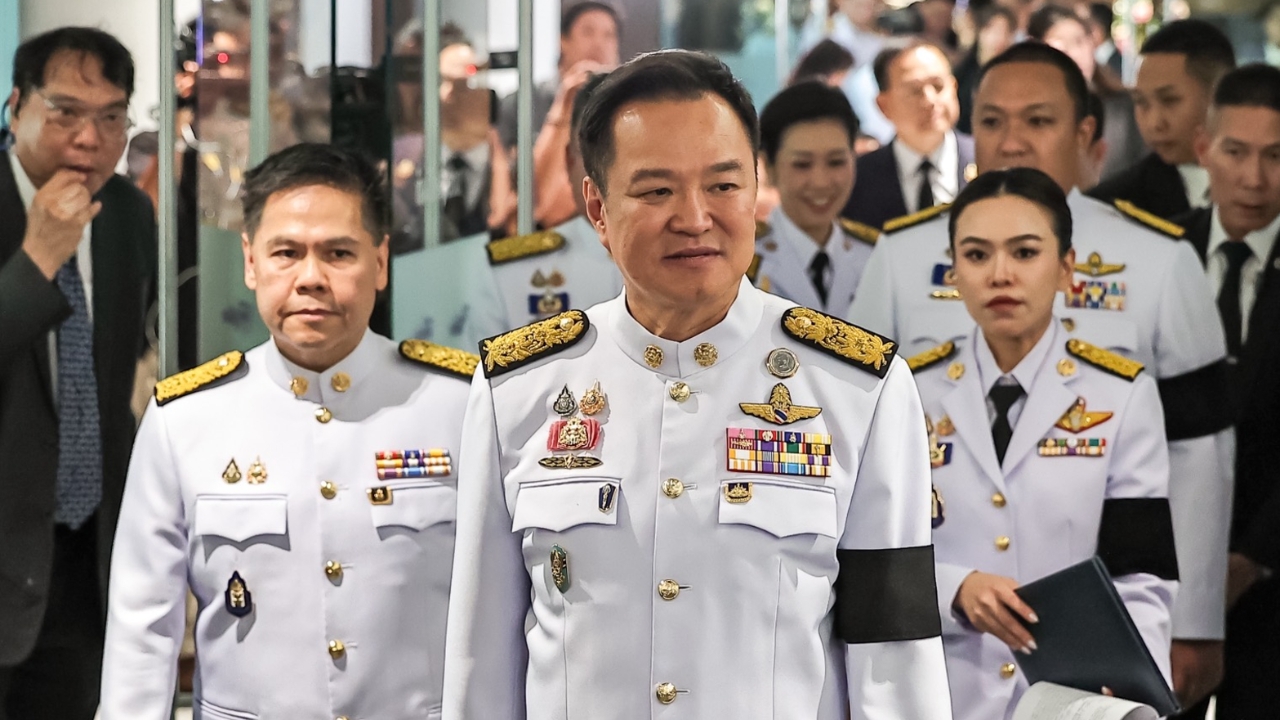
The Prime Minister has ordered that major oil traders under Section 7 and minor oil traders under Section 10 report their oil volumes and sales figures daily at 6:00 PM, alongside lifting restrictions to enable fuel trucks to deliver oil widely and sufficiently to the public.
On 20 March 2026, the Royal Gazette website published Prime Minister's Order No. 3/2026 concerning measures to resolve and prevent fuel shortages caused by the Middle East conflict, B.E. 2569 (2026). Signed by Prime Minister Anutin Charnvirakul on 20 March 2026, the order states:
The escalating conflict in the Middle East involving the United States, Israel, and Iran shows no sign of an immediate resolution, impacting production and export of fuel, natural gas, and related products from this key global production region. The significantly reduced supply has rapidly increased prices. Thailand, which primarily imports fuel, natural gas, and related products, is directly affected.
Furthermore, many fuel stations and depots have experienced fuel shortages recently, causing difficulties for the public's daily life and many businesses. This urgent and unavoidable situation requires immediate measures to address and prevent fuel shortages caused by this conflict.
Under the authority of Section 3 of the Fuel Shortage Prevention and Mitigation Act B.E. 2516 (1973), the Prime Minister issues the following order:
Section 1 This order shall take effect from the date of publication in the Royal Gazette (20 March 2026).
Section 2 requires oil traders under Section 7 of the Fuel Trade Act B.E. 2543 (2000) to comply with the following measures:
(1) Comply with Prime Minister's Order No. 2/2026 on measures to resolve and prevent fuel shortages, dated 6 March 2026.
/ (2) Post fuel prices at their establishments in a clearly visible manner and report any price changes to the Director-General of the Department of Energy Business each time prices are adjusted.
/ (3) Oil traders under Section 7 who operate refineries must report daily by 6:00 PM to the Director-General of the Department of Energy Business on production volumes, fuel stocks on hand, sales volumes, and customer lists with quantities sold to each customer.
(4) Oil traders under Section 7 who are not refineries must report daily by 6:00 PM to the Director-General on sales per customer and customer lists for those purchasing over 3,000 liters per transaction.
(5) Reports under (2), (3), and (4) shall follow the format prescribed by the Director-General of the Department of Energy Business and be submitted via email to datapmo@doebonline.doeb.go.th.
Section 3 Oil traders under Section 10 of the Fuel Trade Act B.E. 2543 shall also comply with Sections 2 (2), (3), (4), and (5).
Section 4 assigns Deputy Prime Minister Phiphat Ratchakitprakarn, Minister of Justice, Permanent Secretary of the Interior Ministry, National Police Chief, Director-General of the Department of Special Investigation, and Director-General of the Department of Energy Business to monitor and strictly enforce compliance with Sections 2 and 3 of this order.
For enforcement purposes, the Director-General of the Department of Energy Business shall provide information from Sections 2 and 3 to the officials mentioned above via email.
Section 5 designates Deputy Prime Minister Phiphat Ratchakitprakarn, Minister of Justice, Permanent Secretary of the Interior Ministry, National Police Chief, Director-General of the Department of Special Investigation, and Director-General of the Department of Energy Business as officials under the Fuel Shortage Prevention and Mitigation Act B.E. 2516, with authority to appoint officers to implement this order.
Meanwhile, the Royal Gazette also published Regulations for traffic officers nationwide exempting fuel trucks from traffic restrictions in Bangkok, its metropolitan area, and other provinces to support the Middle East situation. In summary, this ensures fuel delivery to stations nationwide is sufficient, comprehensive, and meets public demand, effective from the publication date (20 March) until 30 April 2026.
Additional reporting indicates that "Section 7 oil traders" are those trading 100,000 metric tons or more per year, approximately 120 million liters or more. They have a critical role to legally maintain fuel reserves for national energy security.
Examples of Section 7 major oil traders include PTT Public Company Limited, operator of PTT Station; Bangchak Corporation; PTG Energy, which operates PT stations; Shell Thailand Limited; Chevron (Thailand) Limited (Caltex); and SUSCO Public Company Limited.
/ "Section 10 oil traders" are medium to large fuel traders under the Fuel Trade Act B.E. 2543, trading between 30,000 and 100,000 metric tons annually (approximately 36 to 120 million liters), or with total storage tanks of 200,000 liters or more. They must register with the Department of Energy Business and include medium and small fuel stations, community pumps, or operators purchasing fuel from major traders for retail sales to the public.