

The government summarizes the situation in the Middle East, which remains violent. It continues coordination to assist three crew members of the Mayuree Naree vessel and explains that the oil situation is beginning to ease after efforts to distribute supplies widely, while simultaneously controlling product prices nationwide.
On 21 March 2026, the government reported developments in the Middle East situation, stating that violence continues. The main conflicting parties, including Hezbollah, persist in retaliatory attacks and have expanded assaults on energy infrastructure across several countries in the region, further impacting global economic stability and energy security.
Meanwhile, tensions remain high in the Strait of Hormuz, with military operations near the Iranian coast aiming to reopen shipping routes by the U.S. and Israel. Reports indicate plans to deploy additional marines to the Middle East. Recently, Iranian authorities confirmed that a spokesperson for the Islamic Revolutionary Guard Corps (IRGC) was killed in an Israeli airstrike.
Regarding Thailand, the Ministry of Foreign Affairs issued a statement on 20 March 2026 concerning the death of a Thai worker in Israel. It urged all parties to promptly return to negotiation and diplomacy, in accordance with international law and the United Nations Charter, emphasizing the importance of civilian safety and freedom of navigation through the Strait of Hormuz.
For assistance to Thai nationals in the area, the Ministry of Foreign Affairs, together with relevant agencies, continues close coordination. In the case of one Thai worker in Israel who died from shrapnel injuries, the Royal Thai Embassy in Tel Aviv is coordinating with the Israeli government to repatriate the body promptly and is monitoring related benefits and compensation.
Regarding the three Thai crew members on the vessel Mayuree Naree, Thai authorities have coordinated assistance with both Omani and Iranian governments, both of whom have expressed readiness to monitor and consider support options. Thai agencies continue ongoing coordination to ensure assistance is provided as safely as possible, despite security constraints in the area. The Ministry of Foreign Affairs urges Thai nationals in the Middle East to closely follow official updates and strictly adhere to safety recommendations.
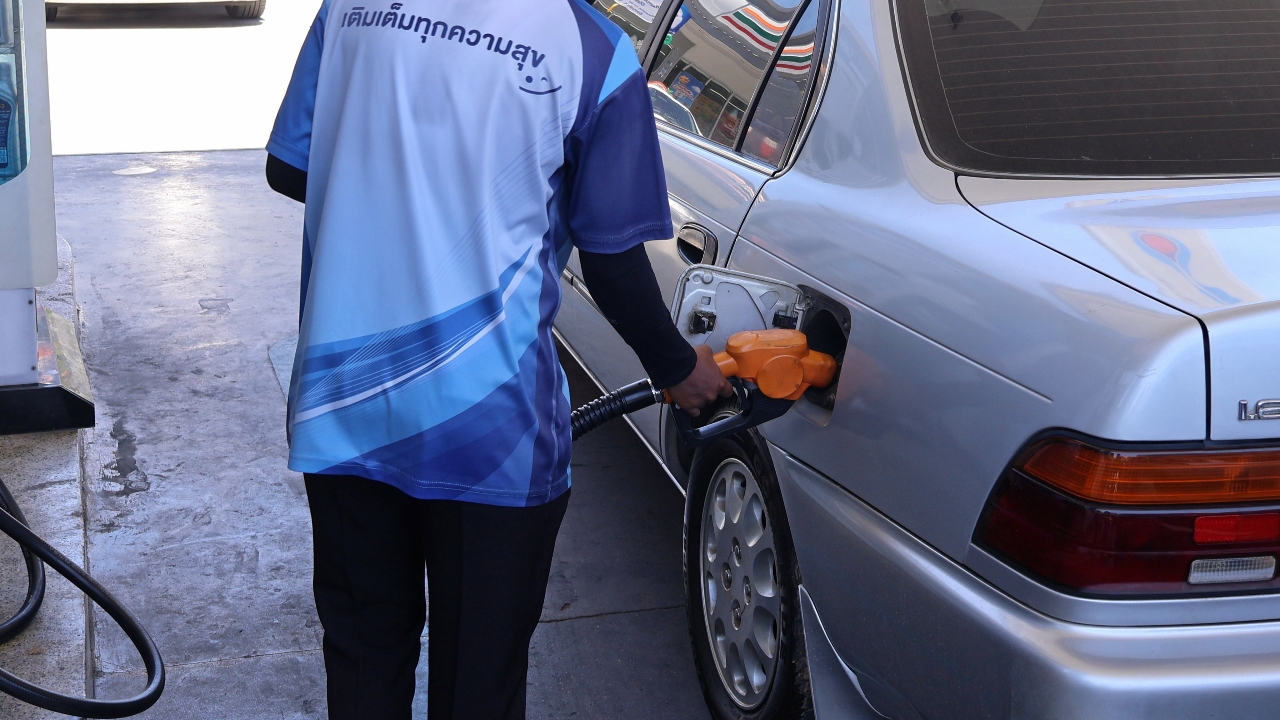
Domestically, the Department of Energy Business is closely monitoring the oil situation, receiving daily reports from provincial energy offices nationwide. Truck drivers transporting oil have been permitted to operate 24 hours throughout March to expedite widespread distribution to service stations. Coordination for continuous oil deliveries is ongoing to resolve shortages in some areas and quickly restore normal conditions.
Overall, the oil situation is improving, with daily fuel sales volumes for both diesel and gasoline decreasing to levels near normal before the heightened tensions, reflecting that previously increased demand is returning to balance.
Concurrently, the Ministry of Energy is drafting a ministerial announcement under Section 8 of the Fuel Trade Act B.E. 2543 (2000), to be submitted to the Minister of Energy per Cabinet resolution. The draft is adjusted to align with Prime Ministerial Order No. 3/2569, which requires fuel traders to disclose selling prices and remaining oil volumes at all refineries and storage facilities to enhance transparency in oil management throughout the system.
Additionally, temporary oil reserve relaxation measures are being prepared following the Prime Minister's directives from the 19 March 2026 meeting on energy issue solutions. These aim to increase oil volumes in the system to meet rising demand during this period. The Ministry of Energy continues systemic management efforts, including monitoring service stations nationwide, coordinating agencies to accelerate oil distribution, and supervising to prevent hoarding or unfair sales, to ensure sufficient public access to fuel.
The Ministry of Commerce is closely monitoring prices and product quantities. The Minister of Commerce has instructed all 76 provincial commerce offices to integrate efforts with provincial governors, energy officials, and provincial commodity and service price committees (GJor) to conduct continuous on-site inspections. These cover price regulation, prevention of sales refusal, and ensuring adequate product availability.
Between 5 and 20 March 2026, inspections covered 2,021 establishments, including 1,262 service stations, 433 chemical fertilizer shops, and 326 markets/retail and wholesale outlets. Ten violations were found for failure to display prices in eight provinces: Chumphon, Sa Kaeo, Sakon Nakhon, Ubon Ratchathani, Chiang Rai, Nakhon Si Thammarat, Chaiyaphum, and Nakhon Phanom. Authorities have prosecuted and fined offenders accordingly. Coordination with the Consumer Protection Police Division is ongoing to investigate complaints about overpriced fuel sales in Ang Thong province.
Regarding palm oil, the Ministry of Commerce monitors production volume, stock levels, and prices closely. Currently, crude palm oil stocks stand at approximately 350,000 tons, sufficient for domestic management. From April to July 2026, new production is expected to enter the market at no less than 400,000 tons monthly, ensuring supply balance. Bottled palm oil prices range from 42 to 50 baht per bottle, with no signs of price increases. The ministry monitors pricing structures from origin to retail closely to prevent commercial exploitation.
The Ministry of Commerce emphasizes strict oversight of product and service prices and requests cooperation from businesses not to raise prices without reasonable cause. It urges the public not to panic, as consumer goods remain sufficient. Unfair sales practices can be reported via hotline 1569 or provincial commerce offices nationwide for prompt legal action.