

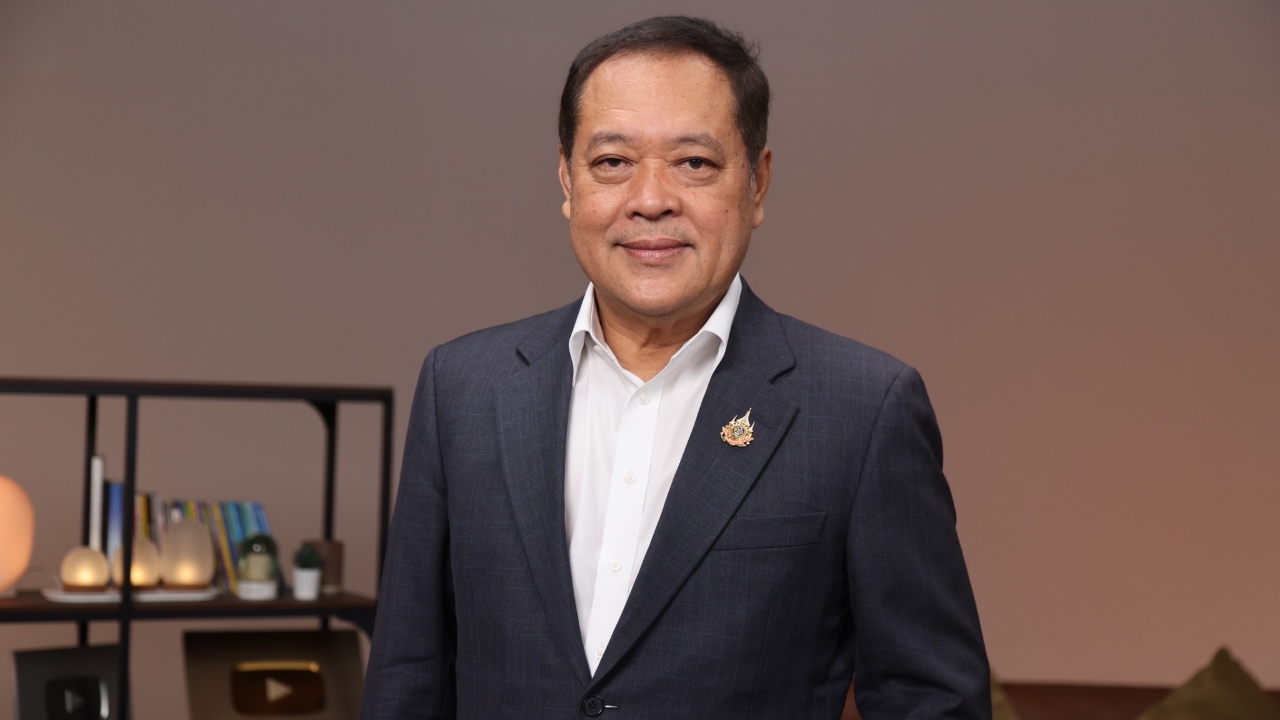
Tawee declares his determination to reclaim justice for the people, urging an end to favoritism toward business groups and a stop to idle concession practices, hoping to see electricity prices fall below 3 baht per unit.
On 22 March 2026, Police Colonel Tawee Sodsong, former Minister of Justice, leader of the Pracha Chat Party, and party-list MP, posted on Facebook calling on the government to stop protecting powerful investors and return energy control to the state. He stated that electricity bills reveal a distorted structure, with high prices forcing people to pay private concessionaires who act as “idle tigers” even though electricity is an essential public utility. The constitution mandates that the state owns at least 51% (Article 56), but currently, EGAT produces only 30% of electricity itself, while the remaining 70% is handed over to large private firms, effectively surrendering energy sovereignty to business interests.
Police Colonel Tawee added that Thailand has energy resources controlled by the state with low costs, but production shares are unfairly limited, especially valuable resources managed by EGAT, such as:
- Mae Moh lignite (EGAT): This is a source of pride for Thais and EGAT. We have our own lignite mine as fuel, 100% domestic, no need to import or worry about currency fluctuations or global conflicts. The cost is only 1.20 to 1.23 baht per unit!
- Hydropower (EGAT): Available across all regions, capable of generating electricity with no fuel cost, only operational expenses of about 1.06 to 1.37 baht per unit. This natural resource is fully developed with depreciation fully accounted for.
Meanwhile, purchasing power from private companies costs as high as 3.15 to 3.53 baht per unit. Moreover, people are forced to pay “capacity payments” to private firms even when plants are not operating. This excess profit is drained from the public’s pockets solely to enrich energy tycoons.
Showing potential further electricity price reductions
If the eight measures to alleviate high electricity costs proposed by the House Energy Commission (reported on 7 March 2025) are implemented, electricity prices could be reduced by at least 0.8588 baht per unit as follows:
1) Exempt household electricity bills from value-added tax (VAT) to immediately reduce the burden.
2) Stop raising the power purchase price (Adder) and FiT rates for private producers who have already passed their break-even point.
3) Use national resource revenues, including royalties and profit shares, to lower fuel costs for the public.
4) Require government agencies to be responsible for their own expenses; local administrations and the Department of Highways should budget for public lighting costs without passing the burden onto household electricity bills.
5) Adjust the portion of funds remitted to the state by reducing remittances from the three electricity authorities to 20%, using the difference to directly lower electricity prices.
6) Review long-term LNG contracts to increase long-term gas purchases to 85% of total imports, which is cheaper than spot market prices.
7) Lower corporate income tax thresholds by reducing the tax base used to calculate electricity authorities’ taxable income to 20%.
8) Establish LNG storage depots as duty-free zones to reduce tax burdens and natural gas management costs.
Demand to end idle concession practices
Police Colonel Tawee stated that to achieve electricity prices between 2.50 and no more than 3 baht, idle concession systems must be halted, specifically:
1. When private power plant contracts expire, they should not be renewed under terms that favor a few wealthy families. Once power purchase agreements (PPA) end, the state must immediately resume management.
2. Return authority to EGAT to produce at least 51% of electricity as mandated by the constitution. Electricity production should focus on public service rather than stock market profits. When the state produces over half of power, costs can be managed down immediately.
3. Fully utilize existing cheap quality resources by accelerating hydropower and lignite production at EGAT, which cost just over 1 baht per unit, to serve as the main price base and reduce the country's average electricity price.
He called on the government to prioritize the people's interests, follow constitutional guidelines, and keep electricity prices below 3 baht or even 2.50 baht per unit. Energy is a basic right for all Thais, not a gold mine for anyone. He vowed to continue fighting to restore justice for all Thai people.