

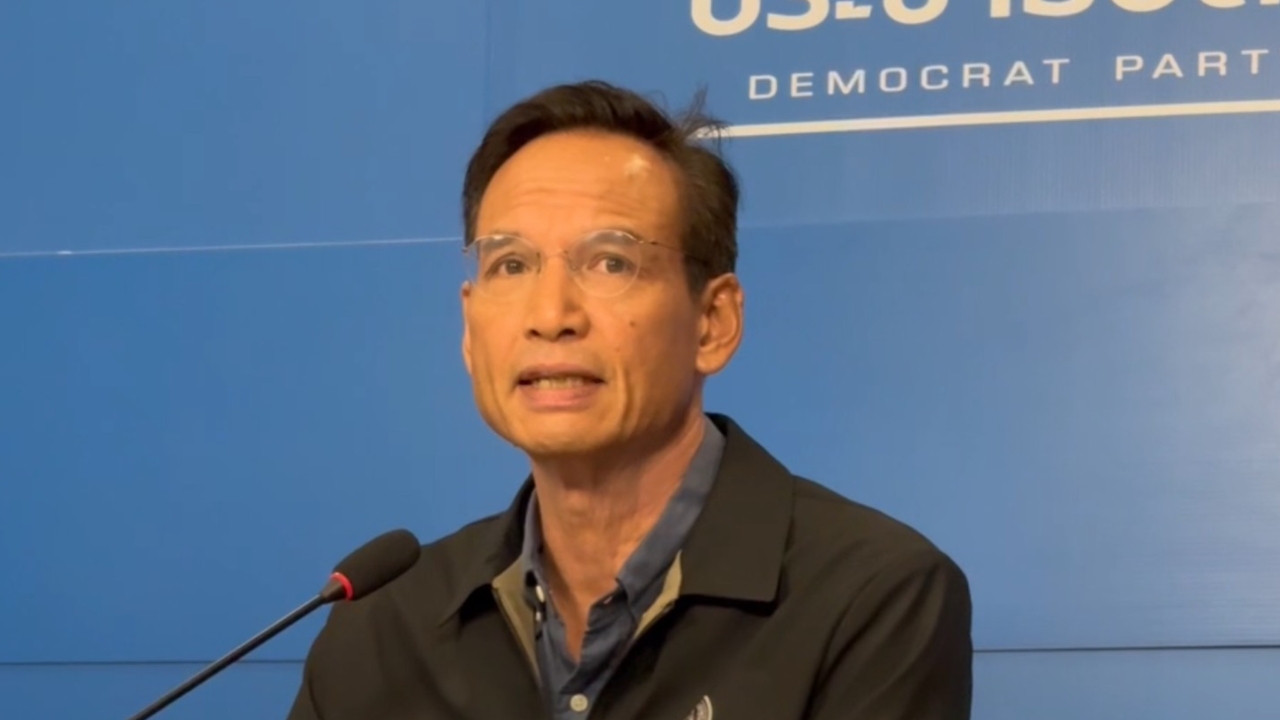
“Korn” is puzzled about where the oil has disappeared to, despite increases in refining and reductions in exports. He urges the government to promptly investigate, criticizing the lack of clear answers for society. He plans to submit an urgent motion to discuss the energy crisis in parliament on 25 March, criticizing the government for failure, lack of transparency, and unprofessionalism. He emphasized that the industrial sector is competing for oil at gas stations, taking advantage of the public.
At 11:30 a.m. on 23 Mar 2026 at the Democrat Party office, Mr. Korn Chatikavanij, party-list MP and deputy party leader, addressed the fuel shortage issue, particularly in rural areas. He said the shortage is a serious problem. After checking in various provinces, he found the oil supply insufficient, especially in the South, where the volume of oil supplied from depots to gas stations has been cut by 50% from normal levels, causing continued hardship for the public. Meanwhile, the government claims there is enough crude oil domestically, having ordered refineries to increase capacity to 104%. The government also says it has reduced oil exports from the usual 200,000 liters per day to about 50,000 liters daily. This raises the question: If there is enough crude oil and refining capacity has increased while exports have decreased, where has the missing oil gone? It cannot simply be explained by villagers hoarding.
“This is a simple question that still has no clear answer from the government. But the fact is that every gas station nationwide reports receiving less oil from the depot than normal and less than the usual demand of the public. I emphasize the word 'normal.' Therefore, we want the government to urgently investigate, which should not be difficult. Previously, there were checks tracking how much oil left one point and where it ended up, who received it. Why does the government now have no clear answers for society and the public on this matter?” Mr. Korn said.
Mr. Korn added that the oil problem affects the prices of goods and the cost of living because oil is a major production cost, including transportation costs. The Ministry of Commerce and Department of Internal Trade must prevent unnecessary price hikes, especially for essential goods, where profiteering might occur. If price increases are unavoidable due to higher costs, the government must have measures to promptly assist the public. Besides the oil shortage, there are also issues with chemical fertilizers, plastics, consumer goods, and palm oil. Recently, the Director-General of the Department of Internal Trade announced plans to control 6–7 items beyond those already declared. These include liquefied petroleum gas, fuel oil, chemical fertilizers, and medicines, some of which are now scarce. Why is there no clear policy? On 25 March, the party plans to submit an urgent motion to parliament to debate the energy crisis, its impact on the public, and price issues, aiming to use the parliamentary forum to address the public's greatest concerns. Although the energy crisis is global, the chaos happening solely in Thailand reflects management and policy problems, not actual shortages. This is the frustration felt by all citizens.
When asked if the halving of oil supplied to gas stations can be verified and why it happened, Mr. Korn said it is very easy to verify. Currently, gas station operators cannot explain to the public why oil is running out or insufficient. The government insists there is enough supply, but previously the public was limited to purchasing no more than 500 baht worth of fuel. People wonder where the oil is and have yet to see explanations from the Energy Business Department, major companies like PTT, or the government about where the oil is. When asked about the recent arrest of an oil depot in Ang Thong province by the Crime Suppression Division, despite government claims of sufficient oil contradicting gas stations reporting only half their normal supply, does this show government mismanagement or concealment? Mr. Korn said the government must provide clear information because it can track every drop of oil from crude through refining and distribution. So why is this still debated or is there concealment? The government has the power to find the truth and, if it communicates clearly, can reduce unnecessary conflict while the public suffers.
Ms. Karn Dee added that the key points are transparency of information, proper management, and accurate communication. These three will help the government clear doubts because currently the public lacks confidence in the government, causing panic.
Mr. Korn continued that currently Thailand has three oil price tiers: 1. Prices at gas stations subsidized by the Oil Fuel Fund; 2. Prices sold through jobbers (middlemen) without subsidies; and 3. Green oil prices sold to fisheries operators, exempt from tax but without subsidies. The government's policy intentionally creates these three price levels for different user groups. The government must manage so each group buys at their designated price. However, the government has allowed three prices but has been very lax in controlling cross-market purchases. This causes chaos because naturally, everyone buys from the cheapest market, which is gas stations subsidized by the Oil Fuel Fund. If normal conditions return, the public will bear the full cost. Therefore, the government should clearly separate the industrial market so it does not compete for subsidized gas station oil. This is about clarity, transparency, and professional management, all currently lacking.
When asked again whether there are hoarders (“Ai Mong”) in this matter, Mr. Korn said he does not know what “Ai Mong” means; if it means hoarders, then as the Prime Minister said, once caught they are no longer “Ai Mong,” but before being caught, they are. The government must have clear measures to supervise and control because the industrial sector buying oil at gas stations is unfair to the public who must compensate later. These are the facts. Beyond the oil shortage, there are also electricity issues, which the party will address next.