

“We Watch” opened a forum to reflect election issues, advising the Election Commission (EC) to rigorously and thoroughly select qualified polling station officials (PSOs). Associate Professor Parinya recommended increasing the role in preventing election fraud.
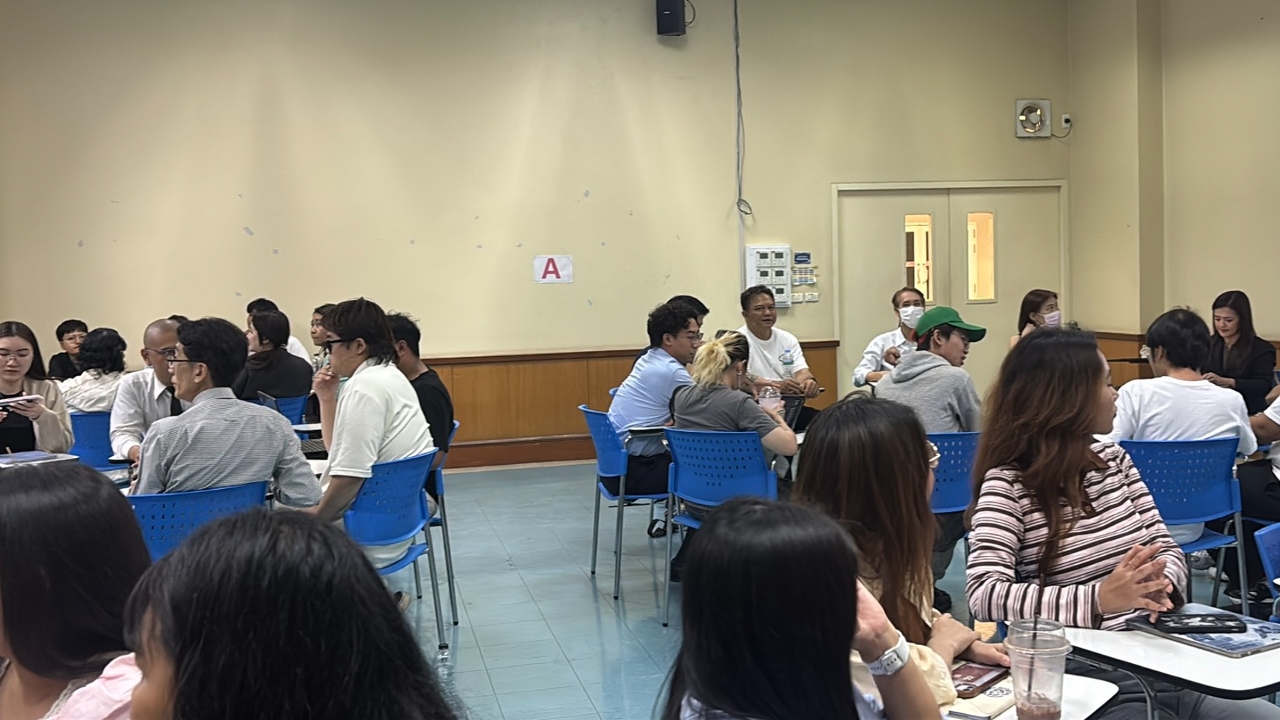
At 13:00 on 23 March 2026, at room 4011, Thammasat University (Rangsit), the We Watch Foundation organized a meeting to open space for citizens, volunteers, academics, local politicians, EC representatives, and local media to share real experiences from before, during, and after the election. The aim was to collect facts, problems, and proposals to make future elections more transparent and improved.
Associate Professor Parinya Dewanaritkul from Thammasat University’s Faculty of Law reflected on the overall problems in Thai elections, which are not limited to just "vote buying." This issue is continuously increasing, but also includes structural problems and a worsening political atmosphere, especially the use of laws to suppress citizens, such as prosecutions resembling charges under the Anti-Communist Act or Section 116, originally used during authoritarian regimes. This signals that this election may not be genuinely free and fair. There is also a trend of "silencing" and lawsuits against citizens through Strategic Lawsuits Against Public Participation (SLAPP), which may become a normalized standard in Thai elections.
Proposing 11 Recommendations
Meanwhile, We Watch drafted 11 recommendations to improve the effectiveness of future elections, consisting of:
1. Reform the structure, roles, and origins of the Election Commission (EC).
2. Revise election laws and referendum laws to facilitate voting rights.
3. Promote civic education and political participation.
4. Develop the electronic voting system carefully and with verifiability.
5. Implement election manuals to promote the voting rights of all Thai citizens.
6. Establish neutrality in election management operations.
7. Restore the role of the EC at the provincial level.
8. Reform the EC’s powers by reducing excessive authority.
9. Improve the selection and training processes for polling station officials (PSOs).
10. Reduce invalid ballots and improve advance and out-of-district voting procedures.
11. Increase transparency by installing CCTV cameras at polling stations.
Advising to Start with Simple Measures
Associate Professor Parinya stated that among We Watch’s 11 proposals, priorities should be set by considering both the "ease or difficulty of implementation" and "the actual outcomes expected." Urgent measures should focus on immediately addressable issues, such as enhancing roles in preventing fraud and raising transparency in the election process. Long-term measures like political structural reform and building democratic culture may yield significant results but require time and face strong resistance. Overall, all proposals aim to restore Thai elections to principles of "honesty, fairness, and transparency" and prevent state power from suppressing citizens from becoming normalized in the future.
Brainstorming to Reflect Election Problems
Following the opinion-gathering activity from citizens in various areas, many problems reflecting systemic limitations were found. These include personnel who receive rushed training and lack readiness, causing excessive workload on polling station officials (PSOs). Some polling booths use unsuitable materials, such as lacking sample ballots for valid and invalid votes in the booth, or using fabric for booth roofs that may compromise ballot secrecy. Additionally, appointing village health volunteers, who are close to local people, as PSOs raised questions about neutrality. Communication from the Election Commission remains insufficient, leading to some citizens lacking understanding of the election process. Community political structures, like selecting PSOs from local people, may also facilitate corruption. Meanwhile, citizens proposed solutions focusing on rigorous PSO selection and improved training quality, clear polling booth standards, promoting democratic learning from childhood, and stronger, more comprehensive communication from the EC. Proposals also included mobile voting to reach disabled voters and amendments to election and election management laws.
Finally, Mr. Pongsak Chan-on, director of We Watch, stated that what was discussed today reflects only what is visible, but the unseen issues are no less important—they are like an iceberg's mass beneath the surface.


