

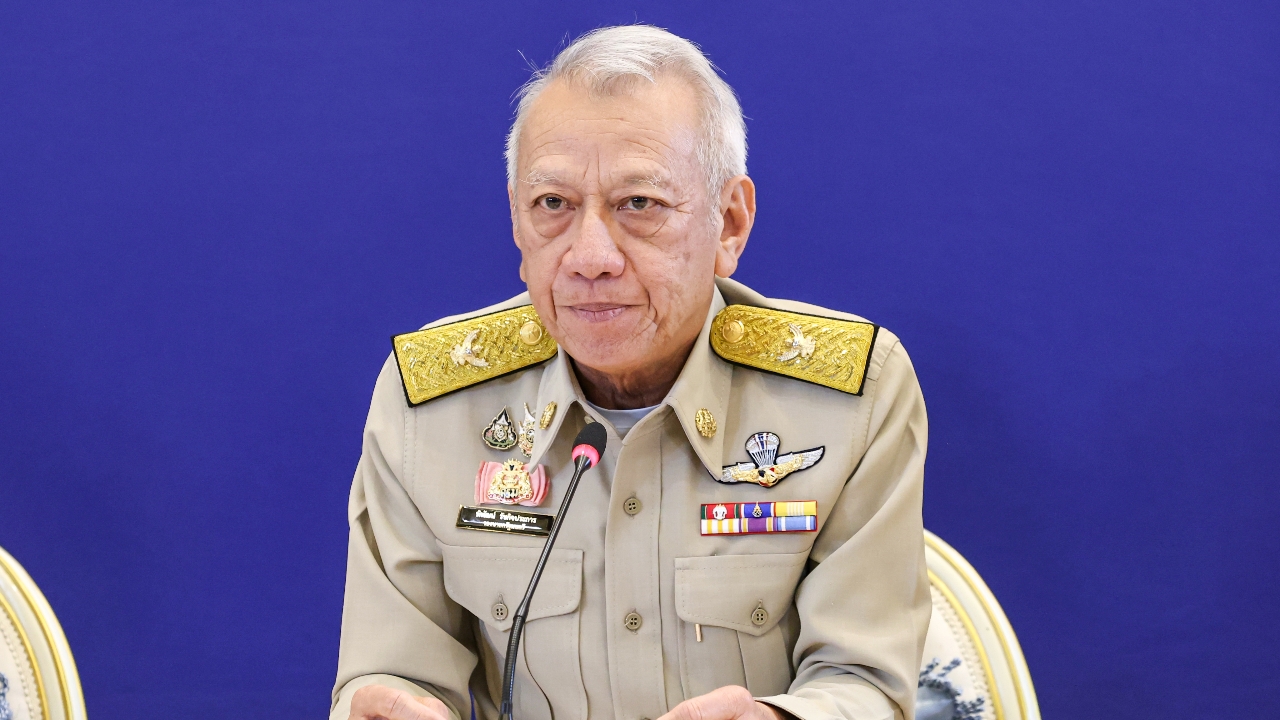
“Phiphat” declared that every service station must have fuel sales as usual this week after the Prime Minister ordered the release of reserve oil to support the public. NESDC and the Energy Ministry explained the diesel demand surge to 84 million liters, ordered resolution of stations claiming their quotas are exhausted—no need to wait until April—and launched a nationwide sweep to hunt for the “masked ones.”
On 23 March 2026, a reporter at the Government House reported that at 14:50, Deputy Prime Minister and Minister of Transport Phiphat Ratchakitprakarn, in his role as director of the Center for Management and Monitoring of the Middle East Conflict Situation (CMMC), held a briefing with Danucha Pichayanan, Secretary-General of the National Economic and Social Development Council (NESDC); Prasert Sinsukprasert, Permanent Secretary of the Ministry of Energy; and Sarawut Kaewtatip, Director-General of the Department of Energy Business. They explained and addressed the shortage of fuel at service stations impacting the public.
Phiphat revealed that the government is not ignoring the chaos caused by the public being unable to refuel. The meeting discussed oil traders under Section 7 and refineries, which have pumped fuel into nearly 10,000 stations nationwide. Daily usage has risen from 67 million liters to 82-84 million liters. Moreover, the Prime Minister urgently ordered the suspension of increasing oil reserves from 1% to 3%, maintaining it at 1% to release that reserve oil into the market to meet demand.
“Within this week, we expect to see no stations reporting a lack of fuel. Refineries are trying to operate at 100% capacity; some may exceed 100% to supply all fuel to Section 7 traders to ease the situation for users.”

Danucha Pichayanan, Secretary-General of NESDC, explained proactive measures: the Ministry of Justice, the Department of Special Investigation (DSI), and the Department of Energy Business inspected eight major oil depots. No irregularities were found; input and output volumes matched. They ordered price postings at depot gates to prevent prices higher than at stations. The current shortage at stations stems from logistical limits, including pipeline scheduling mixing fuel types and truck deliveries unable to keep up with unusually high demand. Some stations usually selling 15,000 liters daily now find fuel bought out by noon. The Department of Provincial Administration’s sweep of 9,387 stations nationwide found about 8,000 facing delivery delays, awaiting tanker trucks.
“The crude oil volume is sufficient for refining domestic use, with over 3.4 billion liters imported in the first 20 days of March. However, average demand rose from 65-66 million liters to 84 million liters per day, with some days’ diesel demand exceeding 100 million liters—almost double the average. The country’s maximum diesel refining capacity is about 77 million liters per day, even as refineries push output to 110%.”
Regarding many stations telling customers their quota is exhausted and they must wait until 1 April for new supplies, Danucha said some stations did reach full quota amid sales surges. But after the government announced last week’s easing of reserve requirements, major traders such as Bangchak could immediately draw from reserve stocks to supply those stations without waiting until April.
Prasert Sinsukprasert, Permanent Secretary of the Energy Ministry, added that congestion at stations is partly due to industrial and transport customers shifting to station refueling instead of wholesale traders (jobbers), as jobbers lack sufficient fuel and have higher costs than stations. The government responded by creating a new system for transparency: Section 7 traders and jobbers must report daily how much fuel they receive, produce, and sell to the Department of Energy Business. Stations found withholding fuel despite delivery will be penalized.
Sarawut Kaewtatip, Director-General of the Department of Energy Business, said current diesel production capacity has increased from 76 million to 80 million liters per day, while demand is 84 million liters. Thus, reserves must be drawn upon. He warned traders to comply strictly with the law. Following the Prime Minister’s order, Section 7 and 10 traders must submit daily data to the department by 18:00. Non-compliance will result in legal action.
Asked how, with diesel production capacity at 80 million liters but demand at 84 million liters, confidence can be had that fuel will be available at all stations this week, Sarawut explained that although production is 80 million liters daily, demand peaks at 84 million liters. This gap is bridged by drawing on working stock—private sector operational reserves—and the government’s relaxation of reserve storage regulations allows traders to quickly distribute this fuel to fill the shortfall.
When asked if the 100-day reserve is sufficient given current diesel demand of 84 million liters per day, the Permanent Secretary of the Energy Ministry said the situation depends on whether the surge is due to panic buying. If demand stabilizes and the introduction of B7 and B20 fuel blends reduces basic diesel use, then the country’s reserve ratio will remain around 90-100 days as before.
Regarding the hunt for “masked ones” exploiting the situation to hoard fuel, Phiphat said a special task force combining the Ministry of Interior, police, DSI, and other agencies is conducting nationwide sweeps of stations and depots. So far, no such hoarders have been found beyond cases arrested in Ang Thong province and attempts to smuggle 20,000 liters of fuel to neighboring countries.
Prasert added that daily mandatory stock reporting is a key tool to identify offenders. Comparing data will immediately reveal if fuel disappears from the system at any point, pointing to hoarding. The public is encouraged to report any suspicious activities for prompt investigation.
