

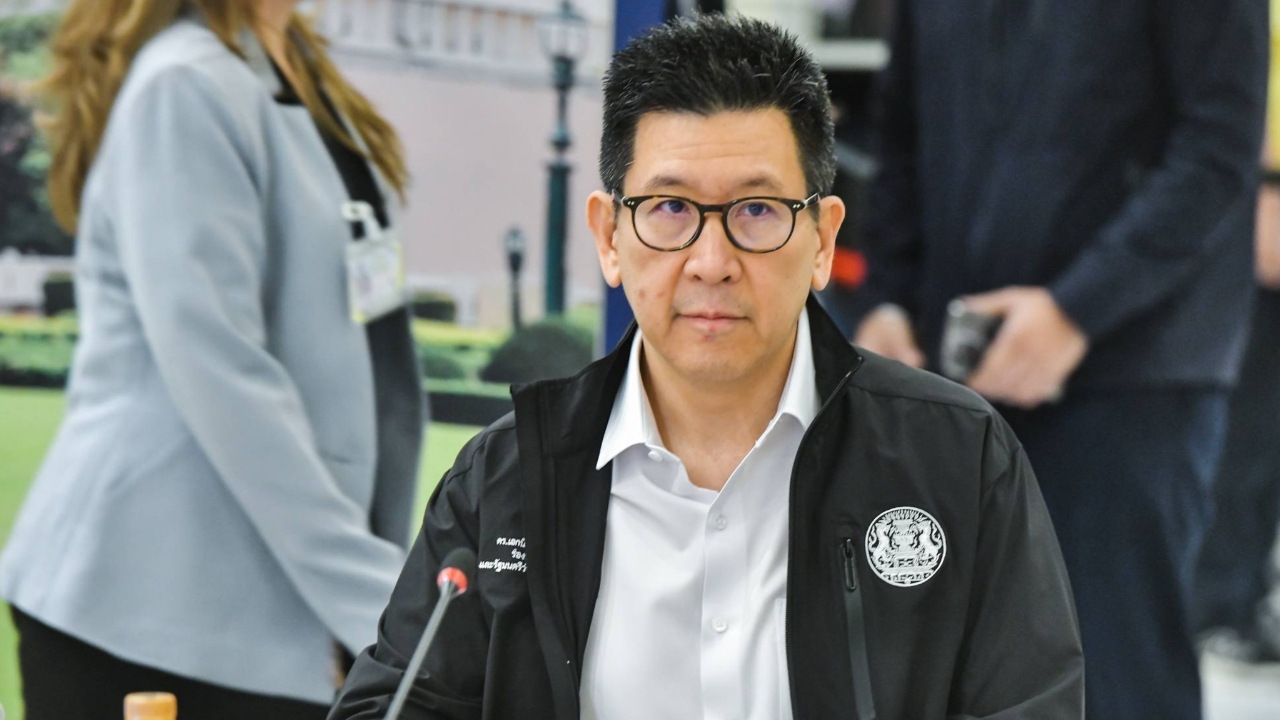
Ekniti pointed out that fuel shortages at gas stations are caused by demand surpassing production capacity. He ordered a reduction in oil reserve ratios and reassured the public that crude oil supplies are sufficient. He acknowledged that defying market mechanisms by fixing prices is ineffective and urged everyone to adjust to global market volatility.
24 March 2026 GMT+7 Mr. Ekniti Nitithanprapas, Deputy Prime Minister and Minister of Finance, commented on the energy crisis saying that the war in the Middle East has caused a severe and unpredictable oil crisis. The situation is prolonged and more intense than expected, involving overlapping crises in oil, natural gas, and other raw materials, affecting the entire world.
Regarding the initial crisis response and price control, the government tried to protect the public by using the Oil Fuel Fund to cap diesel prices at no more than 30 baht per liter for 15 days to lessen the impact on living costs. However, assessments indicated the crisis would be longer and larger than anticipated. Price caps caused hoarding as people rushed to fill tanks before price increases. Diesel demand rose from 67 to 80–100 million liters per day, exceeding the maximum refining capacity of 76 million liters daily, while transportation and delivery systems could not keep up.
Mr. Ekniti continued that the government must manage the problem closely by monitoring daily production data from companies to ensure no data distortion. He urged the public to trust that crude oil supplies are sufficient, not just rely on received information. The Prime Minister has established a special task force to combat hoarding and exploitation, which explained that shortages and fuel competition stem from several factors. They are
1. Public hoarding behavior when anticipating price increases,
2. Transportation channel issues—trucks, trains, ships, and pipelines have restricted operation hours, unable to accelerate fuel delivery to meet sudden demand spikes,
3. Smaller branded gas stations (Jobbers) not receiving fuel, causing consumers to flock to major stations,
4. Fishing boats using green diesel or illicit fuel from Malaysia, but with foreign fuel prices now higher than subsidized Thai fuel, all groups compete to fill at regular gas stations.
To address fuel shortages, the government has ordered the following:
1. Reduce legally required oil reserve ratios back to 1% from previously increased levels to release stored fuel to gas stations immediately for public use,
2. Cancel requirements that led traders to hoard fuel reserves,
3. Unlock regulations allowing fuel transport trucks to operate around the clock,
4. Regulate fishing boats to receive fuel directly from traders to resolve competition at gas stations.
"Today we must accept that this is a severe global energy crisis. Defying market mechanisms by fixing prices does not work. We must be honest with the public. Everyone must adapt to global market fluctuations because price caps cause fuel shortages and smuggling of Thai fuel abroad. Therefore, management must follow market mechanisms, adjusting gradually and focusing on helping vulnerable groups, the transport sector, industry, and agriculture, with Commerce Minister Supachai Suthammanas overseeing product pricing," he said.
Mr. Ekniti further stated that the government has prepared mitigation measures focusing on short-term normalization of the fuel distribution system, such as reducing mandated oil reserves to ensure sufficient supply to smaller gas stations. Diesel prices will be allowed to float at levels aligned with global and regional markets, like Malaysia, while using the Oil Fund and considering excise tax reductions to lessen impacts and cracking down on price gouging.
In the long term, plans include promoting alternative energy sources such as biodiesel, ethanol, palm oil fuel, energy conservation, and liquefied natural gas (LNG) for power generation. These are seen as opportunities to accelerate clean energy development. Additionally, the “Green Economy Plus” project uses solar power generation—solar farms, floating solar, and supporting rooftop solar installations—with tax incentives and feed-in tariffs to reduce national energy costs and enhance competitiveness.