

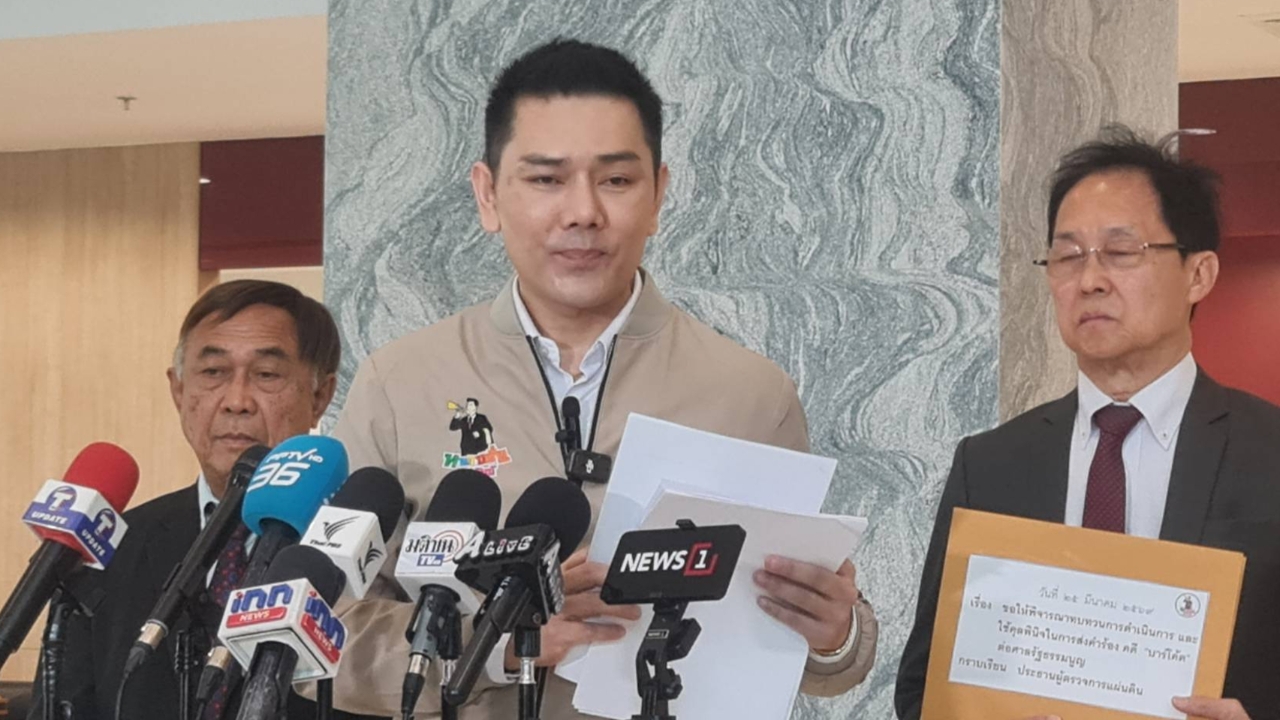
Phattharaphong filed a petition with the Ombudsman to refer to the Constitutional Court for a ruling on the conduct of Anutin and the Cabinet, alleging dereliction of duty in resolving the fuel shortage and favoritism toward business interests. He also requested to submit his name as a witness in the barcode and QR code election ballot case.
On 25 Mar 2026 at 10:30 a.m., at the Ombudsman’s office, Mr. Phattharaphong Suphakorn, also known as Lawyer Aun from Buriram, submitted a petition requesting the Ombudsman to investigate whether Prime Minister Anutin Charnvirakul and the Cabinet have been negligent or corrupt in their management of the fuel supply crisis. He also asked the Ombudsman to refer the case to the Constitutional Court to determine if their behavior constituted dereliction of duty or corruption favoring business interests. This comes amid a fuel crisis where Thai citizens face long queues and some even sleep overnight just to buy 500 baht worth of fuel to sustain their livelihoods. However, Customs Department data show Thailand is not actually short of fuel, still importing about 100 million liters daily.
Phattharaphong added that another painful fact for Thais is that fuel trucks traveling from Chonburi through Rayong and other provinces to Mukdahan—about 100 trucks daily each carrying no less than 50,000 liters—pass by gas stations along the way that display signs saying no fuel is available. Today, people queue up and quarrel over fuel, yet exports continue. This raises the question: if the situation persists causing severe hardship to Thai people, he cannot accept it. He therefore confronts the government publicly and submits a letter to the Ombudsman to investigate where Thailand’s fuel is disappearing to. When the fuel price increased by 2 baht, fuel suddenly appeared—whether it emerged from hiding places or holes is unknown. Even with the 2 baht increase, fuel availability remains insufficient. So if prices rise 4, 5, or 6 baht, will refueling then be plentiful?
“Today’s situation is that people say there is no fuel, which is tough but somewhat bearable since it can still be found with difficulty. What is lacking is money to buy fuel. That is why I am submitting this petition, hoping the Ombudsman will treat this matter as seriously as the QR code and barcode election case,” Phattharaphong said.
When asked if he attached evidence regarding the fuel problem to the petition to the Ombudsman, Phattharaphong said the evidence is straightforward, such as the Customs Department’s announcement of importing 100 million liters daily. What he sees, the Ombudsman also sees, and the Ombudsman has far greater authority—hundreds or thousands of times more—to summon and review documents. The question is whether the Ombudsman will be sincere in pursuing this matter.
Additionally, Phattharaphong submitted a petition asking the Ombudsman to forward to the Constitutional Court a request for him to be a witness in the case where the Election Commission printed barcodes and QR codes on ballots, which he argues violates voting rights and freedoms. These codes could allow tracing back to individual voters’ choices, undermining secret ballots and contravening the Constitution’s intent. He also requested the court to issue an emergency temporary injunction for Parliament to suspend election activities until the case is resolved, as he is the petitioner in the 2026 barcode and QR code ballot case.