

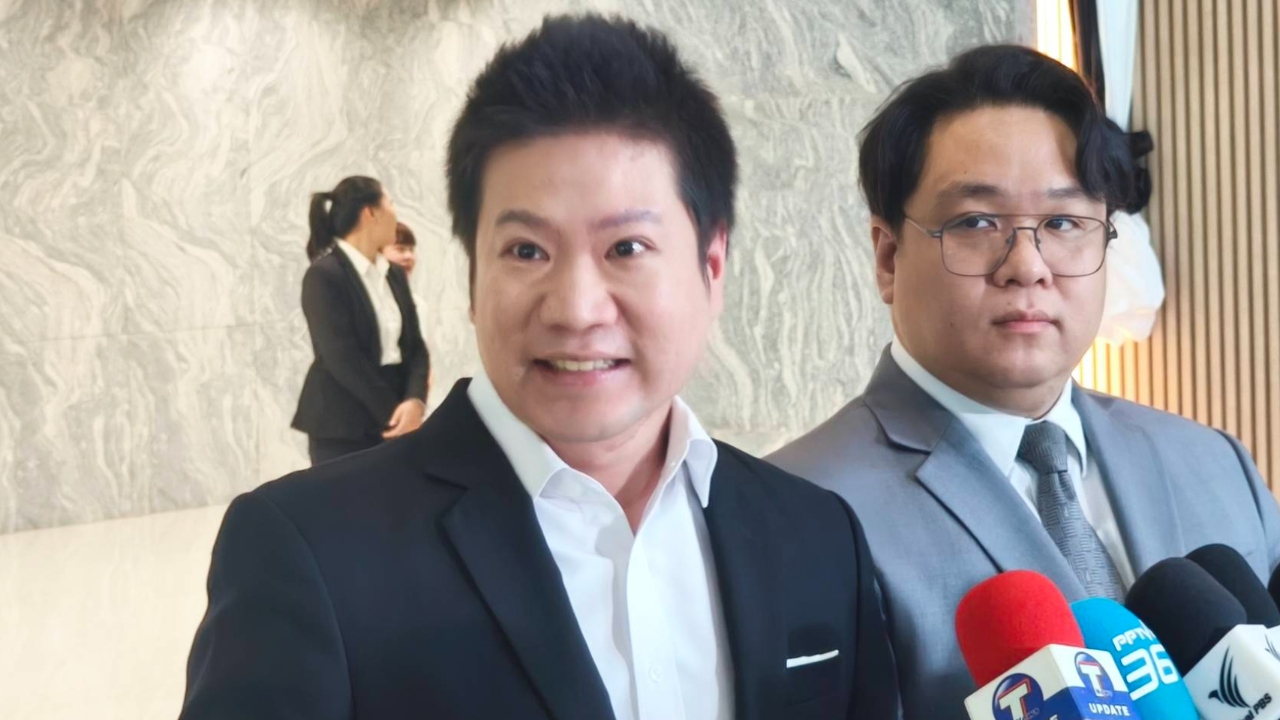
“Dr. Ruerbin–Thanarat” submitted additional evidence to the Ombudsman concerning QR and barcodes linked to voters, affirming it is certain who voted for whom. They acknowledged that if the stub attached to the ballot is not photographed, the linkage cannot be made. They urged the Constitutional Court to call them as witnesses to clarify the truth.
On 25 Mar 2026 at 11:00 a.m. at the Ombudsman's office, Mr. Thamthee Sukchochirat, also known as Dr. Ruerbin, director of DeeVote at Sripatum University, together with Mr. Thanarat Kuawatthanaphan, a technology expert, submitted evidence to the Ombudsman to support a petition related to the 2026 election case. The Ombudsman had sent opinions to the Constitutional Court under Article 213 of the Constitution regarding the use of barcodes and QR codes on ballots. It is believed that these codes can identify and verify the identity of voters and their voting results, violating the secrecy of the ballot and conflicting with the Constitution.
Mr. Thamthee stated that the evidence they submitted today to the Ombudsman includes technical proof about QR codes and barcodes on ballots, as well as cooperation from media and independent photographers who provided photos and videos. Combining these two sets of information, as demonstrated in their mock noodle election at Parliament, allows identification of which voters marked which choices. However, they have not yet combined these data sets and request that if the Constitutional Court wishes to know, they invite the court to call them as witnesses to demonstrate who voted for whom, showing that the election was not secret, based on photos taken since 8 Feb and 22 Feb. Additionally, they submitted expert opinions stating that QR and barcodes are not anti-counterfeiting tools but technologies enabling traceability, depending on what information is traced. They question the Election Commission’s motivation for using traceable technology while claiming it is only to prevent fraud.

Mr. Thanarat said that so far, they have observed two lines of defense from the Election Commission on this issue: first, in a press conference, the Election Commission admitted that barcodes can be linked to stubs, claiming legal mechanisms exist to punish those who disclose secrets. His report emphasizes that once secrecy is breached, it cannot be restored; legal protections are ineffective. Second, Election Commission Regulation 129 authorizes them to mark ballots, but the last paragraph states this is solely to prevent counterfeiting. They have gathered evidence showing that the claim of marking to prevent fraud is weak, as there is no proof that barcodes are actually used for anti-counterfeiting in practice.
Regarding suspicions that those attempting to photograph and extract this data might be committing an offense, Mr. Thamthee said this is a misunderstanding. They did not hack or extract any encrypted data. The information on the barcode is unencrypted and can be viewed by scanning with a regular mobile phone, revealing the stub number. No hacking skills are involved; anyone with a camera can take pictures while voters cast ballots and during counting. This simple linkage already reveals who voted for whom.
When asked if their group’s actions are politically motivated, Mr. Thamthee affirmed there is no political agenda behind it. No one involved is running for election or has a personal stake. He admitted he did not vote for the 'no vote' option but for a particular party. However, this does not affect their neutrality. Their group is open to dialogue and seeks to ensure transparency and benefit the public without bias.
Asked whether it is possible to trace voters without photographing ballots with attached stubs, Mr. Thanarat replied no. Mr. Thamthee added that on counting day, many media photographers took pictures, which is already risky. All photos capturing QR and barcodes, when combined, can identify voters, though the exact number is hard to estimate. Based on the court’s reasoning, even knowing a few voters or glimpsing the voting booth is already a violation. He confidently stated that this election is traceable more than previous ones.
Asked about the 22 Feb re-voting day when stubs and voter names were photographed, whether this violates freedom and rights, Mr. Thamthee said that while the names were not visible in the ballot photos, the QR and barcodes were visible and can reveal the voting order. For example, if 300 voters entered the booth and the 10th barcode is matched, one can find out who voted for whom. Facial images can also be cross-referenced to identify individuals. He confirmed their verification process can demonstrate to the court that ballots can be linked to voters.
Mr. Phattharapong Supakson, also known as lawyer Aun Buriram, said that the group led by Mr. Somchai Srisutthiyakorn and Mr. Thamthee has concretely proven how the election is not secret. The Election Commission’s defense has five points, primarily admitting that QR codes can be traced back to the stub. Meanwhile, the Election Commission argues that constitutional and legal provisions prohibit identification and that there are regulations clearly separating ballot stubs from ballots. Second, they cite the Constitutional Court ruling no. 6/2018 regarding voting rights for visually impaired and elderly voters assisted by helpers, stating secrecy is maintained as long as no disclosure occurs. This case, however, differs from the current one.
