

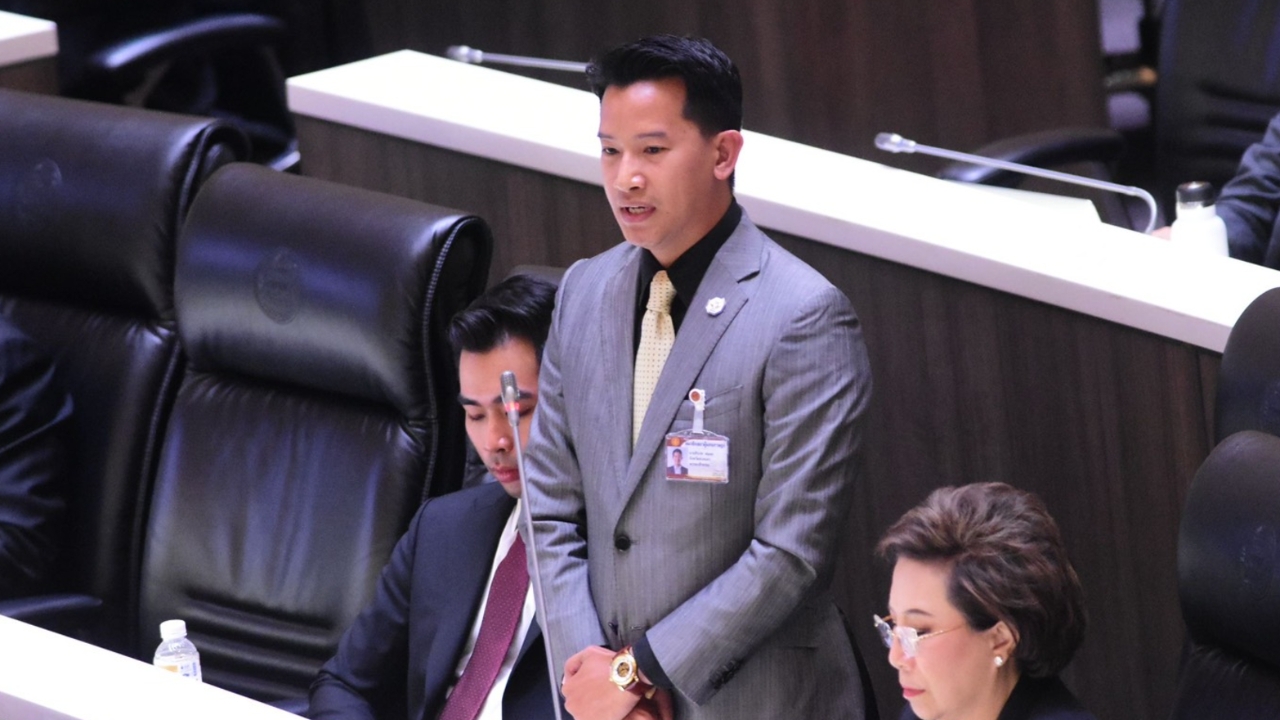
Siraphop, MP of the Kla Party, criticized the government for losing credibility and urged it to stop image-building communication. He said the oil crisis is repeating the COVID-19 scenario. What the people need is not comforting words but the truth and a clear, serious plan to solve the problem.
On 25 March 2026, during a House of Representatives session considering an urgent motion on the energy crisis and its impact on the people, submitted by a coalition of six political parties, at one point, Mr. Siraphop Somphol, MP for Sakon Nakhon from the Kla Party, joined the debate, stating that the government is communicating in a way that contradicts reality, leaving the people to face a severe oil crisis without clear measures. Although Thailand cannot control the Middle East situation, it cannot avoid the impact because the country relies on oil imports from the Middle East for 52%. This crisis has affected people's lives for nearly a month, especially in Sakon Nakhon province, where people have had to queue for fuel over several kilometers, a situation never seen before.
"The image of people lining up for kilometers to refuel happens daily, yet the government insists there is enough oil. The government's definition of 'enough' means limiting purchases to 500 baht per vehicle. Is this the truth the government tells the people? Today, citizens no longer trust the government's explanations due to past experiences, such as during the COVID-19 crisis when the government assured there were enough face masks, but eventually, shortages and price spikes occurred,"
Siraphop continued, addressing the difficulties faced by farmers, especially rice farmers, who must buy fuel from small village pumps where prices are higher than usual, sometimes several baht per liter more than city pumps, in some areas nearly 10 baht higher. Yet people have no choice but to buy. He called on the government, led by the Prime Minister, to urgently establish clear short-, medium-, and long-term measures and to communicate the truth to the public to prepare for the ongoing crisis. He emphasized that the public is ready to accept the truth if the government speaks honestly.
"What the people want is not consolation but truth and a clear plan to solve the problem. Today, the government must stop image-building communication and start seriously addressing the issue before the crisis escalates beyond control."