

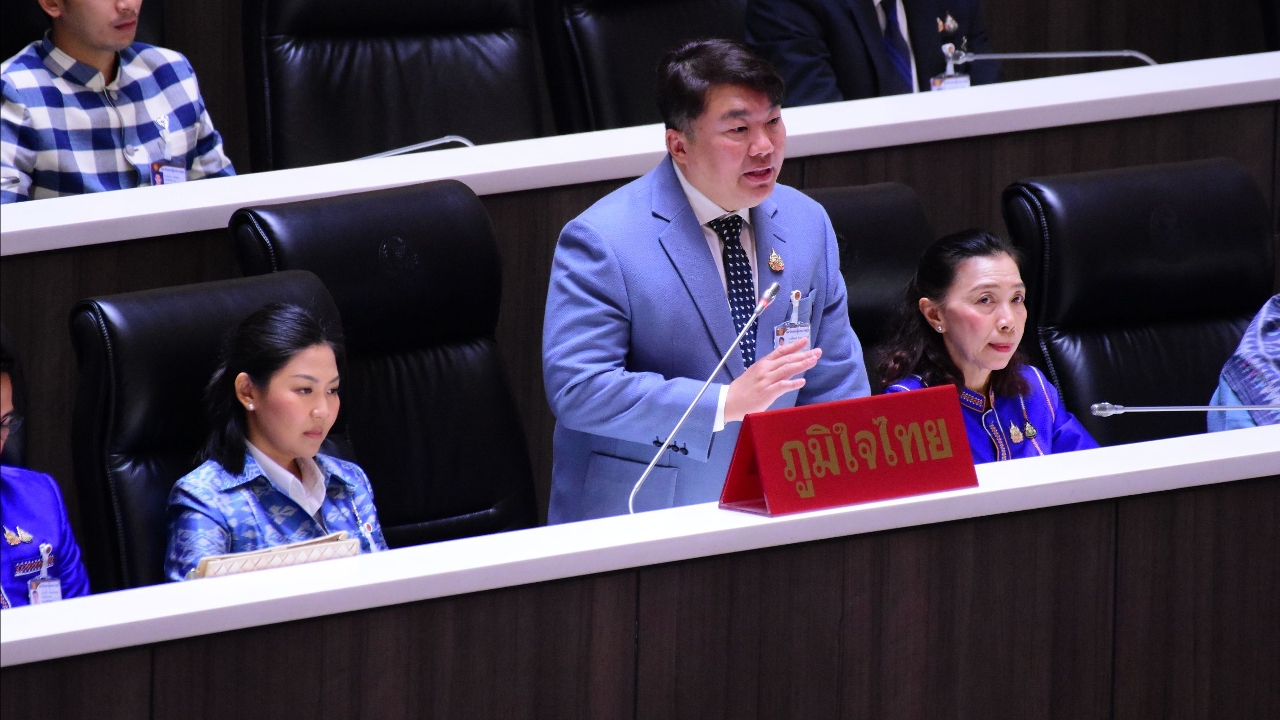
Siripong affirms that Bhumjaithai Party is not idle and understands the oil shortage problem. He supports the government in swiftly using oil reserves to push fuel supply to all service stations as quickly as possible, while clearly communicating alongside measures to reduce living costs and expenses that burden citizens unnecessarily during this crisis period. It is important to balance both actions together.
On 25 March 2026, Mr. Siripong Angkasakulkiat, Member of Parliament for Sisaket from the Bhumjaithai Party, delivered an urgent oral debate requesting the House of Representatives to consider responding to the crisis caused by the Middle East war impacting Thailand. He said today hundreds of MPs have reflected the hardships faced by the people regarding the “oil crisis.” We, the MPs of Bhumjaithai Party, have not been indifferent or silent about this situation as some have suggested, but have questioned and closely monitored the government's management all along. He took this opportunity to clarify the facts to the public about what is happening with the current oil situation and what the government has done so far.
1. The global oil crisis context and responses affect countries worldwide, each with different countermeasures. For example, Singapore lets market forces operate and compensates through other means, while Japan and Malaysia intervene using oil funds to stabilize prices. Thailand adopts a similar approach to these countries.
2. The problem of “dual oil pricing” and the oil shortage (Oil Shock) are key issues now. The current price structure cannot support such a severe crisis. The government fixes pump prices lower, but market-based prices outside the system are higher, causing total demand to surge solely at gas stations. Statistically, Thailand's refining capacity is 77 million liters per day, normal consumption is 67 million liters, and 5 million liters are exported daily under energy exchange agreements. Currently, demand has risen to 84 million liters per day, leading to the shortage or “oil shock” situation seen today.
3. The release of oil reserves aims to reassure the public. The Prime Minister has ordered the revision of regulations on oil reserves, allowing oil depots to release reserve oil into circulation to ease shortages. This follows the successful approach previously used by Japan.
Mr. Siripong recommended urgent measures: the government must expedite pushing fuel into all service stations within this week to restore normalcy. To combat fake news, the government should proactively communicate accurate information, especially about controlling prices of consumer goods, fertilizers, chemicals, and construction materials, to prevent public panic from rumors of price hikes. For reducing living costs, short-term measures like cutting excise taxes or lowering travel fees (e.g., airport fees) should be considered to lessen citizens' burdens. Additionally, promoting alternative energy, supporting biotechnology policies, solar power, and clean energy seriously will build long-term sustainability.
"All of these represent the government's commitment, especially Prime Minister Anutin Charnvirakul's efforts to urgently act for the Thai people. I offer my encouragement to all citizens and fully support the government’s swift resolution of this crisis, which it did not cause," Mr. Siripong stated. Mr. Siripong spoke.