

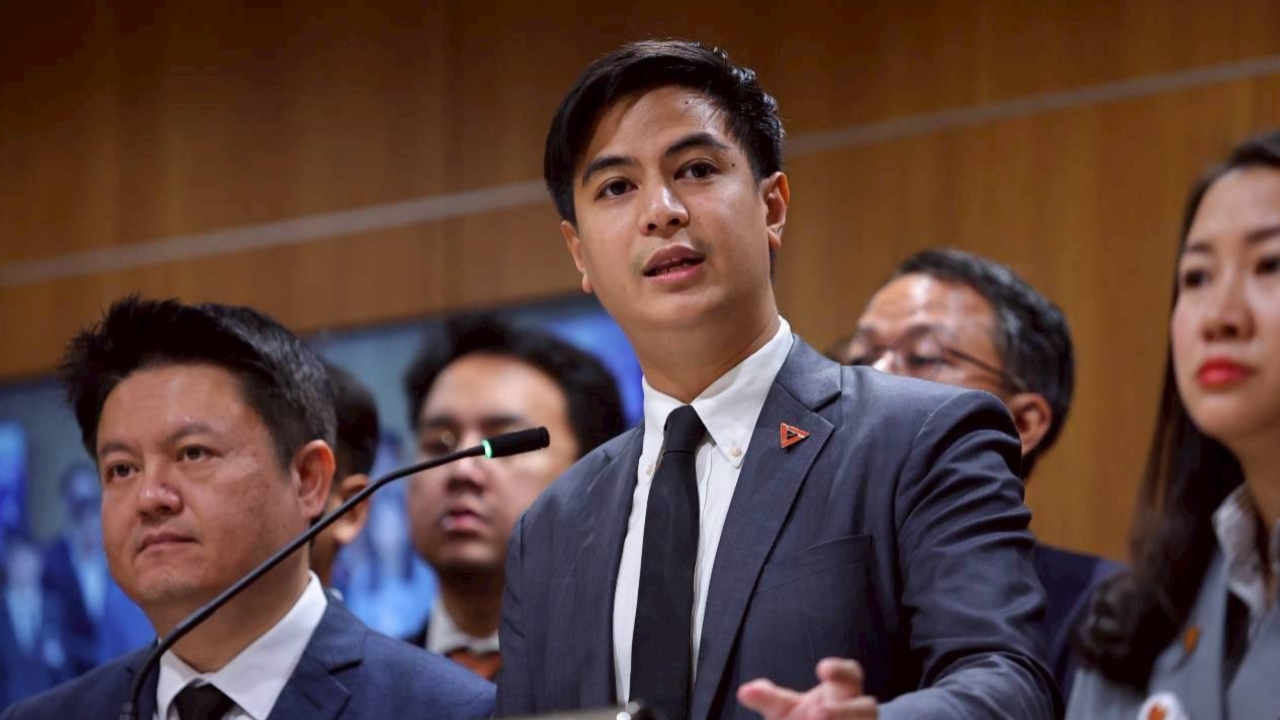
"Ice Cream Parit" blasted the government for abruptly raising oil prices by 6 baht per liter, questioning what kind of shared hardship and happiness this represents. Meanwhile, Chiang Mai MP Phatthapong from the People's Party criticized Anutin for managing the crisis without including the public in the equation. Tags: [oil price hike, government criticism, public hardship, crisis management, Thai politics]
On 26 March 2026, Mr. Parit Wacharasindhu, party-list MP and spokesperson for the People's Party, posted on his Facebook page “Parit Wacharasindh - Ice Cream - Parit Wacharasindh” following the 6 baht per liter oil price increase. He questioned what kind of shared hardship and happiness justifies such a sharp price hike, especially when: Tags: [Parit Wacharasindhu, People's Party, oil price increase, Facebook statement, political commentary]
1. There is still no answer or conclusion about who has been hoarding fuel in the past.Tags: [fuel hoarding, investigation, transparency]
2. There is still no clarity regarding the windfall tax.Tags: [windfall tax, tax policy, oil prices]
3. There is no clear information on whether relief measures for various citizen groups will begin immediately.Tags: [relief measures, public support, government response]
4. There has been no explanation from the Prime Minister in parliament throughout the entire day.Tags: [Prime Minister, parliamentary session, government accountability]
P.S. The photo from a gas station near Lat Phrao, Bangkok, at 1:30 a.m. shows a queue of about 15 minutes.Tags: [gas station, fuel queue, Bangkok, Lat Phrao]
P.S.2 I think I now understand why this week’s parliamentary session was scheduled for only one day, without the usual Thursday session, despite normally meeting every Thursday.Tags: [parliament schedule, session cancellation, political timing]
Meanwhile, Mr. Phatthapong Leelaphat, Chiang Mai MP from the People's Party, posted on Facebook that today's oil price crisis is like the government releasing dam water to flood citizens' homes without providing any assistance. Another crucial issue is the relief measures for five groups, as announced by Deputy Prime Minister Ekniti Nitithanprapas. Where are these measures? Why were they not released before or alongside such a sharp oil price hike? The five groups mentioned are:Tags: [Phatthapong Leelaphat, oil price crisis, government relief, Deputy Prime Minister Ekniti Nitithanprapas]
1. Vulnerable groups – The government says it will add funds from the central budget to the state welfare card after the new Cabinet is formed. In this crisis, they have yet to approve urgent funds, which is akin to a leader who has power and budget but says, “I will release dam water to flood your homes, but you must help yourselves first.”Tags: [vulnerable groups, welfare card, government funding, crisis response]
2. Transport groups – The government says the Ministry of Transport will gather data. The question, similar to group 1, is whether they must wait for diesel prices to exceed 50 baht before completing this.Tags: [transport sector, data collection, diesel prices, government policy]
3. Farmers – There is no direct fuel assistance, but the government says the Ministry of Commerce will help with fertilizer prices. Before the 6 baht hike announcement, fertilizer prices had already risen sharply—for example, one brand of 40-0-0 fertilizer increased from 1,065 to 1,140 baht yesterday. This means the existing crisis is unresolved, yet the government is adding new burdens without relief measures for farmers. This excludes ongoing issues with crop prices mishandled by the Ministry of Commerce.Tags: [farmers, fertilizer prices, Ministry of Commerce, agricultural crisis]
4. Fishermen – The government plans to use B20 biodiesel instead of green diesel, which is 5 baht cheaper than diesel at onshore pumps. But one must ask whether any fishing boats have actually received this assistance yet, and I am confident they have not.Tags: [fishermen, biodiesel B20, fuel assistance, government support]
5. Government contractors, industrial, and service sectors – The government says it plans to adjust the K-factor to aid contractors and prepare soft loans for businesses, but details and plans remain unclear.Tags: [contractors, industry, services, financial aid, government policy]
The decision to sharply increase oil prices, announced after parliament closed to avoid scrutiny, was made in a crisis without any supporting measures or mitigation for the public.Tags: [oil price hike, government decision, parliamentary scrutiny, crisis management]
Once again, Anutin’s government is managing the crisis without including the public in the equation. A good leader, when facing a crisis, "must assess unavoidable impacts and find ways to minimize harm to the public as much as possible, rather than leaving citizens to face severe problems alone, especially when the leader has both power and financial resources available." Tags: [Anutin, crisis leadership, public impact, government responsibility]