

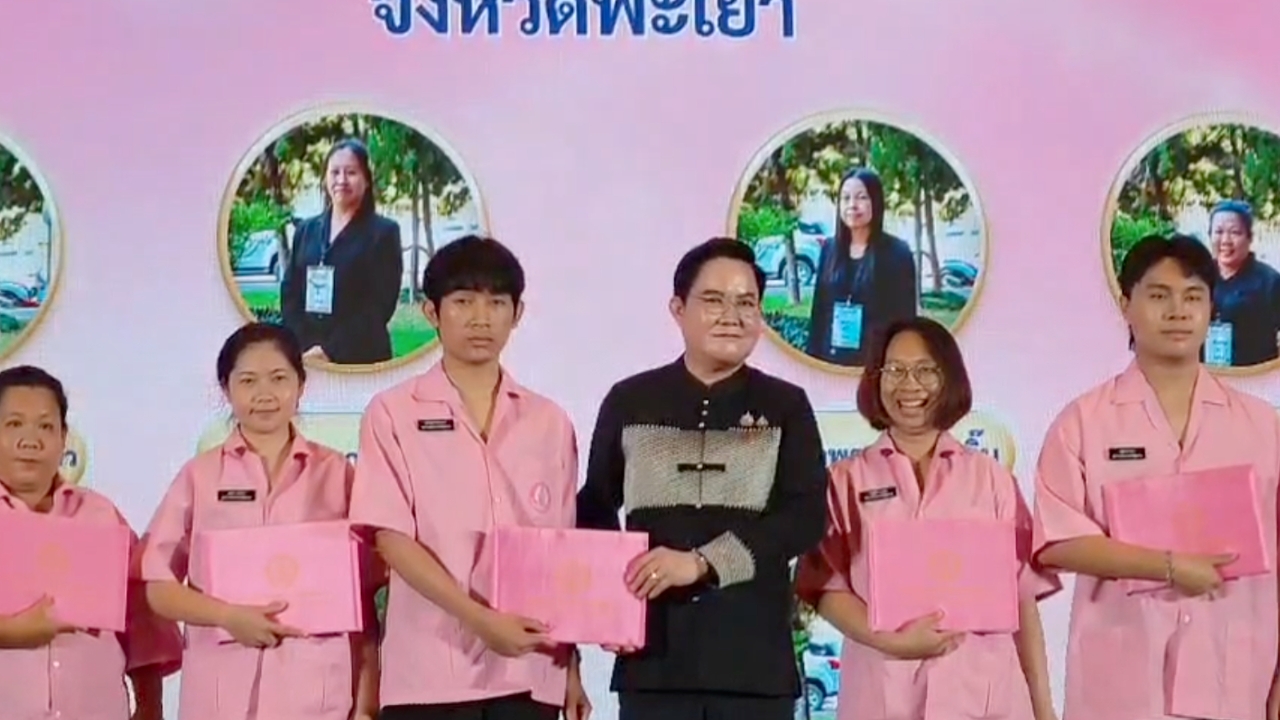
Akara presented certificates to 587 new elder rights caregivers to prepare for the nationwide aging society, with a goal to expand the program to cover every district by 2026. 2026 GMT+7 (Note: The year 2569 in Thai Buddhist Era corresponds to 2026 CE). The date is interpreted as the target year for expansion.
On 26 March 2026 GMT+7, Mr. Akara Phromphao, Minister of Social Development and Human Security, chaired the certificate awarding ceremony for the 3rd batch of elder rights caregivers (new members), totaling 587 recipients. They were also given bags and supportive shirts for their work. Additionally, he delivered policy guidance to advance elder rights protection efforts. “PM Near You” He also congratulated the new elder rights caregivers.
Furthermore, awards of recognition were presented to 10 experienced elder rights caregivers for outstanding performance. Mr. Chokchai Wichianchaiya, Director-General of the Department of Older Persons, reported on the event. Also present were Mr. Kitti Intrakul, Deputy Permanent Secretary of the Ministry of Social Development and Human Security; ministry executives; Dr. Nattanun Tadpitakkul, Director of the Information and Communication Access Support Plan for Persons with Disabilities and Older Persons at the National Science and Technology Development Agency (NSTDA); and representatives from related agencies at the Grand Richmond Hotel, Nonthaburi Province.
Mr. Akara stated that Thailand has fully entered an aging society and is expected to become a super-aged society soon due to the continuous rise in the elderly population alongside declining birth rates and workforce numbers. This shift impacts the economy, society, and national security. Therefore, the Ministry of Social Development and Human Security is preparing for this demographic change by focusing on building systems, mechanisms, and infrastructure to care for and protect older persons within local communities. The goal is to systematically support, care for, and monitor potential risks facing the elderly, aiming to ensure they have a good quality of life and happiness in their own homes. The ministry also supports community protection mechanisms such as subdistrict health-promoting hospitals, local administrative organizations, various volunteers, and elder clubs to participate in promoting, supporting, and improving elder quality of life through the work of elder rights caregivers.
Mr. Akara further explained that the community elder care and rights protection project prepares for the aging society by having the Department of Older Persons under the ministry develop elder rights caregivers as key agents to assist local communities comprehensively in care, assistance, rights protection, and quality of life improvement across five dimensions: social, health, economic, environmental, and technological. The aim is to enable elders to live with dignity and good quality of life. He congratulated all new elder rights caregivers and encouraged them to perform their duties with dedication, professional ethics, and prioritizing the best interests of the elderly to help build stronger families and warmer communities.
In 2026, the community elder care and rights protection project is expanding to cover every district nationwide, totaling 268 areas in 76 provinces. A total of 587 participants have completed the elder rights caregiver training course, passing theoretical, practical, and internship assessments. The project has also gained collaboration from partners, especially the National Science and Technology Development Agency (NSTDA), which developed the “Nirun for Community” system to support elder rights caregivers' work more effectively.