

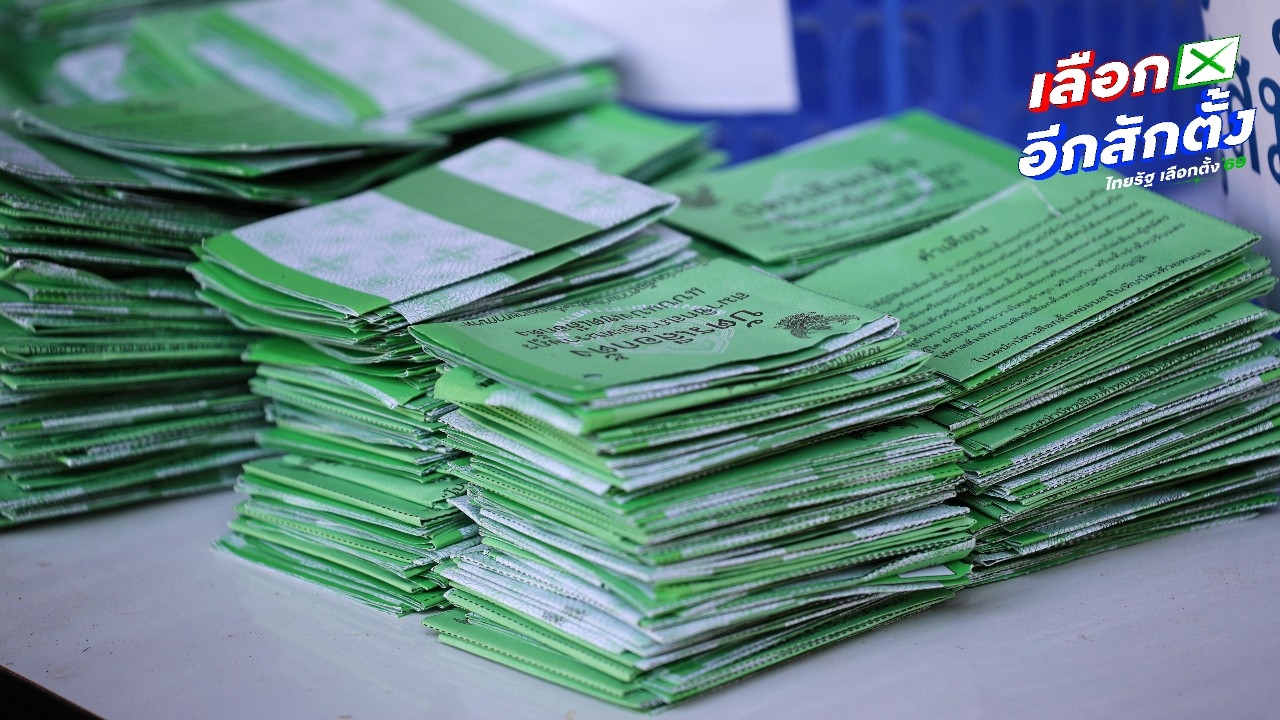
The Election Commission emphasized that the use of barcodes and QR codes on election ballots strictly follows the constitution, assuring that no one knows the voters' choices. It pointed out that courts, the Election Commission, and the public cannot verify individual votes.
On 26 March 2026, during a review meeting of the Election Commission Office held in Chiang Rai from 24-26 March, Mr. Sa-ngaeng Bunmee, Secretary-General of the Election Commission, spoke about the secret direct voting process in the 8 February 2026 election, which is currently under consideration by the Constitutional Court, informing the executive meeting as follows. Regarding the election held on 8 February, the ballots containing QR codes or barcodes constitute direct and secret voting, truly in line with the spirit of the constitution. In other words, no one knows or can verify how votes were cast—not the courts, the Election Commission, nor the general public. However, this does not affect the courts’ or Election Commission’s duties to ensure the election is honest and fair in any way.
“Ensuring the election is honest and fair is a separate matter from verifying retrospectively which candidates or parties voters supported. Monitoring election fraud is a legal duty granted to bodies such as the courts or Election Commission as appropriate. But verifying who voted for whom is constitutionally protected and aligns with the Universal Declaration of Human Rights on elections. No organization or individual—not courts nor the Election Commission—can access that information.”
The report further illustrated the roles of the courts and Election Commission in investigating election fraud related to ballots, authorized by law in two cases: First, ordering a recount. In such cases, if the court or Election Commission decides to order a recount, they simply open the ballot boxes and recount the ballots from that polling station. For the general election on 8 February 2026, the Election Commission ordered recounts in several polling stations on 22 February 2026. Even during recounts, voting remains direct and secret until the ballots are destroyed according to legal timeframes.
The second case involves verifying counterfeit or out-of-district ballots. The Election Commission may order ballot boxes opened and ballots scanned via barcode or QR code to immediately determine if any ballots are counterfeit or cast outside the assigned district. This process does not reveal who voted for whom, thus maintaining secrecy until ballots are destroyed as legally scheduled.
Following this review, the Election Commission Office will publish information for public awareness, encouraging citizen participation and election oversight. The goal is to ensure elections belong to the people, are conducted by the people, and are accepted by the people, making the election process a political exercise where every citizen fulfills their responsibility as a good member of society committed to the nation’s well-being.