

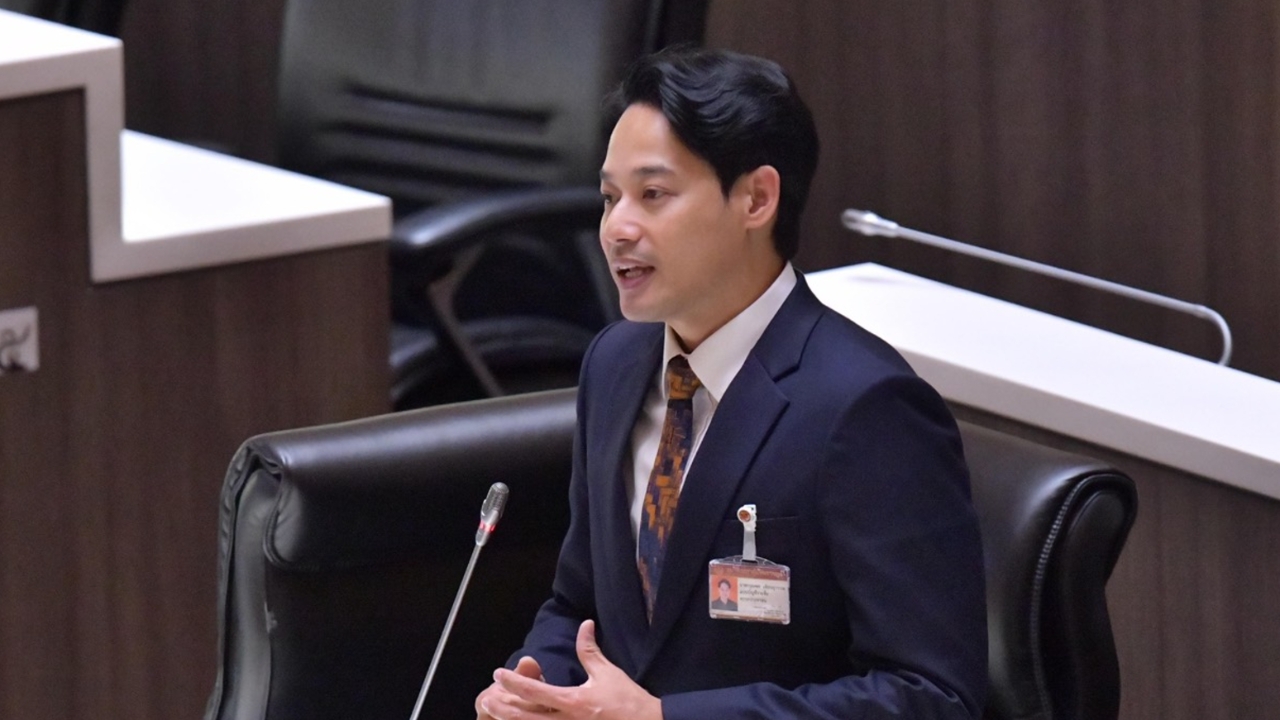
Karunpon of the People's Party revealed that the oil crisis reflects the government's failed management, causing soaring costs for restaurant businesses and severely impacting small operators. He highlighted five proposals for government assistance.
27 March 2026 GMT+7 Mr. Karunpon Thiansuwan, Deputy Spokesperson of the People's Party, reflected the oil crisis is affecting restaurant businesses and small shops. He said that all types of businesses inevitably face declining customers, leading to higher costs. His own family has run a restaurant business for over 40 years, so he wanted to voice the concerns of those affected to all responsible parties to resolve this crisis. The sudden 6-baht increase in oil price overnight has pushed Thai restaurants into a deadlock.
Karunpon further stated, that the sudden 6-baht per liter oil price hike, following the failed and ineffective price cap policy, is becoming a crisis forcing hundreds of thousands of restaurants to close or immediately incur debt. The government is squeezing small entrepreneurs who are gradually dying off. The current oil price crisis severely impacts three levels as follows:
Small operators level Raw material and transportation costs have risen, further reducing already thin profits. Many operators are forced to close because they cannot bear the costs of cooking gas and oil.
Medium-sized operators level They face pressure from all sides with high fixed costs, while consumer purchasing power declines as people reserve funds for energy expenses.
Large operators level Transportation systems are disrupted. Oil shortages affect supply chains and distribution networks, undermining investor confidence.
All of this reflects policy failure: temporary fixes by price capping caused massive fuel fund deficits, followed by a sudden price float. This reveals a lack of vision in management. Abrupt oil price adjustments severely damage the economy. The government's insistence on resisting market forces has caused heavy burdens on businesses trying to recover.
Policy recommendations for the government
1. Urgent tax reduction measures Implement immediate and effective excise tax relief on oil.
2. Targeted assistance Support and subsidize energy prices for food producers to stabilize food prices and ease public hardship.
3. Timely restructuring Stop favoring energy tycoons and focus on reducing citizens' living costs.
4. Promote tax system participation Use this opportunity to encourage businesses to enter the tax system properly by supporting financing for participants.
5. Reduce tax burdens Increase the standard expense deduction for tax calculation from 60% to 90% to ease business burdens.
As for recommendations for restaurant business operators to cope with the crisis:
1. Menu management: immediately remove low-profit, high-hidden-cost dishes.
2. Source local ingredients: reduce dependence on distant suppliers and use nearby produce to cut transportation costs.
3. Improve efficiency: reduce energy use at every operation stage and seriously apply energy-saving technology.
At the end, Karunpon also stated that if the government continues to manage by reacting only after damage occurs, restaurant businesses nationwide may face severe stagnation, and public dissatisfaction will cause immeasurable harm to the state. .