

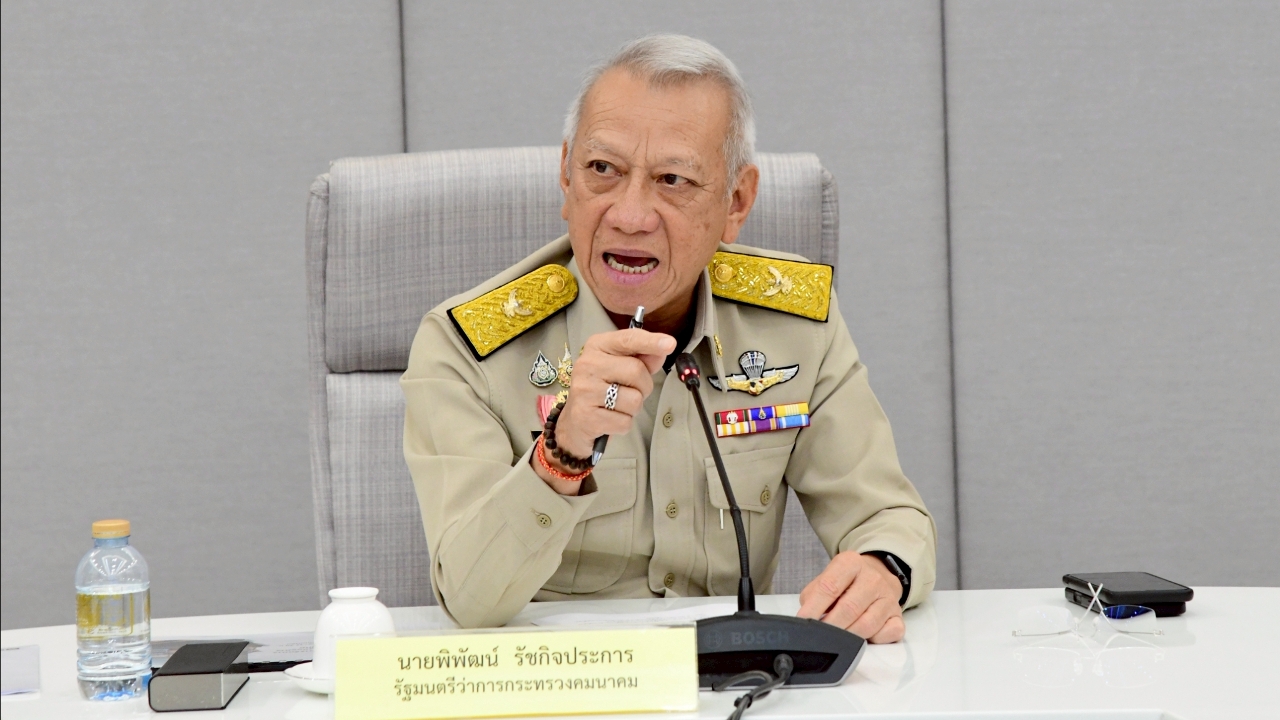
“Phiphat” reveals the background behind a sudden 6-baht diesel price jump, calls to stop announcing prices late at night due to public backlash, denies accusations of insider dealings favoring PT gas stations, warns diesel could hit 50 baht if the situation does not resolve, and assures no fuel shortages during Songkran.
On 27 Mar 2026, Mr. Phiphat Ratchakitprakarn, Deputy Prime Minister and Minister of Transport, serving as director of the Center for Managing the Middle East Conflict Situation (CMMC), explained that the sharp 6-baht per liter diesel price increase overnight stemmed from two main factors: a severe surge in Singapore market reference prices and maintaining price parity with neighboring countries, especially Malaysia.
“Previously, the government planned a 3-baht increase based on discussions that evening if Malaysia kept prices around 38-39 baht. However, by evening, Singapore’s market closed at a much higher price, and Malaysia raised fuel prices by 7 baht to about 45 baht per liter. If Thailand only raised by 3 baht from 33 to 36 baht, the price gap with Malaysia would approach 10 baht, leading to cross-border fuel smuggling. Transport trucks would fill subsidized Thai fuel and return, causing national losses. Thus, the 6-baht hike addressed both the price gap and stopped panic buying that emptied pumps.”
Regarding the issue of announcing price changes at 10 p.m., Mr. Phiphat said he hopes to avoid such late announcements in the future, as they trigger heavy criticism and mass public backlash. He plans to discuss with the Oil Policy Committee (OPC) to hold meetings at 6 p.m. as usual to give the public and businesses more preparation time.
On accusations of insider information and favoring PT gas stations (PTG Public Company Limited) to hoard fuel for profit, Mr. Phiphat firmly stated he did not know the 6-baht figure in advance, receiving a call from the Energy Minister only around 9 p.m. before the official announcement. The Prime Minister was informed at about the same time.
Mr. Phiphat clarified that he resigned as an executive of the company 23-24 years ago and is now only a shareholder, with his brother as the top executive. Moreover, PT is a public company listed on the stock exchange, run independently by a board of directors. He cannot influence or direct operations and challenged critics to verify from the first-quarter and annual financial results whether PT’s profits spike abnormally as alleged.
Regarding PT gas stations having fuel available while others faced shortages initially, Mr. Phiphat explained PT is a distributor under Section 7 without its own refinery, so it contracts with multiple refiners such as Thai Oil, IRPC, and Bangchak to spread risk. During the crisis, management negotiated with all refiners to maximize fuel supply quotas to avoid impacting over 2,000 franchise stations.
. . .
Mr. Phiphat expressed disbelief in a major fuel hoarder (“the masked man”) speculating for profit. Instead, two main factors explain the shortage: transport companies and construction sites usually refill fuel tanks with just enough for use, but amid uncertainty, all began filling reserve tanks fully to prevent problems. Also, consumer behavior shifted from refueling when nearly empty to topping off with even a small drop below full. Millions of vehicles doing this simultaneously created an 'army of ants,' causing daily fuel disappearance of tens of millions of liters from the system.
The oil fund deficit has reached 120 billion baht.
Mr. Phiphat said the government plans to cut the excise tax on fuel by 1 baht, pending election commission approval. The Prime Minister has tasked the Refiners Association to consider lowering refining margins to aid the country. If refused, the government may enforce legal measures such as a “windfall tax.” “Windfall tax” He has proposed this approach to the Ministry of Finance for study.
“The fuel oil fund subsidy ceiling has been set with a 120 billion baht deficit, and the government still has excise tax tools left to use, approximately 5-6 baht per liter. However, if all tools are exhausted and the situation does not improve, prices must follow the market and be allowed to float freely.”
Diesel could reach 50 baht.
When asked about the possibility of diesel prices reaching 50 baht per liter, Mr. Phiphat responded, “I think it will reach that level if the situation doesn’t end.” He reasoned that energy prices must be based on the Singapore market and compared with Malaysia, which as an oil-producing country cannot hold prices down either.
Mr. Phiphat pledged that during the upcoming Songkran festival, maximum contingency plans are in place, including deploying mobile fuel trucks to standby at rest stops and major tourist destinations, assuring no fuel shortages at gas stations during Songkran. “If there isn’t, people will blame me anyway, and I accept that. My duty is to manage this jointly with all Section 7 oil distributors.”