

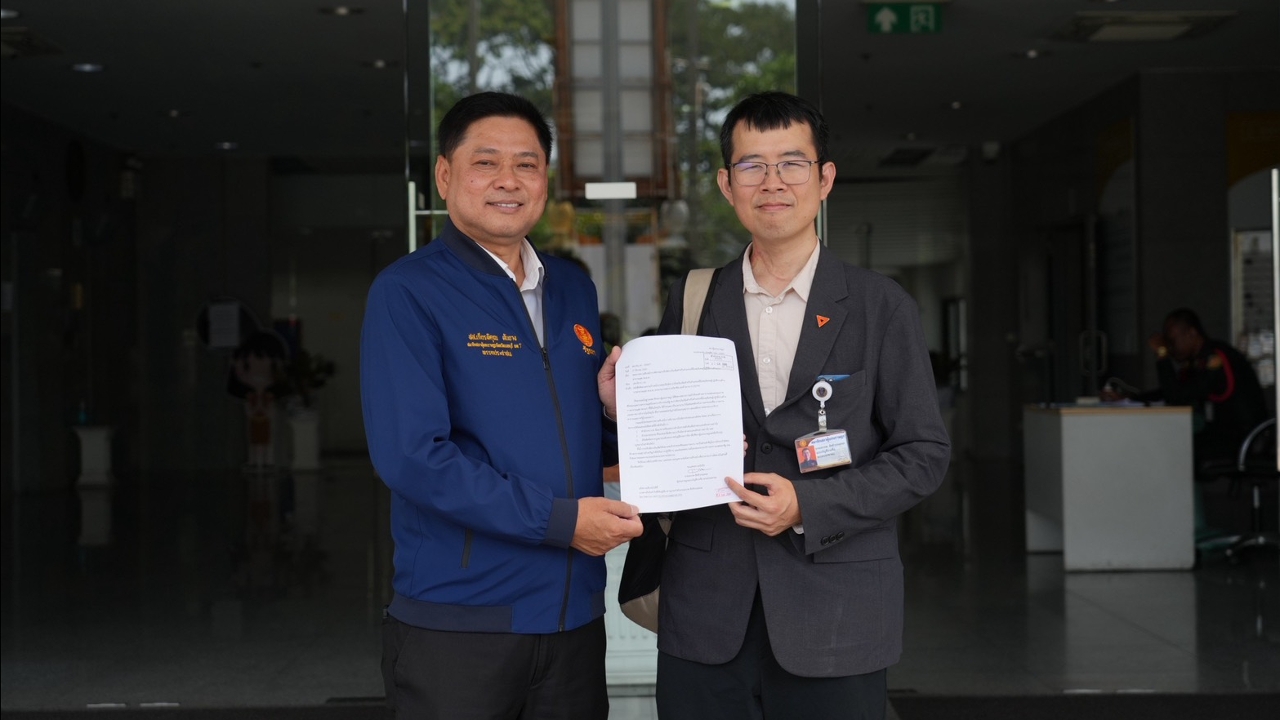
Two People's Party MPs are pressing to follow up on "increased compensation" for nurses after the Ministry of Public Health announced 12-hour long shifts. They hope the parliament will establish a subcommittee to study solutions to health workforce problems quickly.
On 27 March 2026, Mr. Ekaphop Sitthiwannathana, a party-list MP, and Mr. Kiattikhun Tonyang, MP for Nonthaburi District 7, both from the People's Party, jointly submitted a letter to follow up on the P.T.S. payment (compensation for nurses or payments for positions with special circumstances for public health workers) and requested information to support discussions on ways to improve nurses' quality of life at the Nursing Council. They aim to reclaim workers' rights and enhance patient safety. The letter was sent to three key agencies: the Office of the Minister of Public Health, the Office of the Civil Service Commission (CSC), and the Nursing Council. They hope that increasing payments for special circumstance public health positions (P.T.S.) will provide a short-term solution to alleviate the mismatch between compensation, workload, and living costs.
For the long-term solution, discussions with the Nursing Council will aim to promote fair compensation, improve nurses' working conditions, and reform the entire personnel management system.
Mr. Ekaphop stated that health personnel are a fundamental health policy issue within the basic structure of the health service system that all political parties should prioritize. He hopes that once the House of Representatives forms its committees, the relevant committee will establish a subcommittee to promptly study and address health workforce problems. These issues affect not only doctors and nurses but all professional health workers.

Furthermore, unstable employment in the health sector, excessively long working hours beyond human capacity, and stress and fatigue from work increase the risk of medical errors, heighten conflicts between staff and patients, and reduce overall public safety.
In conclusion, Mr. Ekaphop said that the letter submitted to the three agencies should receive cooperation from all parties. This will lead to a joint meeting discussing compensation systems and solutions regarding the 12-hour nursing shifts among workers, policymakers, and the House of Representatives soon. The goal is to help all nurses have a good quality of life, receive fair compensation, and not be exploited by the public employment system, which ultimately discourages people from becoming nurses and makes it impossible to solve the nurse shortage problem.
