

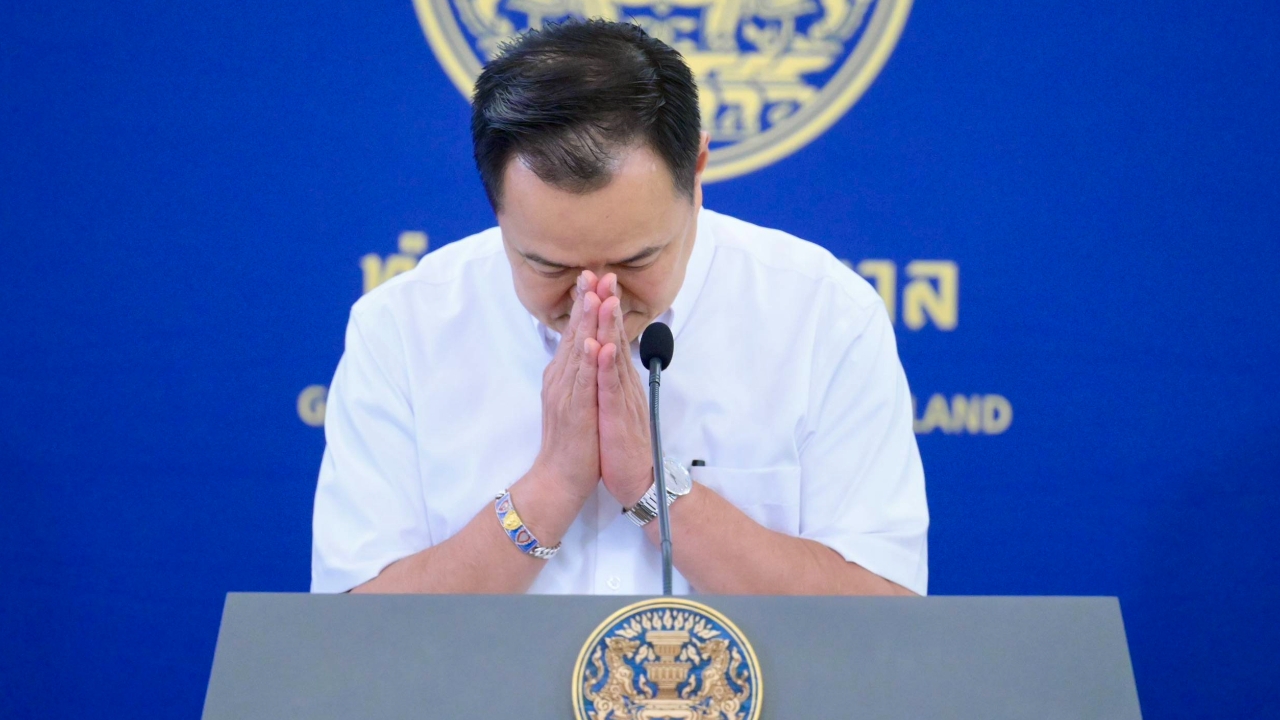
Prime Minister Anutin apologized to the public for the oil price turmoil caused by price management during the first half of March. He noted the situation has eased after the government ceased freezing prices, stressing that Thai oil prices remain lower than those in many ASEAN countries.
At 10:30 a.m. on 28 March 2026 GMT+7 Prime Minister Anutin Charnvirakul spoke at the "Meet the Press" forum under the theme "One Month of Global Crisis: Thailand's Response Plan in a Changed World." He thanked the media for attending the meeting, saying the purpose was to foster understanding of the government's direction and to allow ample time for questions and answers. He said he and the cabinet members involved in managing the oil crisis and the Middle East conflict had been invited to meet with the public and officials from government agencies and state enterprises to clarify the situation and alleviate public concerns.
Regarding the current situation, he said it has been one month, and all countries worldwide are facing energy security challenges equally. Nearly all countries have seen global oil prices surge. Many face oil shortages, and governments have implemented various measures to encourage citizens to conserve energy. So far, the situation remains relatively stable, with ongoing attempts and initial negotiations between conflicting countries. However, no clear positive signs have emerged. This means the world must continue to adapt to this crisis and endure it. He urged the public to cooperate by adjusting their lifestyles and emphasized the need for readiness to handle a potentially prolonged situation. The government will also continuously adjust management strategies according to daily developments.
"In the past period, especially during the first half of March, I must apologize to the public for the turmoil caused by oil price management. We decided to support oil prices during the first 15 days to avoid causing hardship for the people and to give them time to adjust."

Initially, following news reports, we believed the conflict would not last long, but the situation has changed, and it seems unlikely to end soon. The government must constantly adapt, adjusting measures appropriately to focus on stability and minimizing impact on the public. Particularly affected groups such as the vulnerable, low-income earners, farmers, and oil-dependent businesses in transport, fisheries, and industry will receive support to manage expenses and living costs as best as possible.
Currently, the government has established the Center for Managing and Monitoring the Middle East Conflict (CM3EC), which updates daily measures and information. The government focuses on four main areas: foreign affairs, energy security, price control, and measures to reduce impacts on citizens in various sectors.
All parties are making great efforts. For example, the Ministry of Foreign Affairs has accelerated negotiations with all countries to minimize disruptions to goods transport, shipping, travel, and communication systems affecting Thailand. Recently, the ministry successfully negotiated with Iran to allow Thai oil tankers safe passage through the Strait of Hormuz. This success eases concerns about oil and other goods shipments through that region to Thailand. Having settled the negotiation, confidence is greater that transport systems will not face problems like those earlier this month.

Regarding the oil situation, shortages or shortages at some gas stations have started to improve due to various actions by the CM3EC, a special task force addressing the oil crisis on behalf of the government and prime minister. It has coordinated with all agencies to remove bottlenecks causing shortages. Although refining capacity and imports continue steadily and oil reserves have increased, the government remains vigilant. Measures include extending transportation rounds and times, and injecting reserve oil into the system to meet increased domestic demand from citizens who may still be panicking and stockpiling.
"I am not saying people are hoarding, but stocking up, which is their right to feel assured. This has increased daily oil demand. We manage this carefully and avoid restricting supply, understanding the public's ongoing concern. We inject reserves to meet this temporarily increased demand."
At the same time, authorities are cracking down on illegal activities like hoarding and smuggling oil. The government has prosecuted offenders. Recently, ending the price freeze has clearly reduced hoarding and attempts to illegally buy and sell oil for profit, easing the burden on the oil fund, which had been running a deficit.

Regarding the "end of price freeze," it should be understood this is not the same as full price liberalization like in many countries. The Thai government still subsidizes oil through the Oil Fund but at a reduced rate—from 24 baht per liter previously to a lower subsidy now. Allowing prices to float somewhat with global market forces means Thai oil prices are closer to neighboring countries, discouraging smuggling for profit.
This ensures oil remains in Thailand at reasonable prices. The government has reduced subsidies from 24 baht per liter to 16 baht today, saving budget expenses on subsidies. Currently, Thailand consumes 82 million liters daily, compared to 67 million liters before 1 March, prior to the war, so efforts aim to reduce consumption back to normal levels.

"I want to emphasize to the public that before the Middle East conflict, diesel consumption for industry was 67 million liters daily, without any conservation campaigns. Today, the government confirms that if consumption returns to 67 million liters, life can continue normally through Songkran and beyond. We ask for public cooperation: if consumption exceeds this due to panic or worry, please be assured there is enough oil for all. We will implement measures to prevent hoarding, smuggling, and exploitation for profit in neighboring countries."
The prime minister added that current pump oil prices in Thailand remain significantly lower than in neighboring countries. Malaysia and Vietnam have higher prices; Laos is certainly more expensive since it imports oil from Thailand with cooperation. The Philippines, Singapore, and Cambodia also have higher prices. Thailand's prices are lower than all these countries in the region, except for Indonesia and Brunei, which have lower prices as oil-producing countries with their own reserves.

