

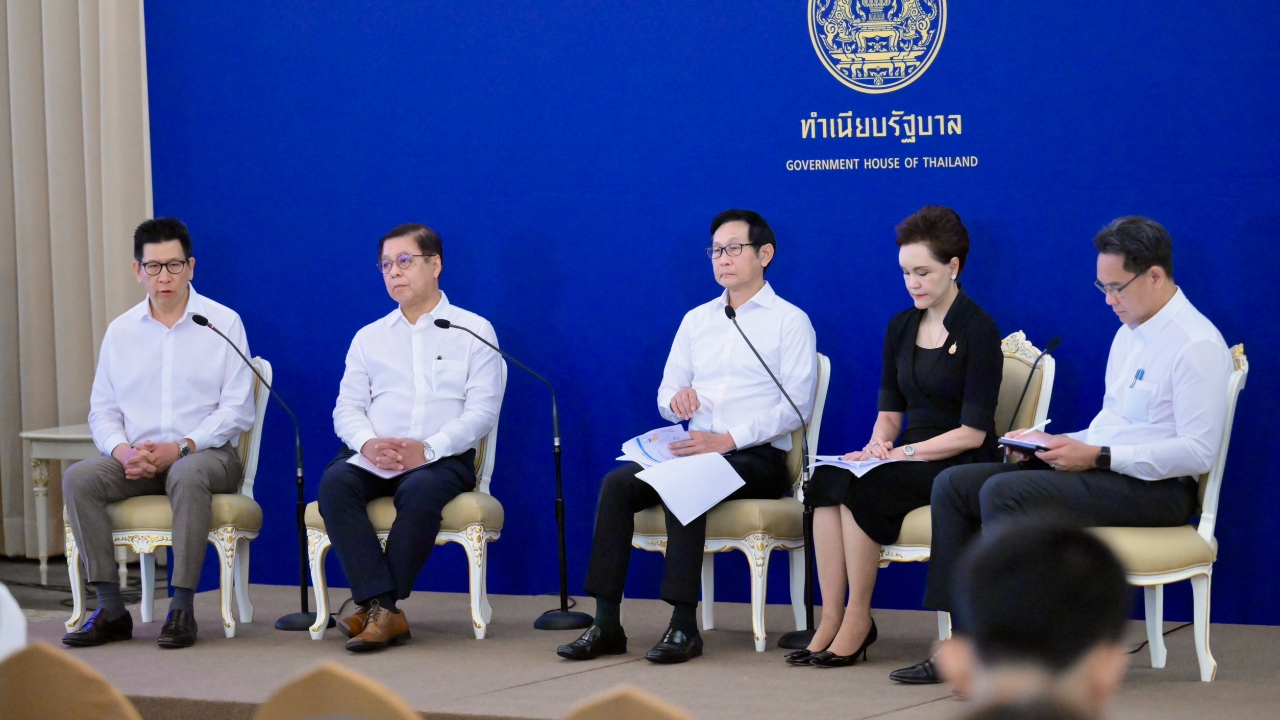
"Aekniti" acknowledges the prolonged global energy crisis is severely affecting Thailand. He vows to continue stabilizing fuel prices and managing living costs while tightening the budget and plans to help vulnerable groups through the state welfare card, emphasizing efficient use of tax revenue.
On 28 March 2026, Aekniti Nitithanprapas, Deputy Prime Minister and Minister of Finance, spoke at the Meet the Press event "1 Month of Global Crisis: Thailand's Response in a Changed World" about the Middle East conflict, calling it a global energy crisis that is more severe and prolonged than expected.

Specifically, energy prices are impacted by the blockade of the Strait of Hormuz, a crucial route carrying one-fifth of the world's crude oil. The government focuses on policies to delay and mitigate impacts on citizens as much as possible, starting with ensuring the safety of Thai nationals in conflict zones through the Ministry of Foreign Affairs.
Regarding economic management, the government uses the fuel fund as the main tool to stabilize prices and slow the rise in living costs. Although this causes the fund to incur losses, officials affirm careful management without overly distorting market mechanisms to avoid a repeat of the 1997 economic crisis caused by price intervention affecting foreign reserves.

The government will gradually reduce subsidies appropriately to maintain long-term fiscal security. Simultaneously, the Prime Minister has ordered all sectors to tighten budgets, cut unnecessary expenses such as canceling overseas study trips, and support working from home to conserve national energy.
Additionally, the government is preparing measures to assist vulnerable and low-income groups through the state welfare card system. The State Welfare Committee will meet on Monday, 30 March 2026, to consider allocating limited budgets effectively to those most in need. Meanwhile, the Ministry of Transport will manage budgets and funds to keep transportation costs from excessively impacting consumer goods prices.

The government’s budget is limited to taxpayers’ money. Every baht is not government money but public tax revenue, so the government must use every baht efficiently to care for the people.
"We must use all available budget tools efficiently, as this is taxpayers’ money. We will use every tool and mechanism possible to delay the impact of this crisis. But since this is a global crisis, all sectors—the government, private sector, and the public—must cooperate so we can overcome this crisis together," he said.

Regarding whether reducing fuel subsidies means reallocating funds to help citizens in other ways, Aekniti explained that the fuel fund is only one tool to prevent excessively high oil prices. Many people, including those who do not own vehicles or use fuel directly, are also affected.
He added that if all available funds were spent only on fuel support, the direct beneficiaries would be vehicle and fuel users, but many others would be left out. Therefore, limited resources must be used to cover all groups of citizens comprehensively.