

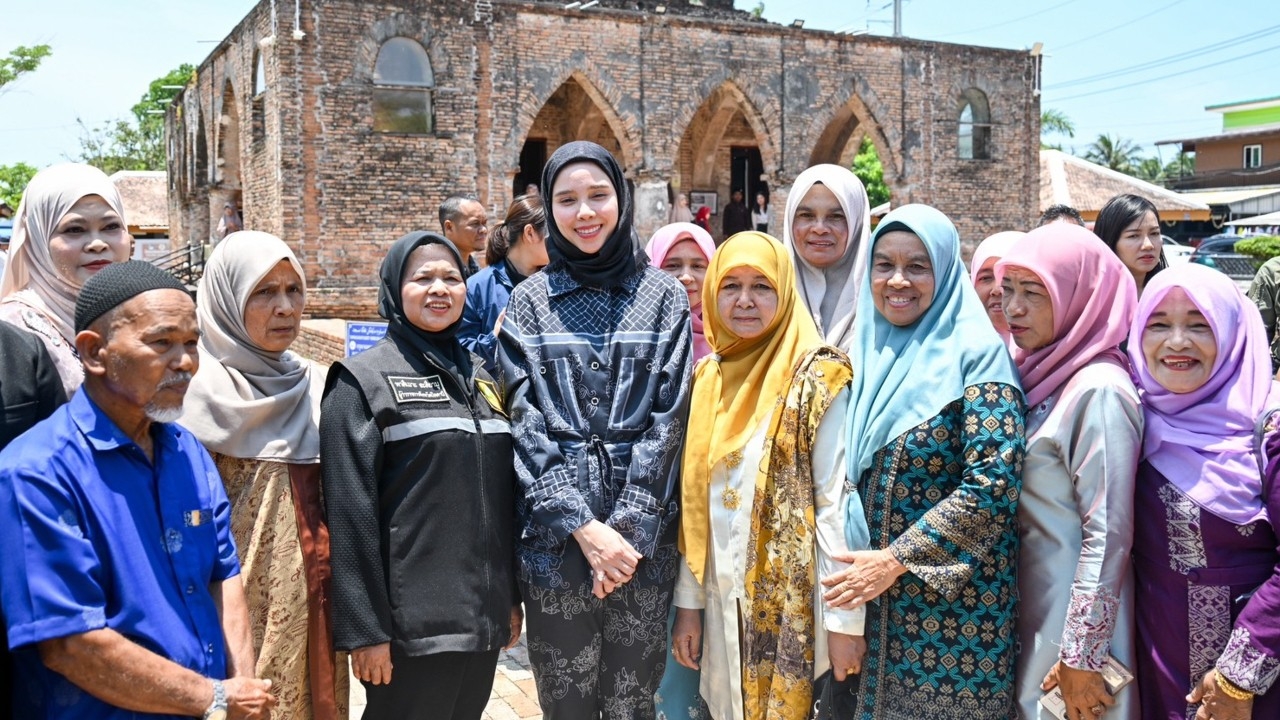
Sabida Thaiset launched the multicultural route in Pattani province, inviting people to experience three cultural ways and promoting seven Unseen Thai Thai highlights to generate income for communities. She also aims to elevate the image of religious tourism to an international level in Pattani.
On 29 Mar 2026 at Sai Khao Waterfall National Park, Khok Pho District, Pattani province, Ms. Sabida Thaiset, Minister of Culture, presided over the opening ceremony of the "Path of Faith: Multicultural City of Pattani" event on 28 Mar 2026, under the religious tourism project for fiscal year 2026.
The Minister of Culture said this project aligns with the government’s Quick Big Win policy focused on promoting secondary city tourism, especially by opening new cultural sites (Unseen Thai Thai) to creatively develop cultural capital into economic value through religious tourism activities. This will help elevate the area’s identity, create social value, and generate sustainable income for local people and communities.
Pattani province is notable for its cultural diversity in history, language, food, lifestyle, and religion. It harmoniously blends Buddhism, Islam, Christianity, and Chinese cultures, reflected in the "three cultural learning centers" that allow tourists close experiences.

Pattani is one of 20 religious tourism routes promoted in fiscal year 2026. The Department of Religious Affairs aims to develop temples, religious sites, and surrounding communities into centers for learning about religion and culture alongside economic promotion. The seven Unseen highlights include: 1. Sai Khao Waterfall National Park, Sai Khao Temple community, and the ancient Najmuddin Mosque over 300 years old, reflecting a Buddhist-Muslim community way of life, with nature tourism activities like trekking, vintage jeep rides, and local wisdom learning; 2. Rat Buranaram Temple (Chang Hai Temple), over 300 years old, housing the revered monk Luang Pu Thuat and serving as a faith center for Buddhists; 3. Ancient Yarang City, a key southern archaeological site believed to be the center of the Langkasuka Kingdom over 1,000 years old; 4. Leng Chu Kiang Shrine (Lim Ko Niao Shrine), a historic shrine dating back to the Ayutthaya period, associated with the "red bag money" belief for good fortune; 5. Pattani Central Mosque, the Islamic religious center with architecture inspired by the Taj Mahal; 6. Krue Se Mosque, an ancient site over 300 years old notable for its red brick Arab-style architecture; 7. St. Gabriel Archangel Church, the Catholic center in Pattani reflecting the historical role of missionaries.
(This part continues the description of the seven highlights from part 4 and completes the list.)
It reflects the historical role of missionaries in the past.

Visitors can also experience the multicultural community lifestyle by purchasing local products and tasting traditional foods such as Kai Khao and Khai Pho Thao, Pattani rice salad, fermented fish, mataba, roti pa-ye, la-sa, tupasutong (stuffed squid with sticky rice), tamarind salad, and spicy fish kidney curry. Cultural products include Juantani cloth, Manora beads, and printed batik fabrics, as well as the opportunity to rent or purchase sacred items like Luang Pu Thuat amulets from Chang Hai Temple.
The Minister of Culture added that this event aims to make temples and religious sites community centers for transmitting morality and wisdom, fostering pride in local identity, and stimulating the economy through tourism. She invited both Thai and international tourists and believers to experience the “Path of Faith: Multicultural City of Pattani,” to learn about diverse cultural roots, experience a simple life full of faith,
and to help sustain, preserve, and promote religious and cultural values for long-term continuity, while elevating Thailand’s religious and cultural tourism image to an international level.
