

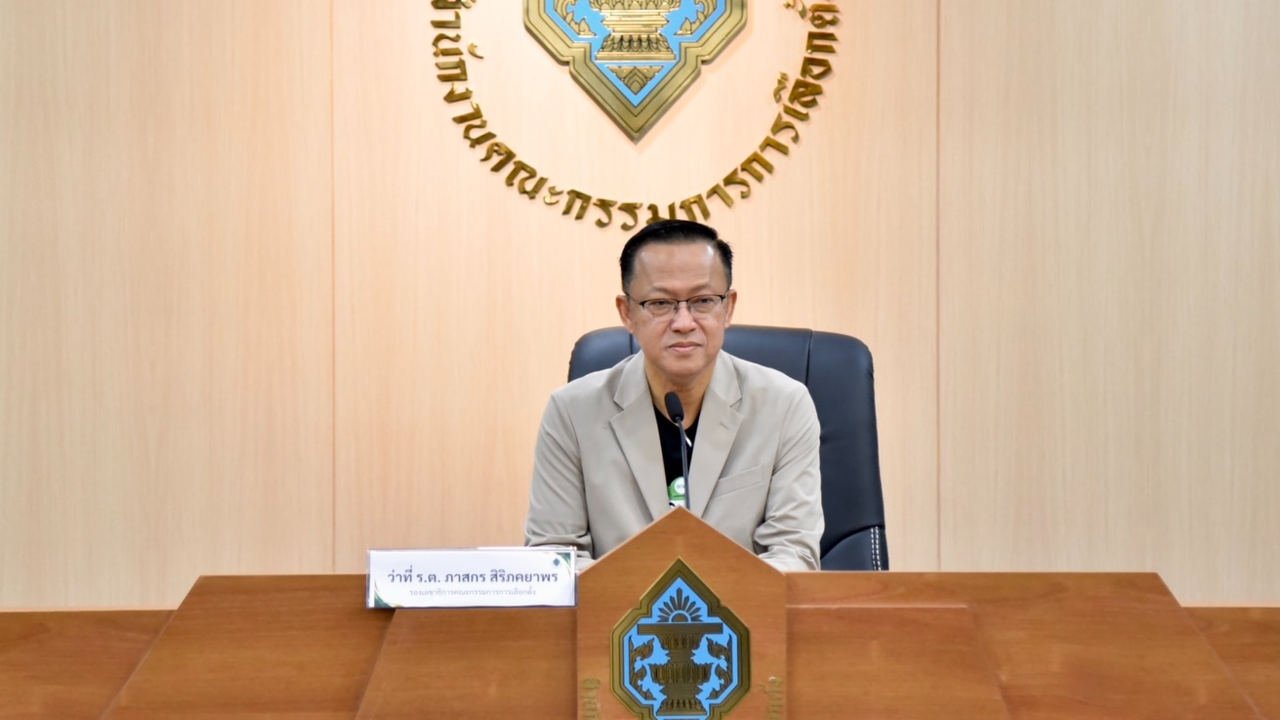
The Election Commission (EC) announced that the municipal elections across 297 municipalities proceeded smoothly with no complaints of legal violations. They explained that the difference in the number of eligible voters for municipal council members and mayors is due to residents changing their registered addresses within the same municipal area. The EC also emphasized that election officials performed their duties with strict oversight.
On 29 Mar 2026 at 10:00 GMT+7, at the Election Commission office, Lt. Pasakorn Siriphakayaporn, Deputy Secretary-General of the EC, reported on the overall municipal elections held in 297 municipalities across the country, including subdistrict municipalities and town municipalities. The elections took place in 63 provinces with 273 subdistrict municipalities and 24 town municipalities, totaling 3,901 polling stations. There were 1,918,259 eligible voters for municipal council members and 1,919,249 eligible voters for mayors. The discrepancy is because some residents changed their registered addresses within the same municipal boundaries, resulting in some only voting for mayor. The EC received reports from election directors in all 63 provinces confirming that all polling stations opened at 08:00 and operations proceeded smoothly. The EC urged voters to check their voter notification cards for their assigned polling stations and voting order, which are also posted at polling stations and can be verified via the Smart Vote app. Voters should bring valid identification such as a national ID card, other government-issued photo ID with a 13-digit number, or electronic documents like the Thai ID app, electronic driver's license, or disability ID card.
The Deputy Secretary-General explained that two types of ballots were used in this election: green ballots for municipal council members, allowing up to six selections, and golden yellow ballots for mayor, allowing only one selection. He urged voters to observe election laws carefully, such as prohibitions against selling, distributing, or providing alcoholic beverages and any form of campaigning that could influence candidates, as these are punishable offenses. He also reminded voters not to bring ballots not issued by polling officials to vote, not to damage or destroy ballots, not to remove ballots from polling stations, not to use devices to photograph marked ballots, and not to show marked ballots to others. These precautions are intended to ensure that the elections for municipal council members and mayors across all 297 municipalities proceed smoothly.
The province with the most municipal council elections is Roi Et, with 19 municipalities, followed by Maha Sarakham and Khon Kaen provinces with 13 municipalities each. The provincial EC offices will closely monitor these areas to ensure the elections proceed smoothly.
When asked if the EC had emphasized to election officials (polling station staff) to avoid errors like those in previous parliamentary elections, Lt. Pasakorn said the EC has communicated with election directors in all 77 provinces, stressing clear, correct procedures in accordance with laws and regulations. This emphasis was included in the training provided to all polling station officials.
Asked whether there are any areas that require special attention, especially regarding intense competition, Lt. Pasakorn said that some provinces have only one municipality holding elections, while others have two or three. The focus is on provinces with many municipalities, such as Roi Et with 19, Maha Sarakham and Khon Kaen with 13 each, and possibly large provinces like Nakhon Ratchasima with 11 municipalities. These provinces will receive special attention to ensure the election process runs smoothly.
When asked if any reports of suspected legal violations had been received, Lt. Pasakorn said that so far there have been none. He noted that this election involved an upgrade of administrative status from subdistrict administrative organizations to municipalities, changing the process. Previously, there was one municipal council member per district, but now it is six per district, which may have introduced changes. Overall, however, the process has proceeded smoothly.