

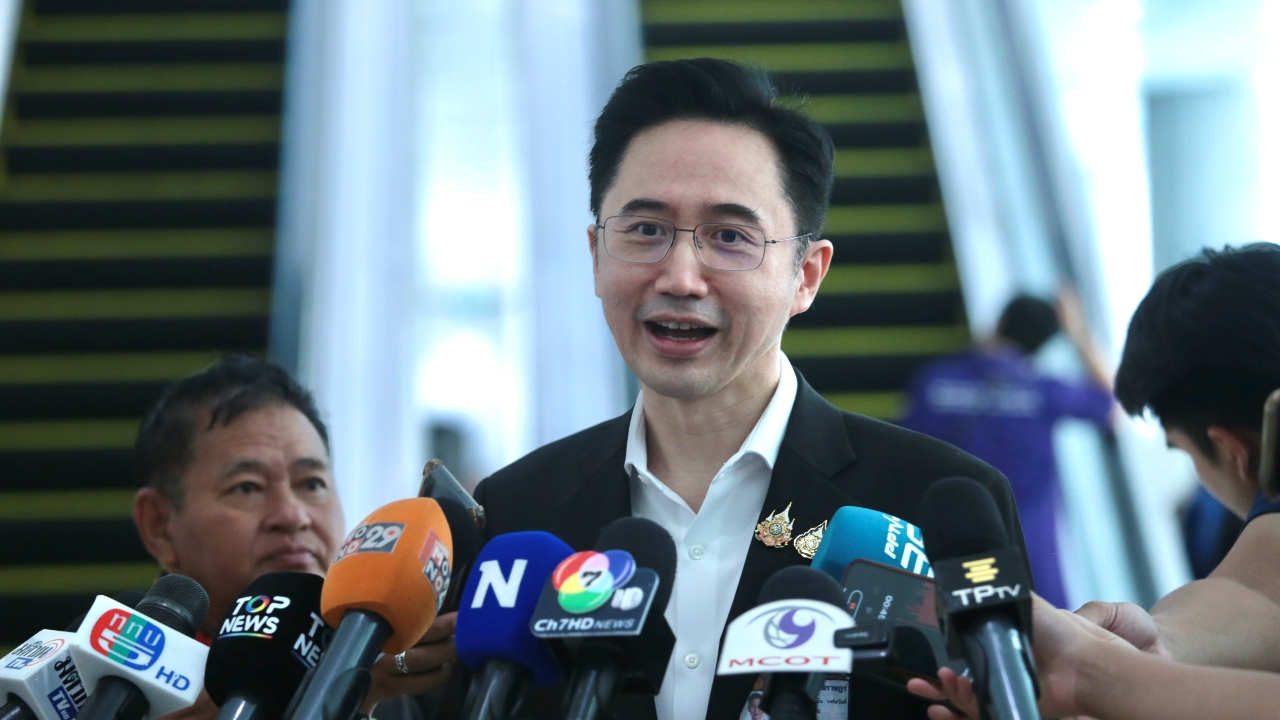
Yotsanan Wongsawat expressed happiness after being royally appointed Deputy Prime Minister and Minister of Higher Education, Science, Research and Innovation. He plans to use innovation to solve the energy crisis and PM 2.5 pollution, hoping to work through parliamentary mechanisms without issues arising from gaps between political parties. Tags: [politics, energy crisis, air pollution, innovation, government appointments]
At 10:00 a.m. on 31 March 2026 at the Parliament, Yotsanan Wongsawat, party-list MP from the Pheu Thai Party, spoke after receiving the royal command appointing him Deputy Prime Minister and Minister of Higher Education, Science, Research and Innovation. He said he was glad for the trust placed in him and vowed to perform his duties to the best of his ability. He acknowledged that these roles come with responsibilities and public concerns. Overseeing the Ministry of Higher Education, he noted discussions about the energy crisis, renewable energy sources, biodiesel, and efforts to develop machinery and engines powered by solar energy as alternatives to oil.
Yotsanan added that preparations have been made to raise awareness about living safely amid PM 2.5 pollution, which is significantly affecting northern regions. Monitoring of forest fires through satellite imagery is essential. Several universities are involved in efforts such as mobilizing supplies of face masks. He emphasized that many tasks come with responsibilities, and he will strive to fulfill his duties to the best of his ability.
When asked about his work plans without a honeymoon period, especially regarding social ministries overseen by the Pheu Thai Party, Yotsanan said they cover vulnerable groups—from children to education, science, technology, workers, and the elderly. They have prepared plans and are ready to collaborate with relevant government agencies. In the first month, urgent matters will be addressed, with plans communicated to the public outlining initiatives for the next six months to one year, aiming for progress over two to four years. Clear communication is crucial, along with preparedness for unforeseen challenges.
Yotsanan continued that preparations must address various issues, including climate change. He attended a seminar where the Speaker of the House noted that significant problems exist. The gaps between political parties must not hinder addressing public issues. Work mechanisms will follow parliamentary procedures, and administrative cooperation is necessary.
When asked about urgent policies to be included in the Ministry of Higher Education and their planned parliamentary announcement, Yotsanan identified two main issues: first, economic inequality and restructuring to align with the changing global economy. Many countries view Thailand as a strategic destination. The question is whether the workforce’s skills are ready to adapt to global changes.
Yotsanan added the second issue: long-term infrastructure planning. Everyone recognizes that Thailand must change. Investment in infrastructure is essential for the country’s progress. This work cannot be done by the ministry alone; coordination with the Ministry of Finance on budget policies is needed. Collaboration must occur across all dimensions, including economic and livelihood aspects, encompassing education, development, and human capital.