

Sakolthee mocked the government, saying locals have renamed the Pollution Control Department as the "Pollution Warning Department" because it only issues alerts without control. He urged that PM 2.5 be included on the agenda of next week's policy statement, highlighting the "Beijing Model" which uses a mix of firm and gentle measures. He presented four proposals to the new government.
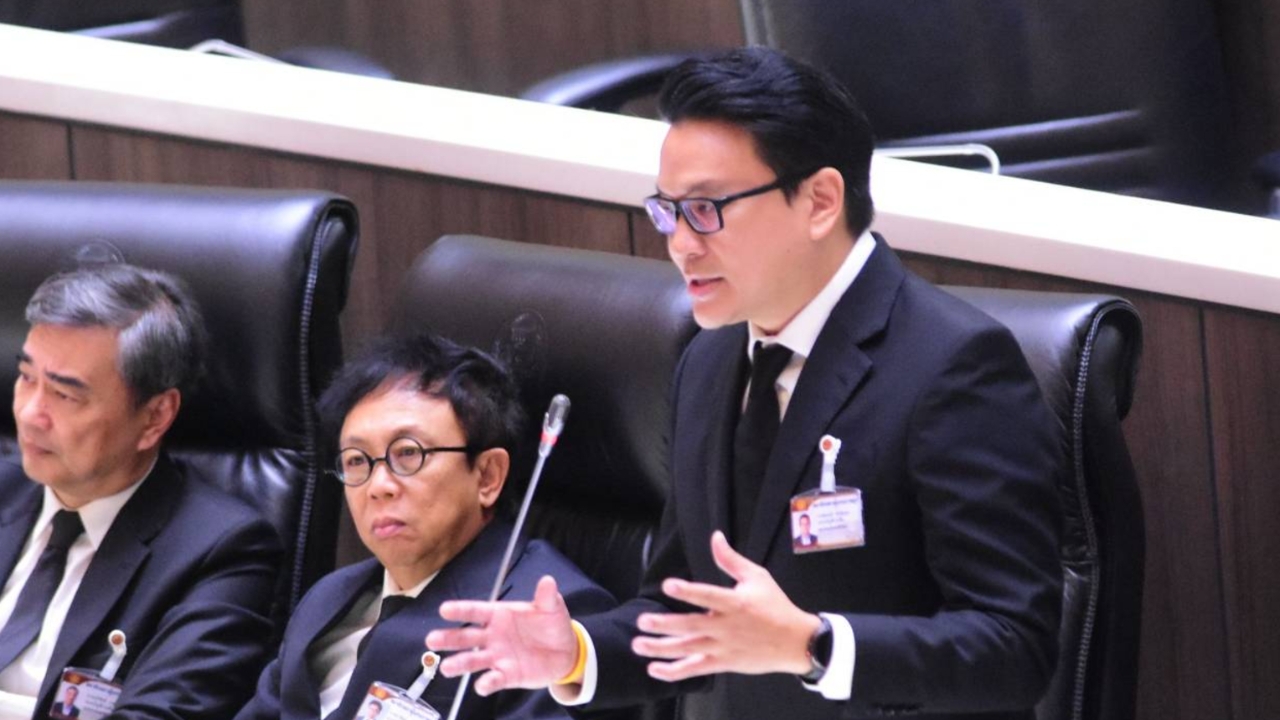
On 1 April 2026 at the Parliament building, Sakolthee Pattiyakul, a party-list MP from the Democrat Party, joined the debate supporting an urgent motion to establish a special parliamentary committee to monitor solutions to the PM 2.5 dust problem. He emphasized that clean air is a basic right that Thai people have been denied for nearly a decade.
Sakolthee identified three main sources of dust: forest and agricultural burning, including over 12,000 hotspots in neighboring countries; pollution from diesel engines in big cities; and industrial factories. He noted that Thailand has always addressed these problems only superficially.
"Today, locals call the Pollution Control Department the 'Pollution Warning Department' because it only issues warnings but cannot control anything. Ordering Work from Home or just issuing app alerts is merely treating the symptoms," Sakolthee said.
Sakolthee proposed that the government learn from China, which has reduced urban dust levels by over 50% within seven years using strict measures. These include a Zero Burning Policy with outright bans, serious enforcement, fines, and punishing local officials who allow burning; a vehicle revolution switching all public transport to 100% EVs; diesel vehicle restrictions such as license lotteries or alternate-day driving; relocating industries by closing or moving factories around the capital; immediate work stoppage during dust crises; and support for farmers via biomass power plants, subsidized plowing machines, and establishing markets for agricultural residues. Thailand has yet to seriously implement such measures.
Sakolthee put forward four demands to achieve structural change.
1. The government must explicitly and seriously include PM 2.5 solutions in the policy statement scheduled for next week.
2. The new cabinet should urgently approve the Clean Air Act draft, which has been pending since the previous parliament, so it can come into effect promptly.
3. There must be direct budget allocations to address PM 2.5, rather than merely distributing funds across various ministries.
4. Support the formation of a special parliamentary committee to monitor government efforts and act as watchdogs for the public.
"We have become so concerned about votes that we no longer dare to implement strong measures. If we want our children's lungs to be as clean as those in major cities like Shanghai or Beijing, we must boldly change the structure starting today," Sakolthee said.