

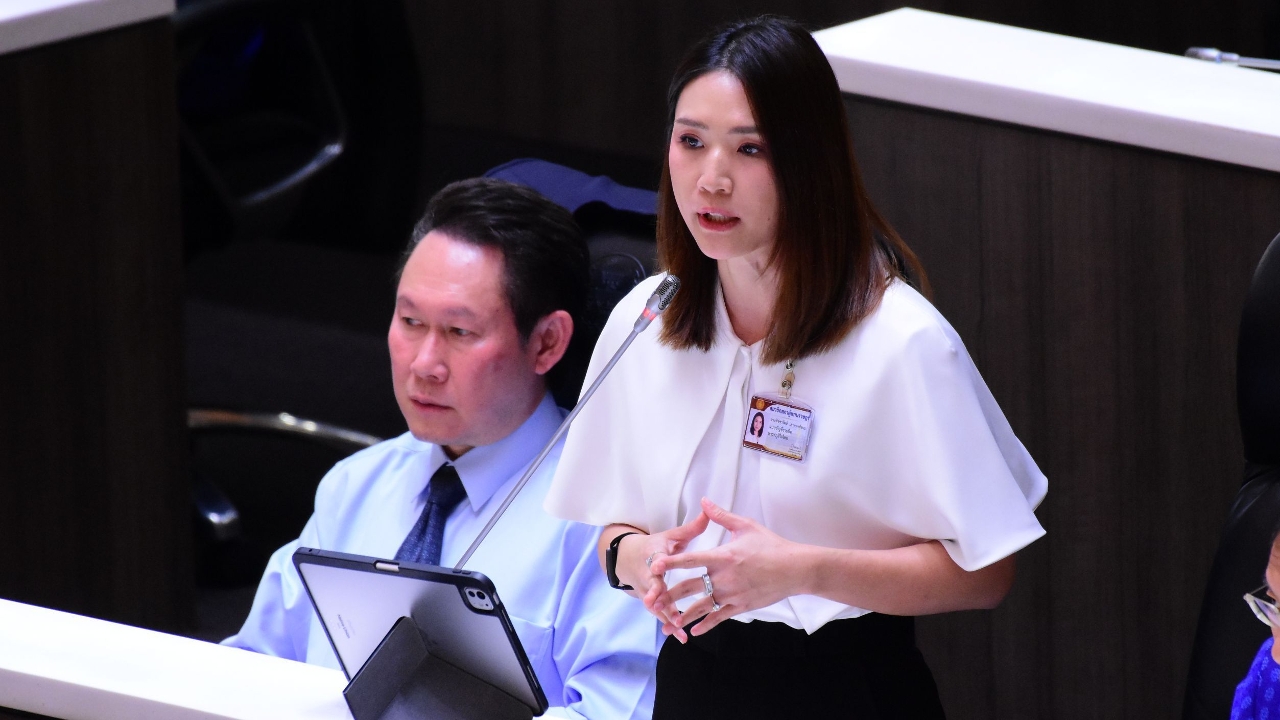
"Picharat" urges the government to swiftly solve the PM 2.5 issue, pointing out its severe impact on children, the economy, and tourism, and demands reclaiming "clean air" for all Thai people.,
On 1 Apr 2026 GMT+7, during a parliamentary session, Picharat Laohapongchana, party-list MP of Bhumjaithai Party, debated a motion requesting the House of Representatives to consider studying systematic and sustainable management measures to address forest fires and PM 2.5 dust pollution. She noted that the need to revisit this issue annually reflects it has become a chronic national crisis. Currently, the northern region faces a critical situation with over 4,000 forest fire hotspots; many provinces are covered by hazardous dust levels ranging from red to purple. Pollution levels far exceeding standards have enormous impacts on both health and the economy. Meanwhile, Bangkok earlier this year also suffered severe pollution that degraded visibility, prompting the government and related agencies to request work-from-home arrangements and suddenly close schools to avoid toxic dust.
"As a mother and guardian, when pollution levels rise, I worry about how the air my children breathe will affect their health. On heavy pollution days, schools must cancel outdoor activities; children lose the chance to play in playgrounds, which undermines their development and learning opportunities. Some schools revert to online learning, but prolonged screen time harms concentration and peer interaction. Moreover, PM 2.5 causes respiratory diseases and asthma, as seen in news reports of an 8-year-old child with continuous nosebleeds. This crisis also imposes financial burdens on families forced to buy N95 masks and air purifiers." Picharat said,
Picharat added that beyond health, the "breath of the economy" is equally important. While the country faces rising costs of goods and energy, it also confronts a dust crisis in the north that clearly affects tourism, a key source of income. Especially approaching the Songkran festival, hotel bookings have decreased. Small business owners and vendors trying to recover are now hindered by this environmental disaster.
"Furthermore, the economic opportunity costs and public health burdens represent enormous long-term expenses borne by both the state and citizens. I sincerely hope to see serious and sustainable government management to resolve this problem and reclaim clean air for all Thai people."