

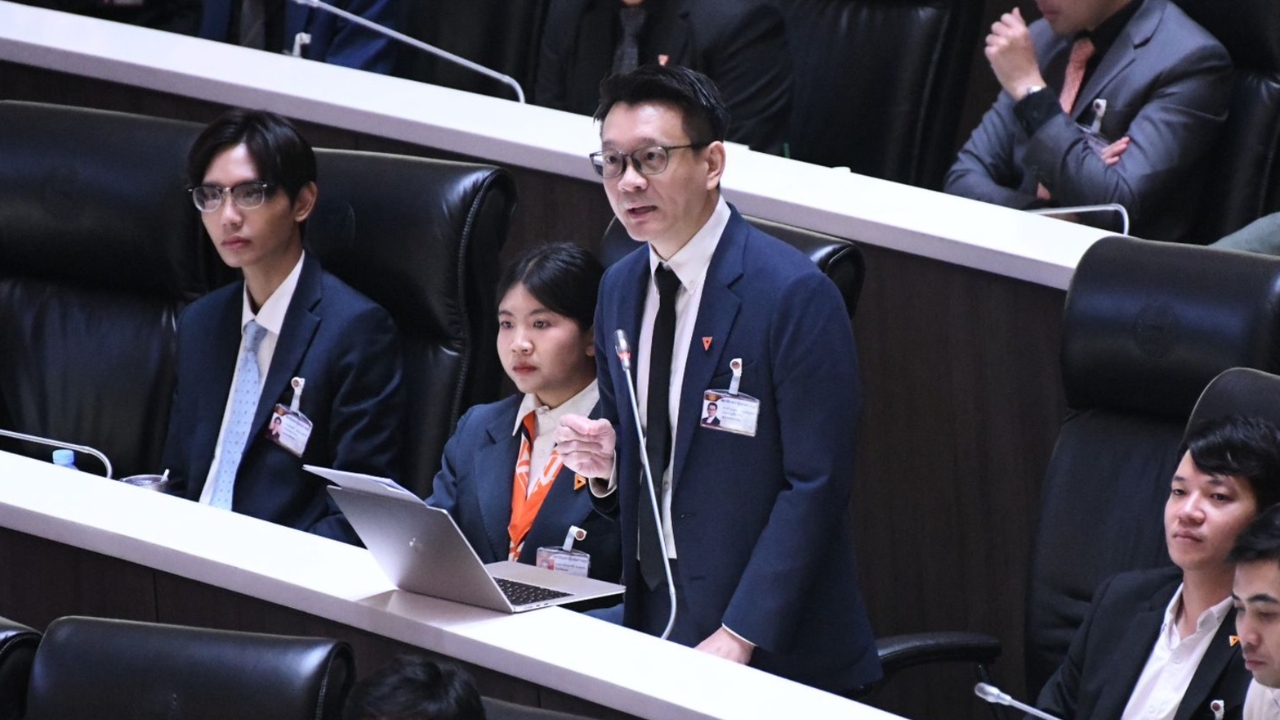
Veerayut revealed that on the first day of April, the oil refining margin jumped by 14 baht. He proposed four measures for the government to impose a windfall tax, emphasizing that this is not unusual in capitalist economies.
On 1 April 2026, Veerayut Kanchuchat, Deputy Leader of the Prachachon Party, "released figures" showing that on the first day of the month, the oil refining margin surged to 13.9 baht per liter. Two years ago (2024–2025), the refining margin was only about 1.7–2.3 baht per liter, roughly "one to two baht". In March, it had already risen to an average of 7.2 baht, which was considered high, but on just the first day of the new month (1 April), the margin jumped sharply to 13.9 baht.
Veerayut said the sharp multiple increase in refining margins justifies the government seriously considering the imposition of a "windfall tax." He stressed that a windfall tax is not abnormal in a capitalist economy.
A clear example is the European Union countries, which imposed windfall taxes ranging from 33% up to 80% on excess profits during the Russia-Ukraine war energy crisis. This allowed the EU to collect a total of 6.85 billion euros, or about 250 billion baht, in windfall taxes in 2022.
Veerayut proposed that if Thailand follows the EU's example, there are four decisions to make: 1) what rate of windfall tax to impose, 2) whether to tax income or profits, 3) which businesses to tax, and 4) how long to impose the tax. For example, Ireland charges 75% on excess profits from extraction, production, and refining businesses (exempting the first 20% of excess profits). Slovenia collects windfall taxes up to 80% on excess profits, while Spain charges a 1.2% tax on revenues from natural gas, oil, and electricity businesses.
Veerayut concluded by saying that under capitalism, a windfall tax is feasible and has been implemented before. However, the details must be clearly defined, including the figures, the scope of business, and the duration of enforcement.