

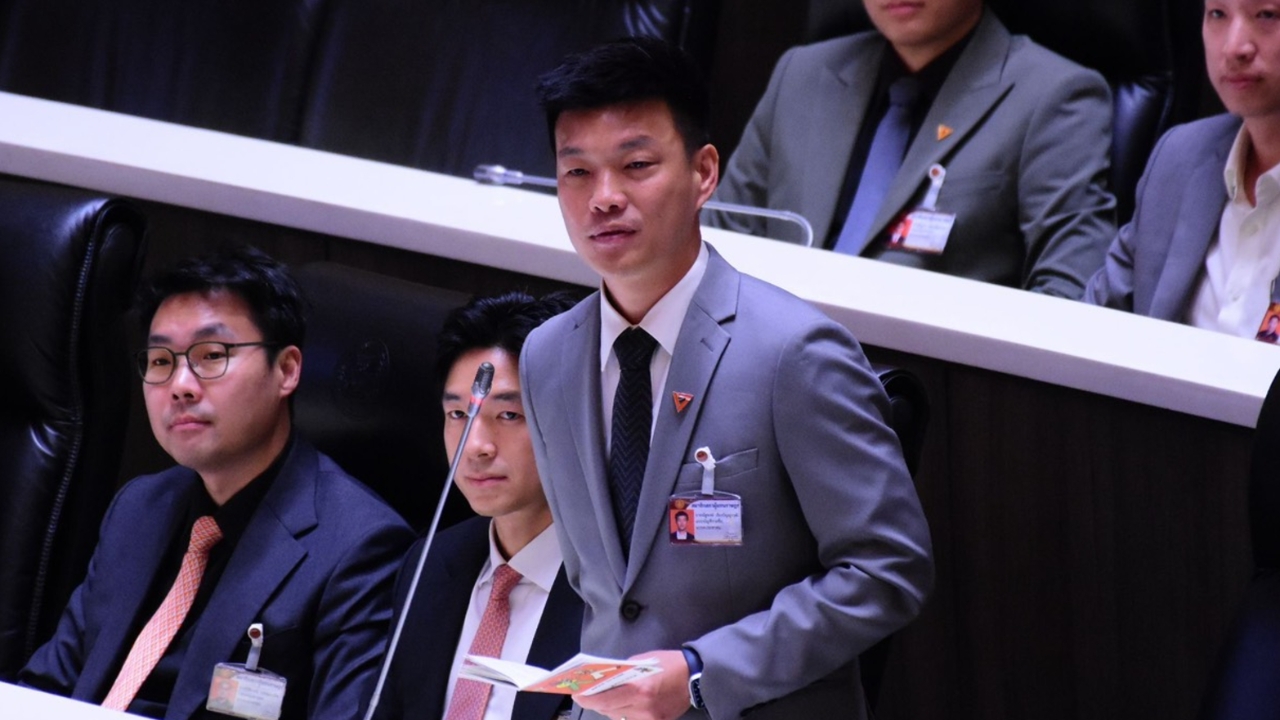
Nattapong demands the government, which has long had the authority to declare a toxic dust disaster in the North, explain why it has not done so. He expressed condolences for the wildfire firefighter who died and urged that the Clean Air Act draft, previously passed by the last parliament, be brought back for urgent reconsideration in the current assembly.
On 1 April 2026, Nattapong Ruangpanyawut, leader of the People’s Party, concluded the urgent debate on PM2.5. He said the PM2.5 toxic dust problem is urgent and must be addressed immediately. It is not a new issue but one the government has neglected, risking millions of people developing chronic illnesses. The dust problem worsened significantly since last week. He and fellow party members held a press conference urging the government to declare a disaster zone to mobilize all forces and tighten command lines to urgently tackle the issue. However, the government delayed, so the matter had to be raised as an urgent motion today.
Nattapong also explained why the government must declare a disaster zone and mobilize forces promptly. About nine days earlier, on 23 March 2026, the average PM2.5 level in the Northern region was 52.7 micrograms per cubic meter, meaning no Northern province was yet in the red zone (dangerous to health). On that day, GISTDA reported 1,488 hot spots in Thailand and about 8,000 in neighboring countries.
By 24 March, hot spots in Thailand had risen above 2,000, and those in neighboring countries exceeded 9,000. That day, three provinces were in the red zone or had health impacts. The highest average PM2.5 in a Northern province that morning rose to 81.9 micrograms per cubic meter, reaching the red zone.
Reflecting on these events, Nattapong emphasized they were clear warning signs demanding immediate government intervention to halt the disaster. Yet the government remained unresponsive. Just two days later, on 26 March, the highest PM2.5 average in the North surpassed 100 micrograms per cubic meter, reaching 152.5 the following day. On that day, hot spots in neighboring countries nearly hit 13,000. One major dust source is wildfires. Currently, firefighters on duty lack sufficient manpower, equipment, and adequate welfare.
Nattapong also mourned the loss of a wildfire firefighter in Mae Rim district who died on duty after getting lost and suffering from accumulated exhaustion. He called the death an unwanted loss, which the government should prevent by better supporting firefighters with manpower, equipment, and welfare to avoid further fatalities.
Additionally, Nattapong questioned cross-border dust control measures, noting the need for economic measures alongside diplomatic efforts. Such mechanisms already exist in the Clean Air Act, which passed the 26th House of Representatives but stalled in the Senate due to parliament dissolution. He urged the government to reaffirm the Clean Air Act draft previously approved by the last House and promptly bring it back for consideration in the current parliament to ensure Thai citizens have clean air and are no longer forced to suffer premature deaths every year.