

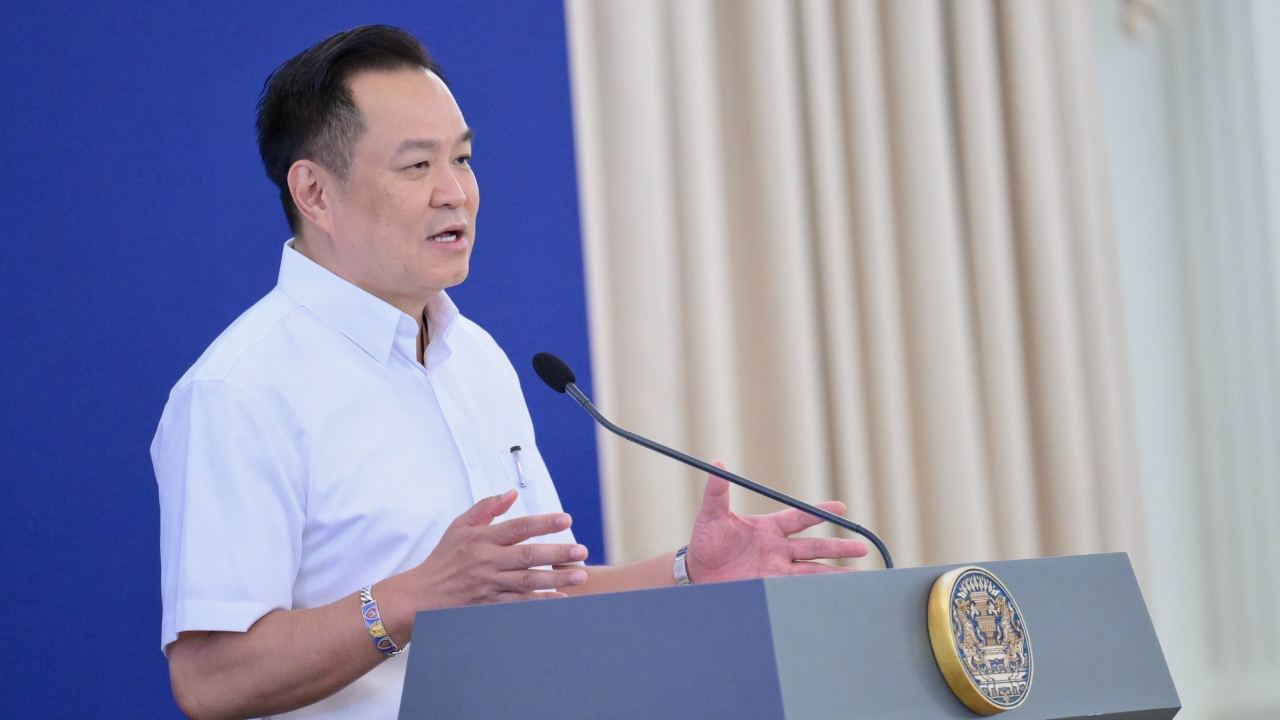
The Phra Pokklao Poll revealed survey results showing that 82.1% of respondents have little or no confidence in the Anutin 2 government’s ability to appropriately handle economic impacts if the Middle East war prolongs, but accept short-term government budget spending to manage energy prices.
On 3 April 2026, the KPI Poll from the King Prajadhipok’s Institute disclosed survey results on "Public opinion on the new government’s handling of the energy and economic crisis." Associate Professor Dr. Isara Seriwatthanawut, Secretary-General of the King Prajadhipok’s Institute and Director of the KPI Poll Center, emphasized the poll’s purpose as an academic tool designed to reflect political realities with neutrality, truthfulness, and usefulness. The poll maintains academic standards and accuracy, avoiding political manipulation, aiming to "listen" to politics through the public’s voice. The KPI Poll data serves as an important knowledge base for politicians, political parties, academics, and the public, acting as a true "brain trust for democracy" in Thai society.
The 15th KPI Poll results were announced by the center, based on a survey conducted from 27 to 30 March 2026 among 2,000 citizens aged 18 and over, distributed across regions nationwide. The key findings were as follows:

1. Regarding confidence in the “Anutin 2 government” to manage economic impacts if the Middle East war prolongs (surveyed by x Line Today), 82.1% expressed little or no confidence that the new government could handle the economy under such circumstances, a clear majority. Meanwhile, 12.8% were somewhat to very confident, and 5.1% were unsure.
Over three-quarters of the public express doubt and serious concern about the government’s ability to maintain economic stability, especially amid rapidly rising energy prices. They may perceive that the government lacks clear measures to cushion the shock from the Middle East conflict’s effects.
2. Most support a mixed approach, encouraging the government to "limit energy subsidies to those in need" while the Northeast region prefers a broad freeze on energy prices.
Findings show 39.0% want the government to temporarily freeze energy prices for most people and let prices reflect actual costs, but use budget funds to assist only highly affected groups. Next, 30.7% want a temporary freeze for most people; 11.1% prefer market-driven prices with long-term measures focusing on vulnerable groups; and 8.1% were unsure.
The majority across all regions want the government to both temporarily freeze energy prices for most people and allow prices to reflect costs, while providing budget aid only to those most affected—except in the Northeast, where 41.3% mostly want a broad freeze on energy prices.
Most people understand the complexity of the issue and avoid extreme positions, wanting the government to balance overall system stability while supporting those most in need. The Northeast’s stronger preference for widespread price freezes may reflect its greater vulnerability and shorter capacity to cope with sudden living cost spikes.
3. Livelihoods must survive; most accept government budget use to support energy during the crisis, with the Eastern and Southern regions showing strongest support.
It was found that 38.6% accept the government reducing other budget items to manage energy prices short-term because it directly affects most people. Another 25.3% accept this only during a short crisis; 14.9% accept aid only for low-income people and the transport sector; 11.1% reject it, preferring to reserve budgets for long-term needs; and 10.1% were unsure.
Regionally, many areas tend to accept budget use to stabilize energy prices, especially the Eastern region (60.4%) and Southern region (54.9%), where energy issues affect the majority directly more than elsewhere. In Bangkok, 32.9% accept it but only during a short crisis.
This reflects that many people still allow the government to use budget funds to alleviate short-term impacts if it concretely stabilizes living costs, especially in the Eastern industrial base and the Southern service and tourism sectors. People in these two regions clearly support spending to freeze energy prices, while Bangkok residents tend to accept conditional, time-limited assistance measures.
Summary of the 15th KPI Poll
This survey not only reveals that the public is "very concerned" about the Middle East situation but also signals two points simultaneously: a lack of confidence in the government’s crisis management, yet acceptance of the government’s role in addressing it. The public agrees to substantial budget use to mitigate short-term impacts if it tangibly lowers living costs. Therefore, the government should promptly build public confidence by clearly communicating economic response plans and allocating budgets flexibly with defined timeframes to manage energy prices. This may focus assistance on the most affected areas and groups, while gradually adjusting prices according to market mechanisms where feasible, so people feel the government is a reliable support amid the heavy pressures of daily living costs and economic uncertainty.