

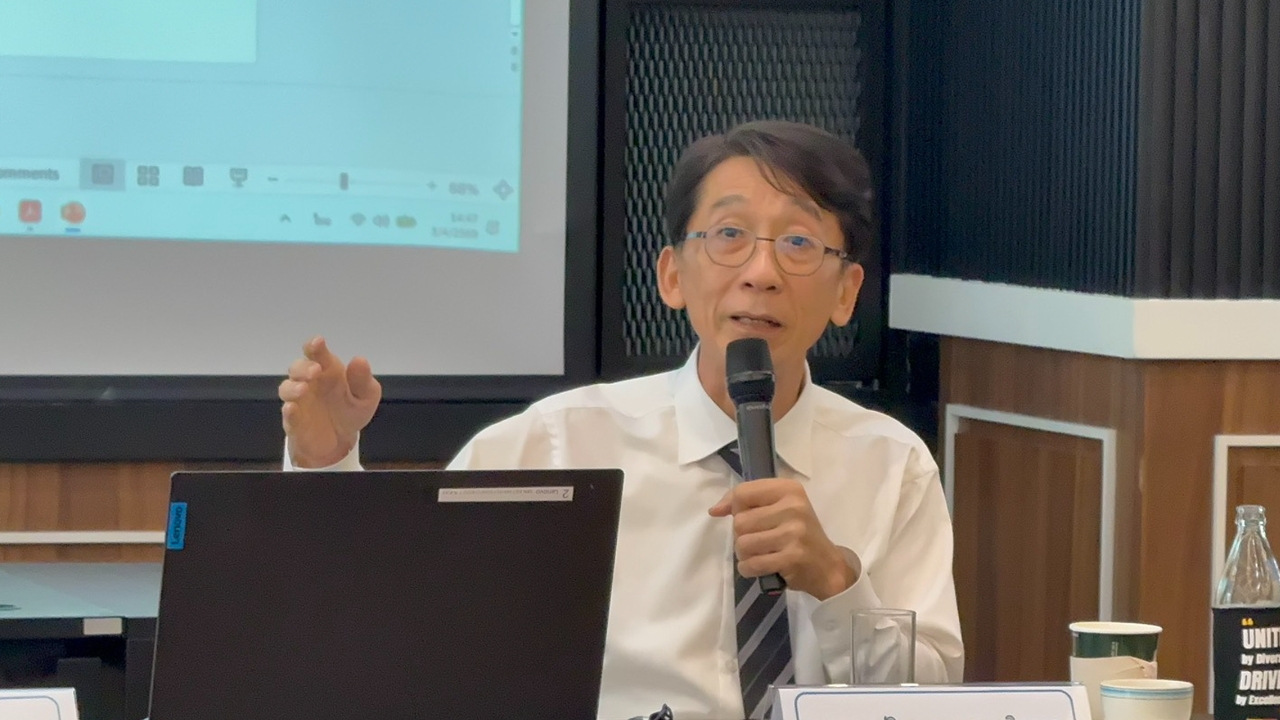
The seminar “Decoding the Referendum Rules 69” reviewed lessons learned to improve the next referendum. "Parinya" invited citizens and political parties to amend necessary laws to facilitate easier referendum voting.
At 13:00 on 3 April 2026, at Room 211 (Mock Court), Faculty of Law, Thammasat University, Tha Prachan Campus, a seminar titled “Decoding the Referendum Rules to Amend Future Referendums” took place, featuring Mr. Phanthil Nuamjerim, Bangkok MP from the People’s Party, Dr. Usanee Pathapeesrikit Lertnatananon, lecturer at the Pridi Banomyong International College, Thammasat University, Ms. Kaewalin Thanomtong, campaign officer at iLaw, and Assoc. Prof. Parinya Dewanarettrikul, lecturer at the Faculty of Law, Thammasat University.
Ms. Kaewalin raised eight obstacles to referendum voting beyond the limited three-day registration period: first, voting is allowed only “outside the province,” so out-of-district voting within the same province is not permitted.
Second, referendum media campaigns are less frequent compared to election campaigns.
Third, the printed referendum voting guide had omissions that could cause spoiled ballots.
Fourth, the Election Commission prohibits parties from directing voters, despite no law forbidding this.
Fifth, on voting day, officials directed voters to reject the referendum; for example, an official in District 2, Nakhon Nayok, told voters, “Please mark 'no' because they will amend the law and constitution,” among other cases of officials influencing voters.
Sixth, there was misleading information that voters should mark a check to approve.
Seventh, vote-buying occurred in some areas to encourage rejection.
Eighth, fake news campaigns promoted voting against approval.
Dr. Usanee said she tried to register online but was unable to, so she took a screenshot, which became the only evidence the court said showed insufficient effort to register. As a citizen following the issue and wishing her vote to be counted, when the social movement to extend the registration period grew, the court dismissed the case and countered: 1. There are multiple channels; why use only one? 2. Being an academic, why was there no effort, wasting 8 hours? Society petitioned for extended registration under the Election Commission’s authority and consulted on how to establish a precedent for future referendums that truly center on citizens.
Mr. Yingcheep Atchanont, Executive Director of iLaw, observed that the negative points in Election Commission documents represent opinions. He was unsure how much weight voters gave these documents, which could endanger future referendums. The second referendum will be even more challenging with many issues to debate, so discussions must begin on what citizens should consider when voting.
Assoc. Prof. Parinya stated that the early voting registration and out-of-district referendum registration periods are inconsistent: early voting registration lasts 17 days, but out-of-district referendum registration lasts only 3 days. The Election Commission cited legal time limits, but in reality, these regulations can be amended or adjusted in special cases. The committee can grant exemptions or relax rules. According to the law, the registration period could be extended, but the Election Commission chose not to.
“I believe referendum voting could be done by mail or online, but the Election Commission chose not to because it does not prioritize citizens in its work. It prefers to use laws in ways convenient for itself. The result is nearly one million fewer people voting in the referendum than in elections. I therefore invite civil society and political parties to prioritize citizens and work together to amend only the necessary laws.”