

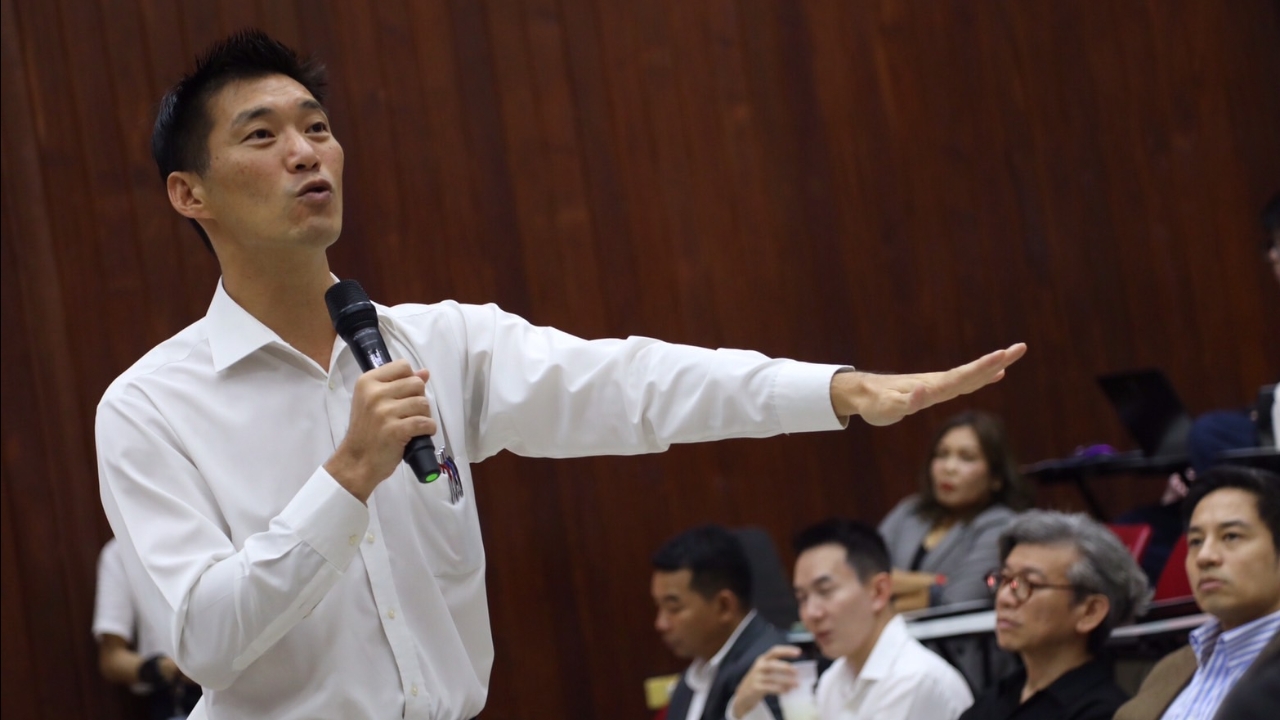
Thanathorn joined a panel discussion at the Faculty of Law, stressing it is time to reform provincial structures so citizens can elect their leaders and create a future-oriented agenda.
On 3 April 2026 at the Faculty of Law, Thammasat University, Tha Prachan campus, the Senate Committee on Political Development, Public Participation, Human Rights, and Consumer Protection, together with the Volunteer Foundation for Society (MOS) and Amnesty International Thailand, organized a seminar titled "Decentralize Power: Give the City a Voice, Give People Rights." Thanathorn Juangroongruangkit, Chair of the Progressive Movement, participated as a keynote speaker discussing the future direction of public administration.
Thanathorn said that the recent calls for elevating provinces to metropolitan status have not been adequately addressed by the government. The core issue is allowing local people to elect their provincial leaders directly. The major challenge now is to push for governors to be elected directly and to integrate overlapping provincial administrative structures into a unified system. If Thailand wants prosperity to spread throughout all regions, decentralization is an unavoidable "agenda for the future."
The Progressive Movement chair also pointed to the failure of decentralization in Thailand, which began with the 1997 Constitution, similar to Japan’s efforts at the same time. However, Japan has since succeeded and advanced far beyond Thailand. The main reason for Thailand’s regression is military coups that recentralized power. To allow each locality to truly determine its own future, this issue must be seriously discussed.
“When the central government refuses to release budgets and responsibilities, only the collective action of the people can pressure decentralization forward, ending the centralization of power and truly advancing local areas,” Thanathorn concluded amid a large audience of students and activists attending the seminar.