

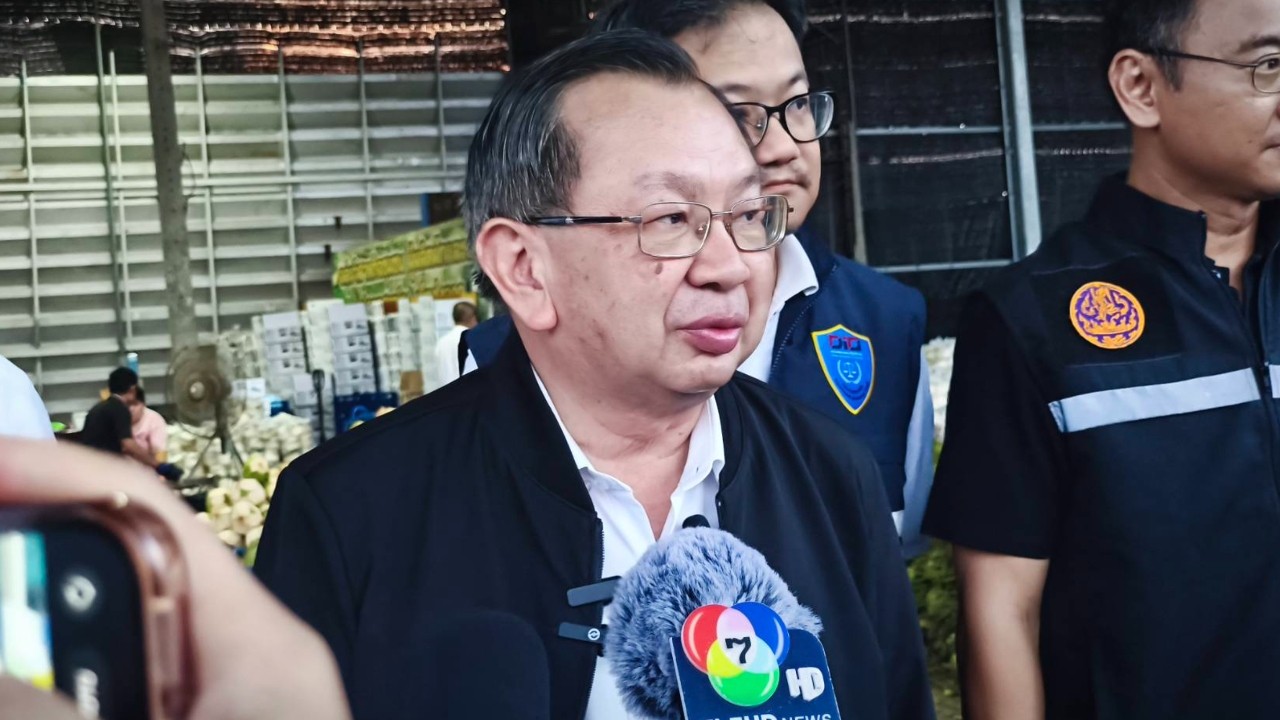
The Ombudsman Chairman is preparing to summarize measures to address the sharp drop in coconut prices and urgently propose them to the Cabinet for consideration. He recommends opening markets in department stores, gas stations, and Thailand Post to help distribute the products, while keeping a close watch on foreign investors leasing orchards or establishing nominee warehouses.
On 4 Apr 2026 at 10:00, Mr. Songsak Saichue, the Ombudsman Chairman, disclosed that during his visit to Samut Songkhram and Ratchaburi provinces on 3 Apr to hear from fragrant coconut farmers and discuss solutions with related agencies, the most critical problem found was the coconut price collapse. Prices averaged only 2-3 baht per fruit for standard sizes. Although some community enterprises or cooperatives received assistance from the Department of Internal Trade to buy coconuts at 5 baht each, this was only a small fraction. Most farmers still face prices below their costs. The urgent measure needed is to use five target provinces—Nakhon Pathom, Ratchaburi, Samut Sakhon, Samut Songkhram, and Songkhla—as pilot models for joint and area-specific solutions. The focus is on opening new marketing channels, such as continuously placing coconuts in modern trade department stores, not just temporarily. There is also a proposal to collaborate with PTT Public Company Limited to distribute or sell coconuts alongside drinking water at gas stations nationwide during price downturns to help move products, as well as cooperation with Thailand Post for product sales.
Mr. Songsak added that support must be provided for community enterprises, agricultural cooperatives, large farming groups, and other farmer groups to purchase coconuts from farmers at higher prices. He urged the Ministry of Commerce, Department of Internal Trade, Samut Songkhram and Ratchaburi provinces, and relevant provinces to jointly create plans and act promptly to alleviate farmers' hardships as soon as possible. This includes accelerating quality standard upgrades, addressing fertilizer shortages and high prices, expanding potential new markets, and enhancing the capacities of Thai producers and farmers throughout the production chain.
“There is major concern about the production chain structure involving foreign capital playing a role and influence, including setting up packing plants or leasing and buying coconut orchards through nominee arrangements. I have ordered the Department of Business Development and the Ministry of Agriculture to jointly inspect the entire chain to close legal loopholes. Additionally, there is an issue with counterfeit coconut water undermining confidence in Thai products, which currently lacks clear scientific indicators and legal authority to immediately halt production,” Mr. Songsak said.
The Ombudsman Chairman further stated that expanding foreign markets requires the “Team Thailand” mechanism involving the Ministry of Foreign Affairs, Ministry of Commerce, and Ministry of Agriculture to find new potential markets beyond traditional ones, such as Spain, Germany, Australia, and the Middle East. The key is upgrading GAP (Good Agricultural Practice) standards, which are internationally recognized but currently certified too slowly to meet demand. He stressed the need to expedite relevant agencies' efficiency in certification and promote organic and USDA (U.S. Department of Agriculture) standards to penetrate premium markets. He will promptly finalize the issues and proposed measures to submit to the Cabinet for swift action, alongside discussions with the Ministry of Foreign Affairs, Ministry of Commerce, and Ministry of Agriculture to develop an integrated approach to solving the problems in a unified direction.