

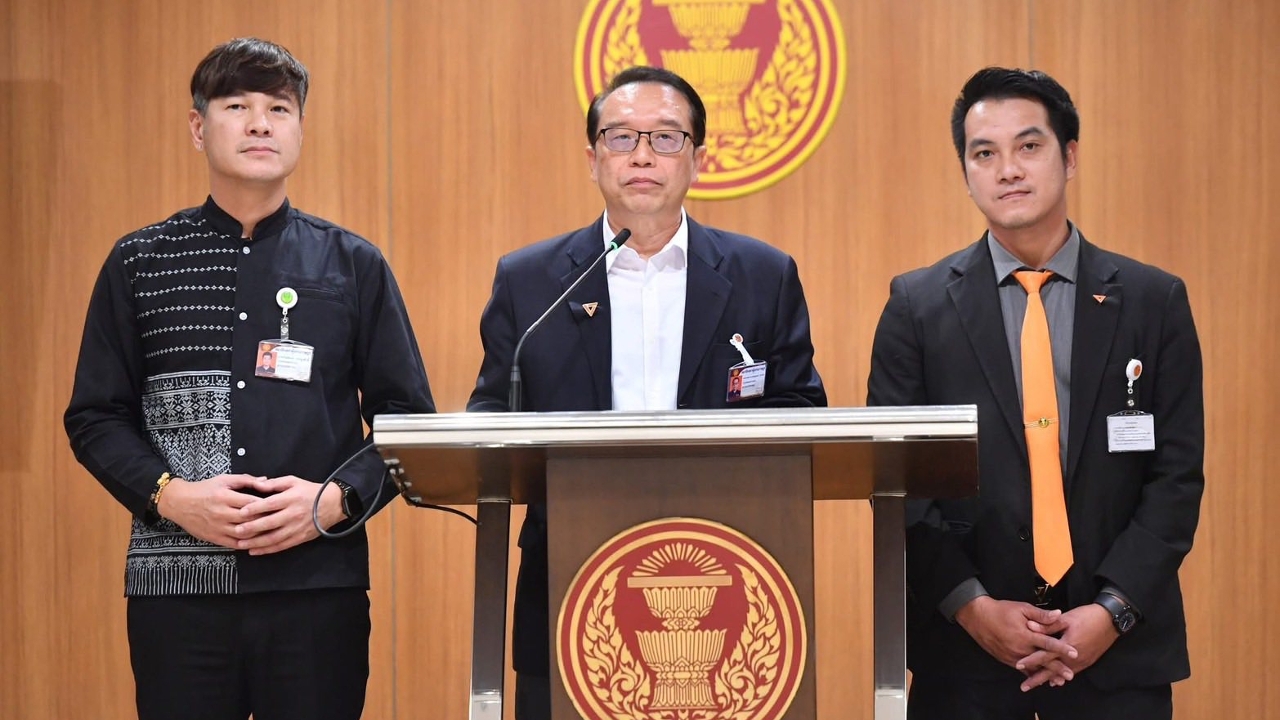
Anusorn warns the government to maintain a three-dimensional balance amid limited energy resources, suggesting a windfall tax on refineries to use the funds to alleviate public hardship and proposing 10 national energy-saving measures.
On 5 Apr 2026 GMT+7, Dr. Anusorn Thamchai, Bangkok MP from the People's Party and former chairman of the audit committee and board member of Bangchak Petroleum Public Company Limited, discussed energy crisis management. He stated that maintaining a balance across three dimensions is essential; failure to do so can cause problems where solving one dimension causes issues in another. The three pillars are: 1. Affordability—energy prices accessible to the public; 2. Energy security; 3. Environmental sustainability. Especially during a crisis of high and potentially scarce energy, the government might need to reconsider the Net Zero carbon target, prioritizing immediate livelihood and energy price issues to avoid escalating economic crises. Simultaneously, heavy budget spending to subsidize energy prices risks fiscal crisis if inefficiencies and leakages occur.
Support for imposing a windfall tax on refineries
Dr. Anusorn added that speculation or profiteering by stockpiling oil further wastes large subsidies without easing the public’s economic hardship. Public debt to GDP ratio could exceed 70% by 2027, increasing the risk of credit rating downgrades, which would raise borrowing costs for both public and private sectors, potentially triggering a crisis within a crisis—an oil crisis cascading into a fiscal crisis. Designing programs to address economic difficulties under limited budgets requires knowledge and data to deliver effective, immediate solutions while restructuring for the long term, ensuring every baht spent stimulates the economy and genuinely assists those in need.
Dr. Anusorn further stated that in early April, refining margins surged to 14 baht, and studies should be conducted on levying additional taxes on refineries to use the funds for public relief. Last year, refining margins averaged only 1.7–2.2 baht. The sharp rise in refineries’ gross profits from refining margins supports the government’s push to impose additional windfall taxes, providing more budget to alleviate economic hardships since many countries impose taxes on excess profits above normal levels.
Concerns over upstream product shortages
If the Middle East conflict prolongs and spreads, Dr. Anusorn predicts a possible Energy Lockdown with domestic oil shortages, as these countries will be unable to secure sufficient reserve oil if imports are disrupted. Beyond energy shortages, shortages of upstream industrial products such as fertilizers, pills, plastics, metals, and semiconductor components may occur, causing supply chain and manufacturing disruptions in Thailand. This would coincide with slowing exports and sharply increased imports; for example, February imports expanded at the highest rate in 50 months. March, April, and May energy imports are expected to surge sharply due to the need to stockpile oil. Should Energy Lockdown occur in Thailand, preparations must focus on minimizing impacts on public health systems and food security. Hospital power systems must remain uninterrupted; emergency vehicles must have fuel; medicines must not run out. Food and agricultural product transportation nationwide must remain smooth.
Recommendations for 10 energy-saving measures
Finally, regarding recommendations to address the prolonged oil and energy crisis, measures on both supply and demand sides are necessary. Demand-side measures focus on conserving and efficiently using energy. In case of oil shortages, Energy Lockdown measures can be implemented. Many countries have begun power shutdowns and closing energy-intensive non-essential businesses. The International Energy Agency (IEA) has issued reports and recommendations, and countries worldwide have adopted various measures to cope with this energy crisis.
These are: 1. Maximize Work From Home (WFH) to reduce travel, oil, and energy consumption.
2. Limit all vehicle speeds to no more than 80-90 km/h.
3. Use public transportation instead of private cars.
4. Allow private cars to refuel only on designated days based on license plate numbers.
5. Increase carpooling systems.
6. Prohibit LPG use for transportation; allow LPG only for cooking.
7. Change driving and vehicle maintenance habits to save fuel.
8. Avoid air travel whenever possible.
9. Promote cooking with electricity instead of LPG, freeing LPG for essential product manufacturing.
10. Manage feedstocks efficiently to prevent shortages of products related to petroleum derivatives, among others.