

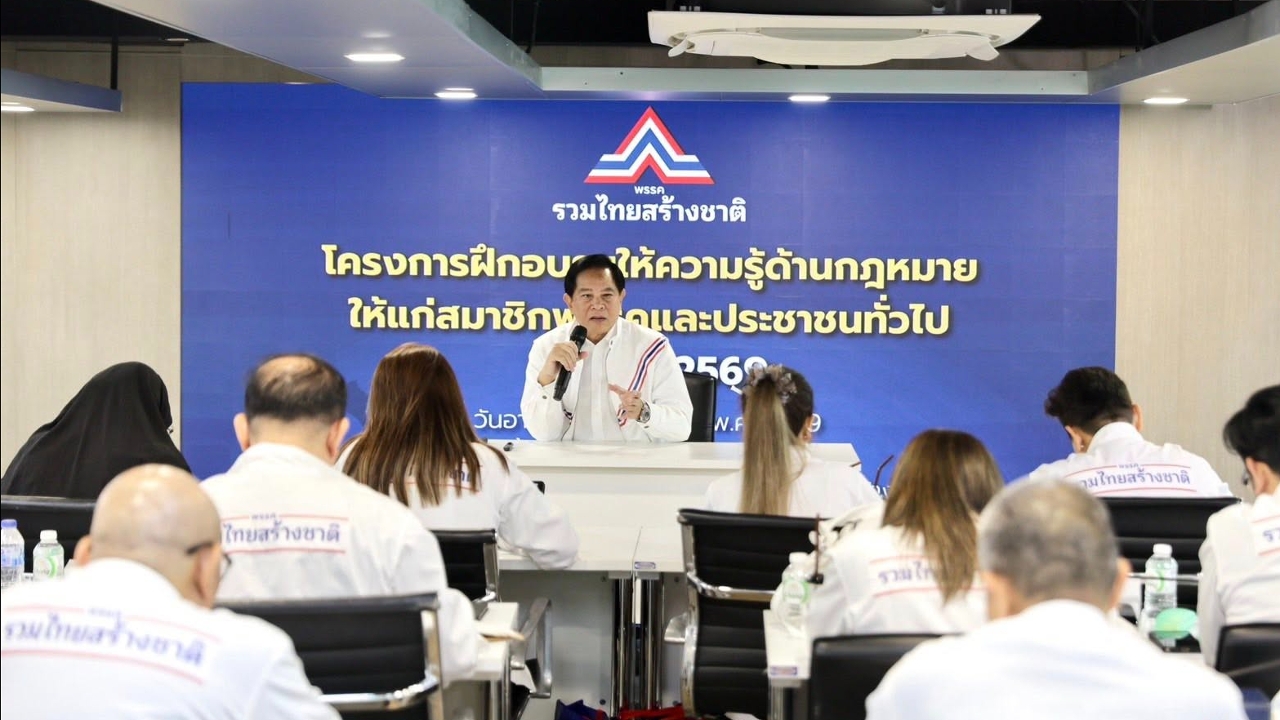
The United Thai Nation party equips its members with knowledge on "energy and law." Party leader Peeraphan points out that the energy crisis is not just an economic problem but a structural issue impacting the country's security.
On 6 Apr 2026 GMT+7, reporters reported that the United Thai Nation party organized its first 2026 training program on energy and law under the theme "Thailand's Energy Crisis: Rising Living Costs, Stagnant Income, Who Controls the Game?" Party leader Peeraphan Saleerutwiphak, along with executives, legal experts, and energy researchers, provided education on energy, law, and practical solutions. Over 100 party members from across the country participated.
Peeraphan opened a perspective on energy structure with the topic "Energy Crisis, National Crisis: Time to Restructure for the People," highlighting that the energy crisis is not merely an economic problem but a structural one affecting national security and citizens' quality of life. He emphasized the necessity of a major energy structural reform to establish fairness.
Meanwhile, party deputy leader Narapat Kaewthong reflected on the impact of rising energy costs, which directly affect the agricultural sector and grassroots population, contrasting sharply with clearly declining incomes, under the topic "Voices from Farmers: Why Are Costs Rising While Income Falls?"

Additionally, the event included education on law and pricing mechanisms, explaining Thailand's energy law structure as a key mechanism for price determination. It pointed out systemic limitations that remain obstacles to reform, emphasizing the need to update laws to align with current conditions. The program also proposed measures to stabilize energy, ranging from short-term actions to long-term structural reforms. It underscored the role of communication, particularly social media, to make energy issues understandable, accessible, and to encourage public participation in effectively advancing the party's policies.
