

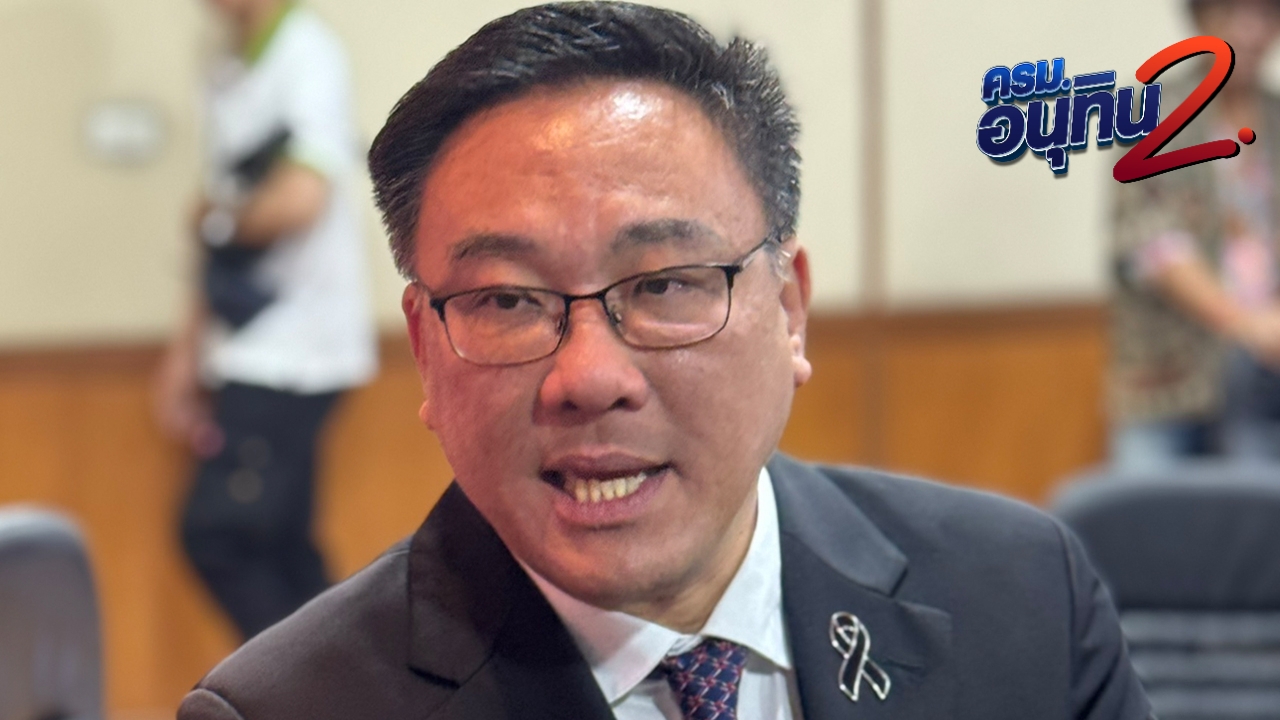
Julphan reveals that the Social Security Board election will use the old 1-to-7 formula, pointing out the possibility of removing it from the civil service system. He emphasizes that no problem is too difficult and confirms he will expedite solutions as quickly as possible.
At 11:00 a.m. on 7 April 2026, Julphan Amornwiwat, Minister of Labour, announced after delivering policy guidance to ministry executives about the working approach and oversight of the Social Security Office. He confirmed that the election of the Social Security Board will follow the original schedule set by the office, using the current election formula of 1-to-7. He will sign the order after the government delivers its policy statement to Parliament on 9-10 April, ensuring the election occurs on time. He added that he wants the Social Security Office to be a key organization managing workers' funds independently, free from political control or interference.
Julphan affirmed that as Labour Minister, he will not interfere or intervene in the Social Security Office’s operations. The office’s work will be independent and transparent, free from political influence of any party or color. He called on the Social Security Office and political groups to cooperate in reforming the office into a reliable organization that does not become aligned with any political faction. All sides should allow the Social Security Office to proceed neutrally. He considers this the starting point of his work and will provide further details in the future.
Julphan also stated that current management of the Social Security Office is discussing future adjustments to become more professional, especially in investment units. They will develop the board’s structure to increase democracy through consultations, ensuring changes comply with legal procedures to maximize benefits for all insured persons.
Regarding welfare adjustments, a joint working team will be established, not only from the Ministry of Labour but also including representatives from the National Health Security Office (NHSO) and the Ministry of Public Health, such as medical professionals, to ensure welfare improvements cover both insured persons and those providing services to them.
As for the new old-age pension calculation formula, called the CARE formula, mechanisms will be sought to balance options, possibly allowing insured persons to choose. The Social Security Office will study and reconsider this before approving any changes. On the possibility of removing the Social Security Office from the civil service system, Julphan sees it as possible but requiring careful consideration. He stresses that political factions should not be involved with the Social Security Office.
On managing migrant labor, especially Cambodian workers, Julphan said he has received concerns from the Federation of Thai Industries and the Thai Chamber of Commerce since before taking office as leader of the Pheu Thai Party. He understands labor shortages in certain sectors like agriculture in the eastern region and asks for time to resolve these issues. Work permit renewals for migrant workers from Myanmar, Laos, and Vietnam have been processed, though about 200,000 to 300,000 cases were missed, and solutions are being sought. Policies regarding Cambodian workers depend on government direction, with prior correspondence sent. Clarity is awaited from upcoming Cabinet meetings. He also mentioned disruptions in sending Thai workers abroad and the need to find new destination countries.
Regarding the country's economic fragility that could affect employment, Julphan revealed that the first measure to help workers is reducing social security contributions and creating support measures to maintain employment if the situation worsens. Frameworks are in place, awaiting clearer details.
"The most important thing is that the private sector must keep moving forward. Employment must not decline because if workers leave the employment system, their skills will be lost, reducing the country’s productivity unnecessarily. Therefore, maintaining employment may involve reduced working hours with government financial support to businesses or workers. We need to find ways to address this as the energy crisis may worsen. Regarding directives for Work from Home or Work from Anywhere, these were discussed with the Prime Minister and currently are voluntary requests, not mandatory. It depends on the nature of each agency’s work. All agencies have been tasked to consider this. This crisis is real, and we want everyone to help save energy as much as possible."
On the 2026 minimum wage increase, Julphan said he wants an increase but must consider the current economic situation. If the economy improves, appropriate adjustments will be made. Discussions include creating an automatic mechanism for wage adjustments to reduce discretionary decisions, considering multiple factors beyond inflation alone.
Regarding the investigation of the SKyy9 building case, Julphan confirmed close monitoring but no interference. He concluded by saying that from his perspective, no problem in the Ministry of Labour is insurmountable; once assigned, he will do his best. Asked whether the biggest concern is overhauling social security, he said no. All problems have defined challenges and clear goals; only the timing of solutions is uncertain. He must expedite all efforts due to pressing circumstances.