

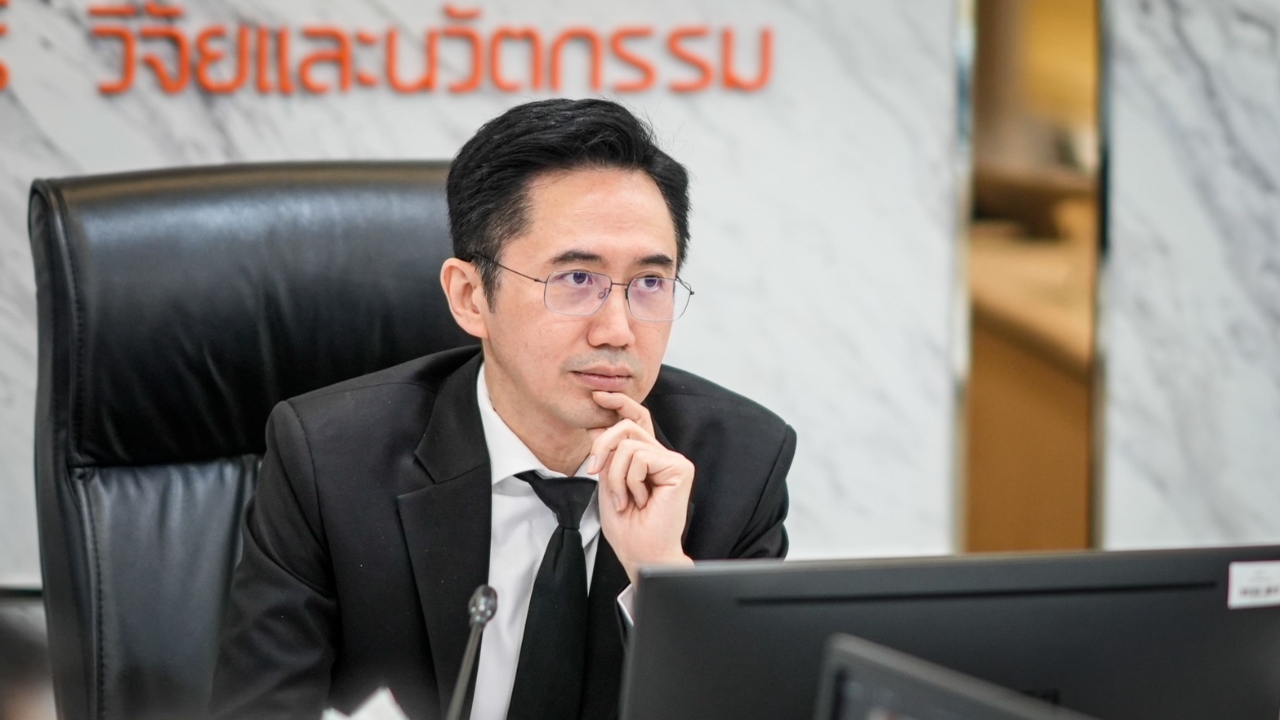
Deputy Prime Minister Chen began his first day by discussing solutions to the energy crisis and PM2.5 pollution, highlighting innovations to combat dust in eight northern provinces, and preparing to present an Action Plan to the Cabinet on 11 April.
On 7 April 2026 at the Office of the Science Promotion Committee, Research and Innovation (OSPRI), Mr. Yoschanan Wongsawat, Deputy Prime Minister and Minister of Higher Education, Science, Research and Innovation (MHESI), held urgent talks to apply research and innovation to resolve the energy crisis and PM2.5 pollution. He stated that he was ordered by the Prime Minister to begin work immediately, even before delivering a policy statement to Parliament, due to the urgent situation impacting the public widely. The mechanism of the Science, Research and Innovation Promotion Fund (SRI Fund) will be central to rapidly implementing existing research plans into practical action.


To address PM2.5 pollution, the Ministry of Higher Education plans to mobilize innovations in eight northern provinces at risk through three key frameworks: prevention, mitigation, and health care. The “Follow the Burn” application will be used to identify individual forest fire sources alongside supporting artificial rainmaking and wildfire suppression technologies. Additionally, health protection innovations such as positive pressure nets and dust-filtering masks will be distributed, and DustBoy sensors—developed by Professor Dr. Setth Samphattakul—will be installed in childcare centers and schools. AI chest X-ray systems will also be deployed for precise and rapid health screening of residents in affected areas.


For medium- and long-term plans, the Minister aims to expand research outcomes toward sustainable economic dimensions, including the Net Zero Campus project to reduce carbon emissions in educational institutions nationwide, and promoting biodiesel and clean energy through a robust research ecosystem. Precision agriculture technology will be employed to reduce production costs and agricultural burning pollution. After the Songkran festival, the War Room’s efforts will expand to support SMEs and control agricultural and food prices through productivity-enhancing innovations, creating an ecosystem where Thai startups and entrepreneurs can mutually support each other sustainably.

Finally, Mr. Yoschanan plans to summarize all operational guidelines for presentation to the Cabinet meeting on 11 April. He emphasized that the policy statement on 10 April will be delivered alongside an Action Plan ready for immediate implementation, seeking central budget support and cross-ministry cooperation with the Ministries of Interior, Energy, and Public Health. The goal is to transform the Ministry of Higher Education into a key ministry capable of effectively applying knowledge and innovation to resolve the nation’s crises in all dimensions.
