

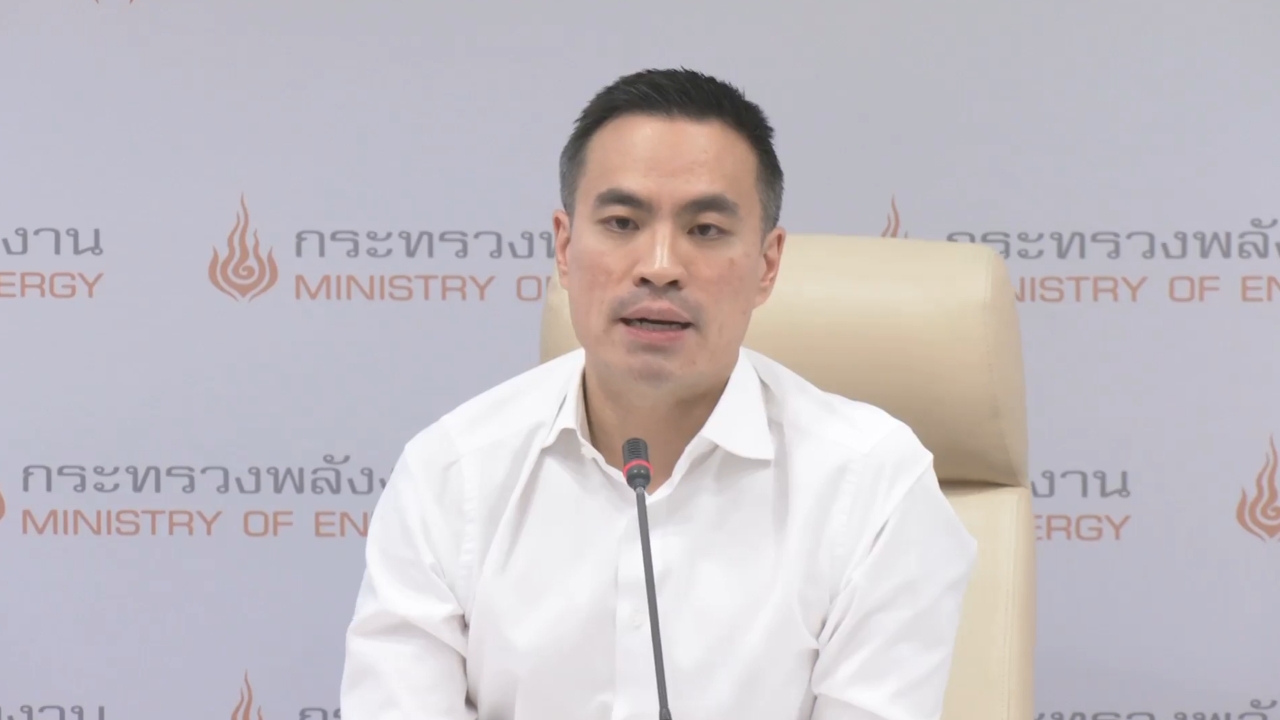
“Akanat” revealed the Energy Regulatory Commission’s (ERC) resolution to reduce refinery prices by 2 baht for Diesel B7-B20 for the first time using emergency decree powers to amend and prevent fuel shortages, setting refinery prices pending announcement in the Royal Gazette before considering pump price reductions.
At 15:06 on 7 April 2026 GMT+7. Mr. Akanat Promphan, Minister of Energy. He spoke after discussions with refinery operators, followed by a meeting of the Energy Policy Administration Committee (ERC). The key summary was that the Prime Minister clearly directed during the first Cabinet meeting on 6 April, using the study results from the Oil Fund Management Committee (OFC), chaired by Deputy Prime Minister and Finance Minister Mr. Akiniti Nitithanprapas, which were presented to the Cabinet and resolved to assign the Ministry of Energy, led by Mr. Akanat, to proceed.
Mr. Akanat added that the important issue is “oil prices.” Today, I have acted as announced yesterday. Since morning, together with the Permanent Secretary of Energy and the Director of the Energy Policy and Planning Office (EPPO), I have spoken with refinery groups—some cooperated, others did not attend, but cooperation was confirmed. We understand that part of the price increase is due to the Middle East crisis, which we accept.
However, today’s high oil prices, after taxes and marketing costs, have been mitigated by the Oil Fund mechanism. I confirm that the Oil Fund uses future oil consumers’ money to subsidize current prices. The fund’s current deficit is about 50 billion baht. We continue to subsidize diesel prices daily, totaling about one billion baht per day.
. Previously, whenever pump prices were adjusted up or down or subsidized, the Oil Fund was used to subsidize the prices consumers pay at the pump—in layman’s terms, the fund bears the burden. However, reviewing the figures, we see that the pricing mechanism under the current global crisis is abnormal. Today, refineries operating in Thailand must share responsibility to absorb the abnormal price increases.
According to the Oil Situation Management Committee chaired by Mr. Akiniti, which is the Price Structure Inspection and Determination Committee (PSIDC), EPPO collected and confirmed data throughout March, showing that refining costs—part of refinery prices based on Singapore market references, including crude oil and refining fees—rose abnormally in March-April.
“Based on these figures, at 13:00 today, under the Emergency Decree on Prevention and Mitigation of Fuel Shortages B.E. 2516 (1973), an order empowered the Energy Regulatory Commission (ERC), chaired by me, to set refinery prices. We exercised this power to reduce pump prices to ease public burden by using the Oil Fund mechanism, which uses public money. This new mechanism, the first of its kind in Thailand, involves setting prices referenced to Singapore with a discount applied directly at the refinery level. This way, the Oil Fund’s burden is reduced as refineries lower prices when selling to distributors.”
Initially, the meeting resolved based on March data and evidence that refinery prices for diesel grades B7 and B20—currently problematic—can be reduced by 2 baht. By April, refining fees have risen further, so early April data from the first week will be reviewed to consider whether the 2 baht reduction can be increased.
Mr. Akanat also thanked refinery operators in advance, noting some signaled willingness to cooperate with this measure. The Energy Policy Administration Committee emphasizes the priority of preventing fuel shortages. Although refinery price cuts will impact refinery revenues, oversight will ensure liquidity is maintained so refineries can continue purchasing crude oil to refine for Thai consumers. The situation will be monitored. The ERC has officially resolved today to reduce refinery prices for diesel B7 and B20 by 2 baht.
Regarding when pump prices will be reduced, Mr. Akanat said the ERC has made its decision, but under the Emergency Decree, a draft announcement must be published in the Royal Gazette, which may take until tomorrow (8 April 2026). Efforts will be made to expedite this process. If effective tomorrow, the Oil Fund Management Committee (OFC) will meet to consider how the 2 baht refinery price discount will be passed on to pump prices.
“We must reduce reliance on crude oil and imported raw materials. We have seen that when a crisis occurs and we cannot stand on our own, import dependency causes problems. Therefore, the government supports biofuel use that Thais can produce domestically. We have coordinated with service stations to accelerate installation of B20 biodiesel pumps for trucks and will offer special compensation for B20 to lower transport costs passed on to consumer goods.”
By 20 April 2026, service stations will have installed enough B20 pumps along major roads, approximately every 100 km, totaling about 100 stations. Subsequently, B20 pumps will be installed on major two-digit highways at similar intervals as soon as possible. This will provide a double discount benefit. The refining fee for biodiesel will be considered for reduction, and the Oil Fund will subsidize B20 more than B7 to ease costs for transport trucks. Quick installation of B20 pumps for trucks and transport vehicles is being prioritized.
Thus, in tomorrow’s OFC meeting, they will consider how much of the refinery price discount will be passed on to pump prices for B7 and B20. In one to two weeks, if refinery price discounts increase from 2 baht to 4–6 baht, part of the additional savings can further reduce pump prices without increasing Oil Fund burden, or be used to maintain the fund’s financial health.
“Today, the ERC added a new mechanism. I am fulfilling my promise made yesterday. This morning, I negotiated with refineries, and this afternoon’s ERC meeting resolved to use ERC powers under the Emergency Decree to reduce refinery prices for B7 and B20 by 2 baht. We await the Royal Gazette announcement tomorrow for enforcement, after which the OFC will decide which fuel types will have their pump prices reduced.”