

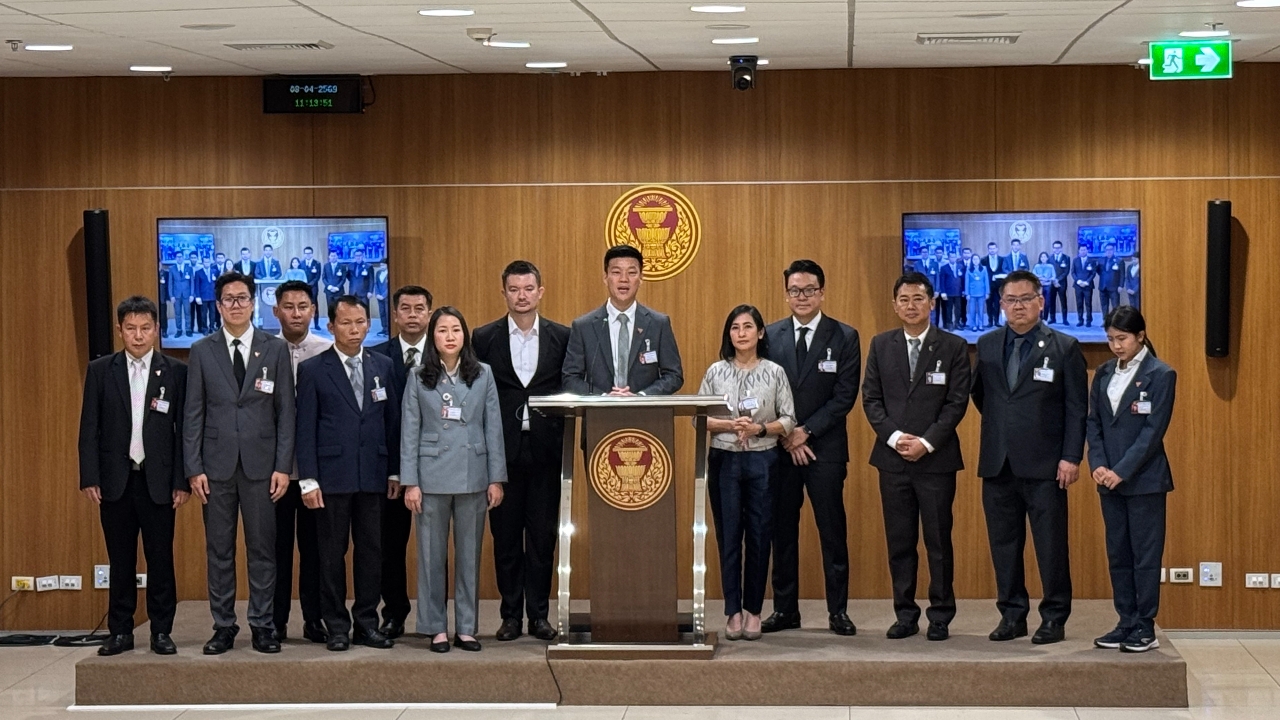
Three opposition parties have joined forces to call on the government to thoroughly reconsider the Clean Air Act draft, warning that remaining silent is tantamount to accepting that citizens live amid air contaminated with carcinogens.
On 8 Apr 2026 GMT+7 at the Parliament, reporters noted that leaders of the three coalition opposition parties—the People’s Party, Kla Tham Party, and Democrat Party—jointly issued a statement urging the government to review the Clean Air Act draft comprehensively and transparently. They called for inclusive consultation with all sectors and emphasized prioritizing public health and safety over short-term economic gains. They also urged expedited parliamentary consideration to equip Thailand with legal tools to systematically manage air pollution and develop balanced oversight mechanisms that protect the environment while promoting sustainable economic and social development. The opposition coalition stressed that “clean air is not a privilege but a fundamental right of every citizen.”
Mr. Natthapong Rueangpanyawut, leader of the People’s Party, stated that the three opposition parties clearly stand united regarding Thailand’s escalating air pollution crisis, especially the PM2.5 issue threatening widespread public health and reaching a level deemed a “national health emergency” that cannot be ignored. Currently, Thai citizens are unavoidably exposed to toxic air pollutants, including carcinogens such as PAHs, mutagens, and heavy metals accumulating in fine particulate matter.
This is especially true for residents in the upper northern region, who face prolonged exposure to hazardous particulate levels, significantly increasing their risk of serious diseases. The health impacts of PM2.5 are not merely theoretical concerns but are scientifically proven, including:
• Asthma: Particulate matter triggers airway inflammation, causing attacks and breathing difficulties.
• Chronic bronchitis: Long-term exposure leads to persistent inflammation.
• Chronic obstructive pulmonary disease (COPD): Progressive decline in lung function.
• Lung cancer: Resulting from accumulation of carcinogens in the respiratory system.
• Ischemic heart disease and stroke: Due to vascular inflammation and blood clot formation.
• Hypertension: Effects on the autonomic nervous system.
• Alzheimer’s disease: Evidence links pollution to brain degeneration.
• Type 2 diabetes: Through inflammatory mechanisms and insulin resistance.
• Effects on fetuses: Including low birth weight and premature birth.
The concern about PM2.5 is not merely about “dust” but the “toxins” that damage public health at cellular and societal levels. However, the opposition coalition is deeply concerned that the Clean Air Act draft might be dismissed or not brought before Parliament, citing reasons such as:
. (This part appears to be a bullet point marker without accompanying text, so no translation content.) • Legal redundancy.
• Burden on the business sector.
• Increased authority for permanent officials.
Ms. Kandej Liaopiroj, deputy leader of the Democrat Party, affirmed that these concerns are insufficient to reject legislation aimed at protecting citizens’ lives and health. Allowing the bill to be delayed or dismissed is equivalent to accepting that the public must continue living amid air polluted with carcinogens and toxins without adequate protection. Such inaction or rejection is not only a policy failure but a failure of responsibility toward the lives of all citizens. The opposition coalition will continue to stand firm in defending public health rights and will monitor, scrutinize, and push for the Clean Air Act until tangible results are achieved.