

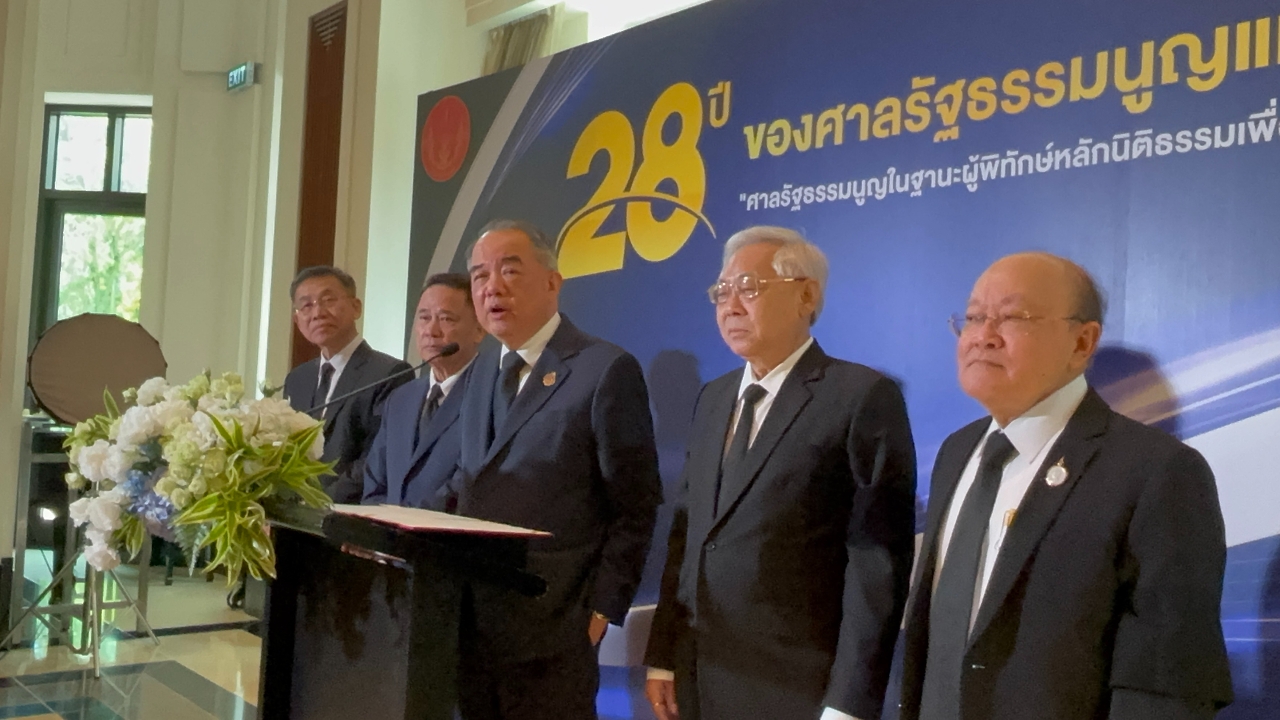
The Constitutional Court has approved extending the deadline for the "election ballot barcode" case by 15 days. The case is expected to conclude within 11 months. The Chief Justice affirmed that the judges are independent and remain unfazed by public criticism.
On 8 April 2026 GMT+7, Nakarin Mektrairat, Chief Justice of the Constitutional Court, updated on the election ballot barcode case that the court has allowed both parties—the Ombudsman (complainant) and the Election Commission or EC (respondent)—to extend the evidence submission period by another 15 days. In principle, the panel agreed to permit extensions up to 2-3 times as necessary and justified, to ensure the evidence collection process is as complete as possible.
Nakarin said that once the evidence is complete, the panel of judges will deliberate together to assess any overlapping testimony. If any written evidence remains unclear, the court may summon witnesses for direct clarification or conduct additional hearings. Regarding speculations about a possible 5:4 vote or concerns about public perception, the Chief Justice affirmed that each judge and the panel act independently and will decide based solely on the presented evidence.
When asked about past precedents declaring elections void (such as voting in the wrong booth), Nakarin acknowledged that previous cases might be studied for comparison but emphasized this is a distinct case. He stressed having no concerns about this case and intends to keep within the timeframe. The longest case in history took 11 months, and this one should not exceed that. As for the issue of "election confidentiality," the panel will discuss internally and carefully review how evidence is obtained from both sides. Meanwhile, the executive branch can continue its duties normally, as it falls outside the court's jurisdiction.