

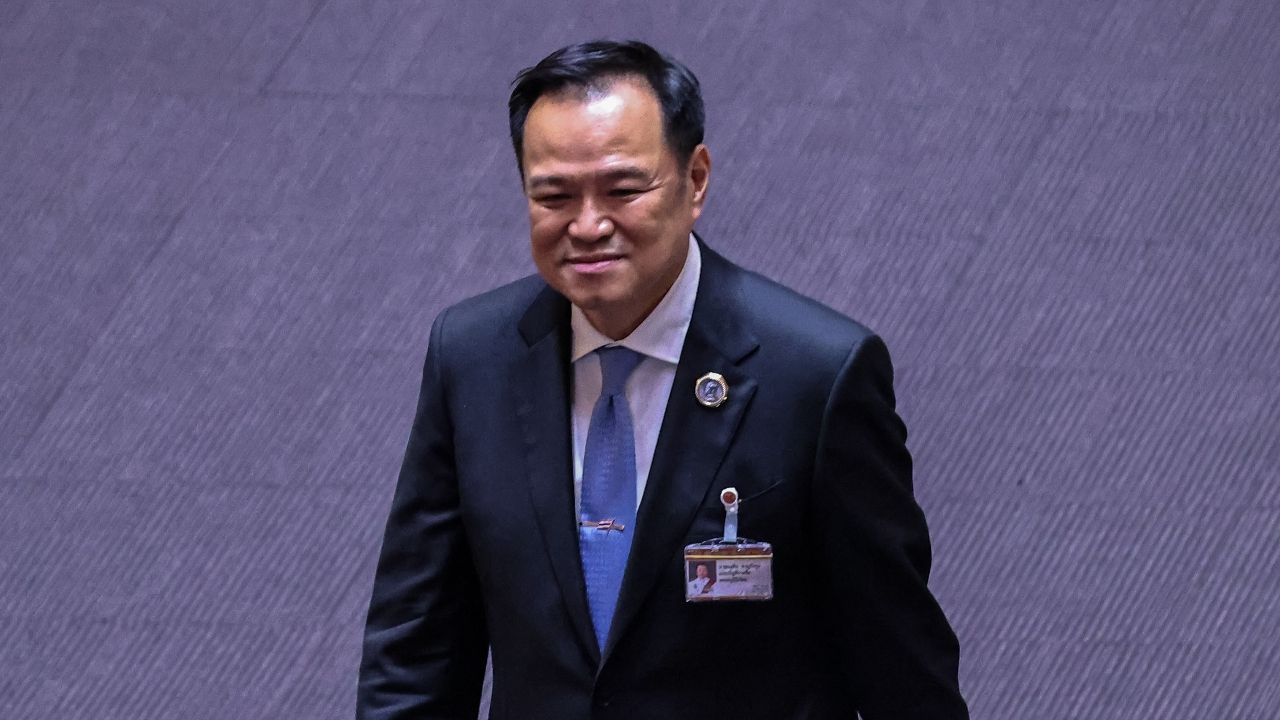
Listen live tomorrow as the Prime Minister leads the Cabinet to present the Anutin 2 government policy to Parliament, affirming the confirmed launch of the Khon La Khrueng Plus project. The government administration will be managed in a "Cluster" model, alongside a new military policy introducing 100,000 volunteer soldiers to replace mandatory conscription.
On 8 April 2026 GMT+7, reporters reported that the Anutin 2 government policy presentation to Parliament is scheduled for two days: 9-10 April 2026 GMT+7.
The government policy content consists of five areas:
1. Economic sector
2. Foreign affairs and security
3. Social sector
4. Disaster management and environment
5. Public administration and legal reform
The government will simultaneously address immediate issues while restructuring the country's economic and social frameworks. It will adopt an integrated "strategic cluster system" for public administration, combining efforts from the private sector and citizens. The government's role will shift to supporting and facilitating the public, accelerating development of the public digital system. The administrative mechanism in the "Cluster" form divides work into five strategic groups:
1. Macroeconomics, investment, and future industries
2. Production, trade, and services
3. Infrastructure, natural resources, and environment
4. Social welfare and services
5. Foreign affairs and security
Reporters noted that the government’s announcement to change public administration into a Cluster system (five strategic groups) aims to reduce redundancy and promote proactive work. It also seeks to enhance Thailand's role in ASEAN more actively (Beyond Thailand) and aims to join the OECD by 2028.
Notable policies of the Anutin 2 government include "Khon La Khrueng Plus," building on the previous administration's program, with an added goal of becoming a "global food security hub." Additionally, the military policy introduces 100,000 volunteer soldiers to replace conscription. Regarding constitutional reform, it was mentioned only that a referendum will be held to listen to the public’s views, proceeding with drafting the constitution through proper procedures.
The joint parliamentary session will begin at 8:30 a.m. on Thursday, 9 April 2026 GMT+7, continuing until 2:00 a.m. on Friday, 10 April 2026 GMT+7, totaling 17 hours and 30 minutes on the first day. The chair will then adjourn the session to resume at 8:00 a.m. on Friday, 10 April 2026 GMT+7, concluding at 11:00 p.m. the same day, totaling 15 hours for the second day. Altogether, the two-day session will last 32 hours and 30 minutes, divided as follows:
Chairperson’s session: 1 hour
Prime Minister’s policy statement: 1 hour 30 minutes
Cabinet members: 6 hours
Senators: 4 hours
Coalition party MPs: 5 hours 30 minutes
Opposition party MPs: 14 hours 30 minutes