

In a future world becoming permanently volatile, the Persian Gulf war has become a key factor shaking the world's largest crude oil trading market, especially in Asia including Thailand, which monopolizes oil imports up to 80% of total production.
The invasion of Iran by major powers such as the United States and Israel, involving heavy missile attacks, has damaged infrastructure spanning 70-80 years of investment, making recovery to previous conditions impossible. The resulting damage has sent shocks worldwide, including to Thailand, where the government urgently introduced subsidies to stabilize oil prices and support vulnerable groups.
To help the country overcome the energy crisis and disrupted supply chains, Prime Minister Anutin Charnvirakul's government proposed solutions prioritized in three steps as follows:
1. Set clear goals: the government will manage how much it can handle soaring energy prices without distorting market mechanisms, while choosing to subsidize industries that can truly grow, such as smart agriculture, animal feed, expanding electric vehicle (EV) opportunities, and strengthening the wellness business by fully supporting them.
2. Transition: accelerate clean energy production to replace the oil energy crisis, whose prices will never fall again, by allowing private sector freedom to invest and trade electricity and encouraging citizens to generate and sell electricity for energy security.
3. Transform: reform the country's structure faster than global changes, such as introducing AI to assist government work, elevating entire systems through sandbox models to build resilience against volatility.
This aligns with the views of Deputy Prime Minister and Finance Minister Aeknithi Nitithanprapas, who spoke at the BATTLE STRATEGY 2026: Economic Competition Seminar.Towards the goalof 3% GDP in the new world order battlefield, he said Thai people must accept reality and use existing resources with maximum efficiency. The state must focus on truly needy groups and invest timely for the future.
Meanwhile, SCBX CEO Arthit Nanthawit offered sharp insights in this context. "There is no miracle" that can help Thailand if we continue to deceive ourselves with GDP figures or existing reserves, because the truth is Thailand depends on cash cow industries that have very low growth, causing these engines to weaken continuously.
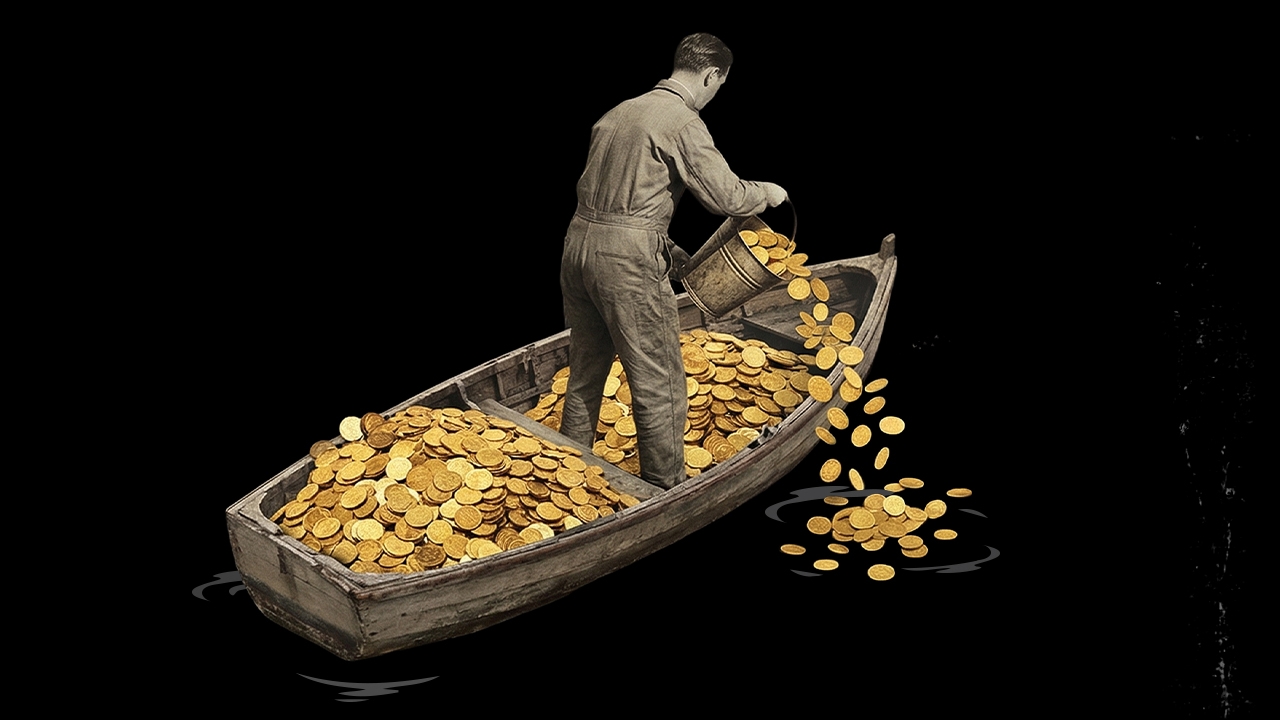
The major challenge for Thailand today is not just growth figures but questioning how long traditional engines like exports or tourism can sustain us. If the government persists with short-term fixes, it is akin to burning resources until depleted, possibly leading to a vicious cycle of lower tax revenues, reduced investments, and increasingly difficult economic growth.
What Thailand lacks in the AI era is not "ideas" but "the determination to act". Because real change is not about strategies but about the "difficult decisions" on whether to use limited resources to sustain dying old sectors or courageously risk creating new ones to replace them.
Ultimately, the country must build confidence in a clear and continuous direction. In summary, Thailand today does not yet need to "be rich" but must "survive". Here, survival means not being trapped in old traps, having a future to rely on, and having the whole system ready to move forward together.
Boldly cutting away what no longer fits, though painful, is the only way for Thailand to sustainably become a winner in the new world order battlefield.