

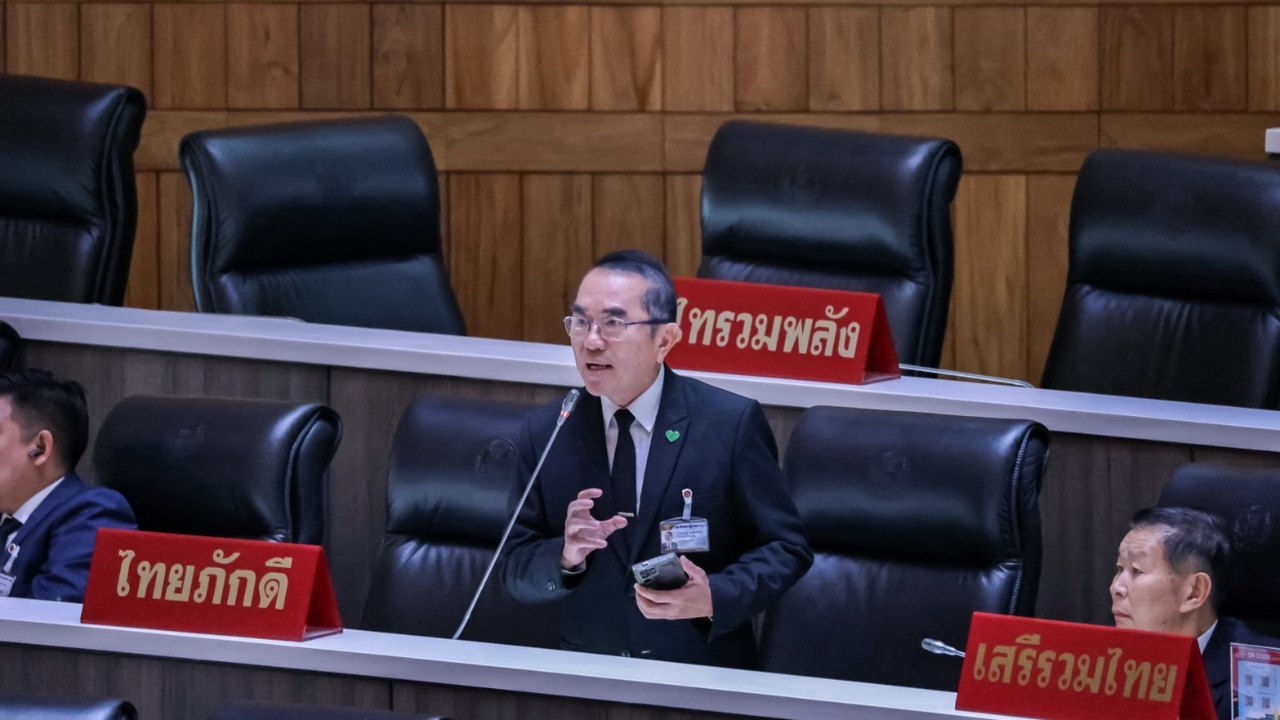
Dr. Warong points to the oil shortage and high prices crisis, asserting there is definitely a hoarding syndicate. He exposes over 727 million liters of oil missing from the system and warns the Prime Minister to listen and act swiftly before the government fails to complete its term.
At 11:50 a.m. on 9 April 2026, Dr. Warong Dejkitvigrom, party-list MP and leader of the Thai Pakdee Party, spoke in the government policy debate. He raised concerns about energy and oil, noting that although the government claims to manage the situation to ease the impact on citizens, in the past month diesel fuel has been scarce and expensive. He warned this is dangerously close to national oil theft if mismanagement or corruption is allowed.
This government has raised oil prices eight times, increasing by a total of 20.80 baht per liter—from 29.94 to 50.54 baht. Although prices have since dropped somewhat, the burden on citizens remains unfair. Nationwide suspicions of oil fraud persist. For example, in Surat Thani province, 57 million liters of oil from refineries destined for major oil traders went missing. If the government is serious about cracking down on the hoarding syndicate, it should investigate exactly who refineries deliver oil to. Since there are only a few major traders, the identity of the hoarders would become clear. The government has wrongly assumed from the start that citizens are hoarding oil and thus implemented three measures: 1. Allowing oil transport 24 hours a day, 2. Cancelling oil reserve measures, and 3. Allowing companies or oil depots to receive continuous refinery deliveries. Yet these have failed to alleviate the public’s suffering. Even by the end of the month, shortages persist, and inspections found no irregularities at depots. This indicates the government has misanalyzed the situation. From my field visits, I found oil is not being delivered from depots or major traders under Section 7 to gas stations as usual. Nearly every station reports receiving only about half their usual oil volume.
Dr. Warong continued, citing the Prime Minister’s statement on 3 April that the country normally consumes 67 million liters of oil daily, but usage has surged to 85 million liters—about 20 million liters more. He questioned where this excess comes from, especially since the economy and industry have not changed significantly. While suspecting irregularities is reasonable, the government has been slow to respond, causing harm to citizens. His team gathered data showing that from 23–31 March, comparing oil distribution with January 2026 (a normal period), there was an abnormal surplus averaging 14.086 million liters daily, totaling 225.378 million liters. He asked where this excess oil has gone.
In January, the oil volume delivered to stations was 51.3 million liters per day, yet many stations received less than half that amount—missing about 25.65 million liters daily. Between 16–31 March 2026, diesel fuel disappearance totaled 635.778 million liters, causing nationwide queues at gas stations. Adding government agency data showing an abnormal surplus of approximately 317.254 million liters during the same period, plus the shortfall of 410.4 million liters at stations, suggests missing oil could total 727.654 million liters. He considers this outright fraud and corruption in the oil process. It is impossible those managing the country’s oil system are unaware of this, yet corruption and theft continue, causing public hardship. While the past had the “fake G2G rice pledging” scandal, today it is “fake diesel” because oil from depots isn’t properly delivered to stations. The government must clarify these facts to the public.
Regarding the government’s third policy on anti-corruption, Dr. Warong recalled the Prime Minister’s clear statement to “talk and act,” and urged starting by cutting political privileges that benefit cronies. For example, reducing the number of MPs’ assistants from eight to three could save at least 800 million baht annually. He also proposed abolishing MPs’ and senators’ pensions to redirect funds to help citizens. If the Prime Minister truly wants to fight corruption, he must begin by cutting his own faction’s benefits. Citizens are frustrated and angry as everything grows more expensive. The government’s policy statement only deepens societal discontent. If the government acts quickly to tackle corruption and heeds warnings, it may complete its four-year term. But if it continues to ignore the issues, this administration may not last long.